REVIEW · ZAGREB
Zagreb Street Art Private Walking Tour with a Local Artist
Book on Viator →Operated by Kresimir Golubic · Bookable on Viator
Street art in Zagreb has rules. This private tour led by local artist Kresimir Golubic uses a smart mix of walking and air-conditioned transfers to show you the city’s overlooked walls and corners. It ends at his Atelier/Studio, so you’re not just looking—you’re meeting the maker.
I love that you get to see multiple street-art styles up close, from wall tags and paste-ups to letter art and murals. I also love the human scale of the tour: you stop at Kresimir’s atelier, where the art feels less like a scavenger hunt and more like a real craft.
One thing to plan around: this is still an outdoors-heavy walk, and it’s listed for moderate physical fitness. The experience also requires good weather, so cloudy or rainy conditions can change your plans.
In This Review
- Key highlights at a glance
- Why Zagreb street art feels different with an artist beside you
- Meeting point, pace, and how the 3-hour layout works
- Stop 1: Opatovina Park walls and the art of the close look
- Stop 2: Ban Josip Jelačić Square for street art right in the main scene
- Stop 3: Stube Ivana Zakmardija and how stairs shape street art
- Stop 4: Martićeva ulica murals—your longest street wall session
- Stop 5: Držićeva and the Atelier visit—where street art becomes craft
- Stop 6: Jukićeva ulica and Zagreb’s art connections in motion
- What you’ll learn: tags, paste-ups, letter art, murals, and current trends
- Price and value: is $42.14 per person worth it?
- Who this tour is best for (and who should think twice)
- Should you book this Zagreb street art tour?
- FAQ
- FAQ
- How long is the Zagreb street art private walking tour?
- Where is the tour meeting point?
- Is this a private tour?
- What language is the tour offered in?
- What stops does the tour include?
- Is there admission cost at the stops?
- Does the tour visit the artist’s studio?
- What if the weather is bad or I need to cancel?
Key highlights at a glance
- Local artist guide: You’re led by Kresimir Golubic, not a script reader.
- Private group: Only your group participates, so you can ask questions.
- Six focused stops: Park walls, main-square pieces, stair art, street murals, and more.
- Atelier/Studio time: You visit the artist’s workspace on Držićeva.
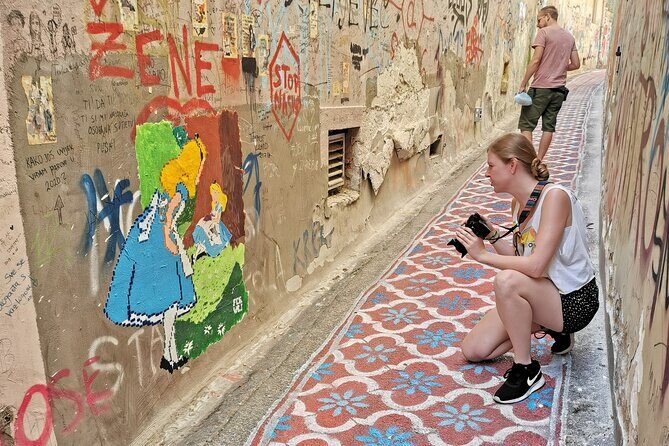
- Street-art range: Tags, paste-ups, letter art, murals, plus current style trends.
- Free admission at stops: Each listed stop has free admission ticket.
Why Zagreb street art feels different with an artist beside you
If you only see street art from the sidewalk, it can feel random. This tour changes that. You’re walking with an active artist who knows the local language of the walls—how pieces are made, how styles evolved, and what’s going on right now.
You’ll also get a sense of how street art earns respect in places like Zagreb. The tour is built around the idea that graffiti and mural work aren’t just decoration. They’re communication—sometimes loud, sometimes letter-perfect, sometimes political, sometimes just personal.
And because it’s private, you won’t spend the whole time squinting at images from a distance. You can ask why a tag looks a certain way, why someone chooses one wall over another, or why letter art shows up where you least expect it.
Other private walking tours in Zagreb


Meeting point, pace, and how the 3-hour layout works
You meet at Trg bana Josipa Jelačića 11, Zagreb. From there, you move through the city on foot for most of the experience, with comfortable air-conditioned transfers between areas when you need them. That matters in Zagreb because even in mild weather, a full walking-only tour can feel long.
The total time is about 3 hours. The stops are short to medium—some are quick checks, others are long enough to actually study the walls. This is the kind of tour where pacing is the point: you get bursts of intensity, then a pause where you can look closely and regroup.
You also end at Kresimir’s Atelier/Studio, with the finish tied to Oznaka za 16 (Meridijankrižanje Vukovarske i Držićeve). Ending at the studio is smart for your day. It gives you closure and a final place to digest what you saw before you head off for food or a museum.
Stop 1: Opatovina Park walls and the art of the close look
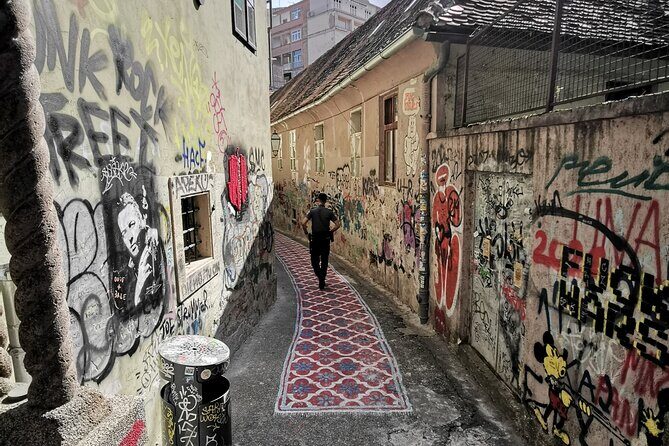
Your first stop is Opatovina Park (about 25 minutes). The highlight here is simple: nice walls to check. That’s exactly what you should do—slow down and scan like you’re reading.
In a park setting, street art often shows layers: older pieces, newer tags, and sometimes different styles sitting side-by-side. With a local artist guide, you’ll learn what to notice first: the lettering habits, the placement choices, and the difference between a quick marker-style tag and something designed to last longer.
What I like about starting here is the mental warm-up. You build your “street art eyes” early, so the rest of the walk feels clearer instead of overwhelming.
A small drawback: because it’s an outdoor park wall stop, you’ll want to dress for whatever the day brings. If you’re sensitive to heat or rain, plan to carry water and a light layer.
Stop 2: Ban Josip Jelačić Square for street art right in the main scene
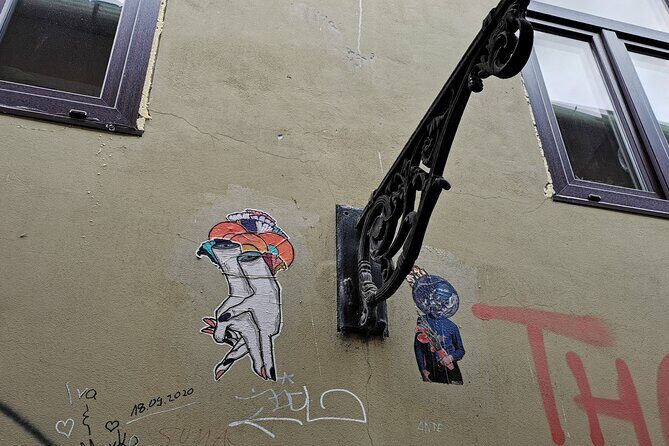
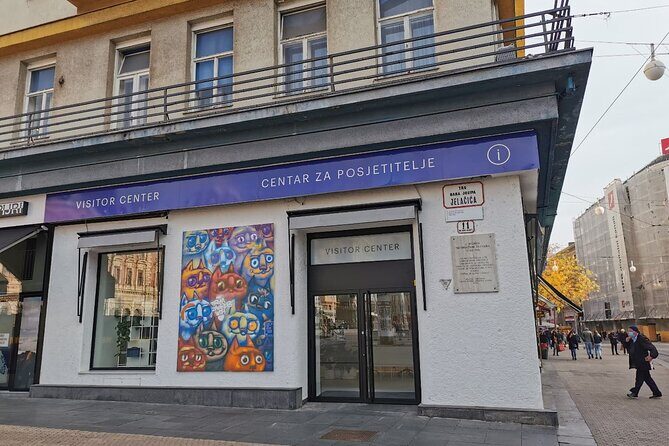
Next you head to Ban Josip Jelacic Square for about 15 minutes. This is a quick check, but it’s a meaningful one because the square is the classic “main place” in Zagreb.
Here, street art can feel extra interesting because it’s not hiding. It’s sitting in a public space people pass constantly. That contrast helps you see the point: street art isn’t always meant to be secret. Sometimes it’s meant to be seen fast, understood quickly, and argued about politely (or not so politely).
Since the stop is only 15 minutes, don’t expect long explanations at every wall. Use it like a warm snap decision: look, then listen, then move on.
Stop 3: Stube Ivana Zakmardija and how stairs shape street art
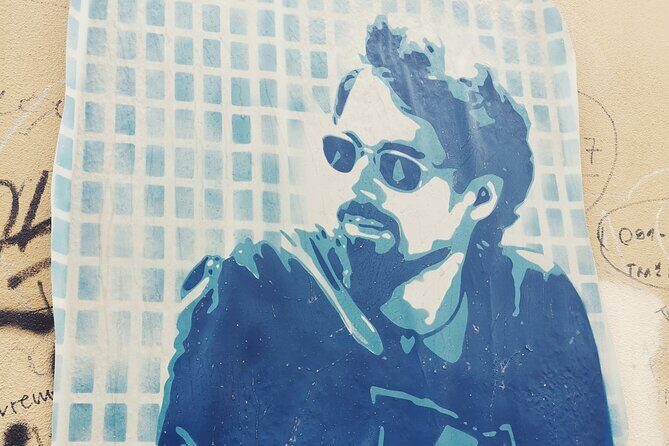
Your third stop is Stube Ivana Zakmardija (about 25 minutes). You’ll spend this time studying a lot more art in one concentrated area. Places like stairways and passage-like spaces tend to shape the style of what gets painted or pasted.
Stairs create natural “frames” for the viewer. You’ll likely notice how art works at different angles—things you can see head-on versus details you catch only when you move a few steps. This is where you start connecting style with space.
If you like photography, this is the kind of stop where you can get shots without feeling like you’re just chasing street art for a thumbnail. But even if you’re not shooting photos, keep an eye on the lettering and the contrast between simple tags and bigger mural strokes.
Other walking tours we've reviewed in Zagreb


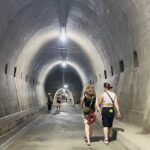

Stop 4: Martićeva ulica murals—your longest street wall session
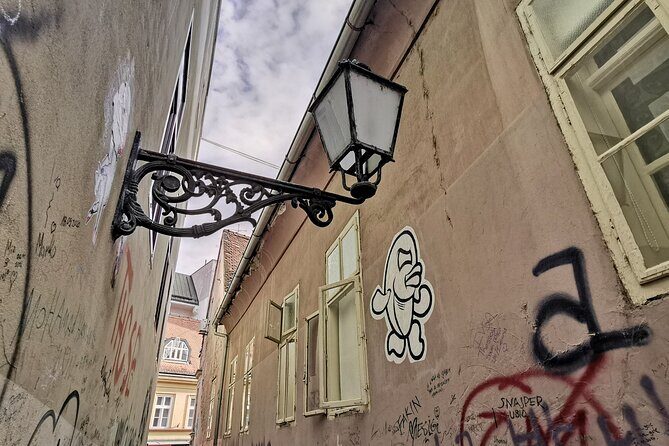
Then it’s Martićeva ulica for about 40 minutes. This is the stop where you slow down. It’s also where the tour shifts from quick spotting to “read the wall like a page.”
A street with a run of murals often lets you compare styles in sequence. You can watch how one artist’s letter structure differs from another, or how color and spacing change from one piece to the next. It’s one thing to hear about graffiti styles; it’s another to see them lined up in a walkable corridor.
The practical upside of 40 minutes: you get time to circle back mentally. You can look again after a guide explains something new. That makes the information actually stick.
If there’s a downside, it’s that this is where you’ll want comfortable shoes most. Forty minutes moving through a mural-heavy area adds up.
Stop 5: Držićeva and the Atelier visit—where street art becomes craft
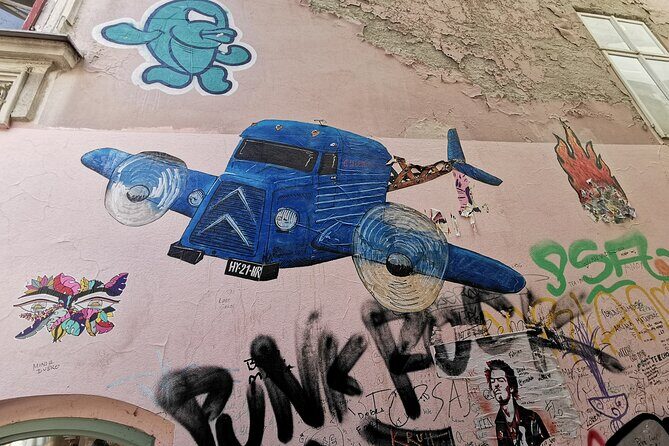
You’ll then reach Držićeva for about 40 minutes, including a visit to the Atelier/Studio. This is one of the most valuable parts of the tour because you get past the street-level “what do you think?” phase and into the maker’s world.
The idea isn’t just that you see the studio. You’re there because the guide can explain process and choices—how street art fits into a living city, not just photos on a feed. It’s also a good moment to ask direct questions, especially if you want to understand the line between tags, paste-ups, letter art, and murals.
Kresimir’s studio hours are listed as Monday to Friday, 10:00 AM–3:00 PM. If your tour day is within those hours, this stop tends to feel like a normal working visit instead of a rushed peek.
Value-wise, this is where the tour justifies its price. Street art walks are common. A real studio stop with an artist is where this one earns its ticket.
Stop 6: Jukićeva ulica and Zagreb’s art connections in motion
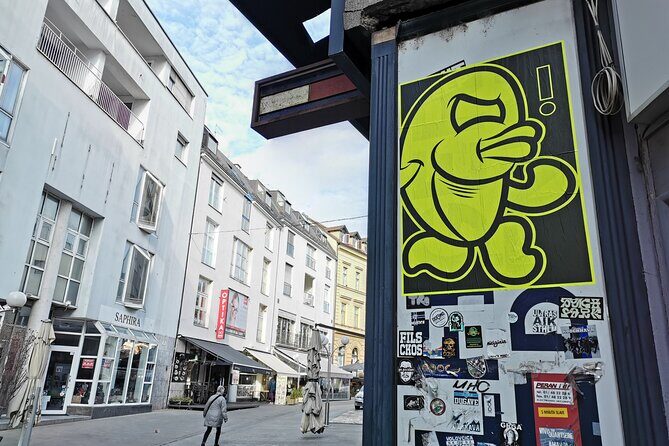
Finally you head to Jukićeva ulica for about 40 minutes. This stop is described as the art center of Zagreb, so it’s a fitting closer. By now you’ve seen the spectrum: tags, letters, murals, and other forms. You’re ready to connect what you saw to the wider scene.
This is where you can step back and think: What does it mean for a city to treat street art as a part of its cultural map? In a closing stop, a good guide helps you connect the dots without turning the walk into a lecture.
Another practical reason this stop works at the end: you’re more likely to be near cafés, food, and onward transport. You can use the final 40 minutes to reset your eyes before you continue your Zagreb day.
What you’ll learn: tags, paste-ups, letter art, murals, and current trends
The tour’s core promise is that you don’t just see street art—you learn how the forms relate. You’ll cover the history of graffiti in a practical way, including origins that move from writing and markings to graffiti recognized as art. Then you’ll trace how styles develop over time.
You’ll also spend time on the different “languages” of street art:
- Wall tags: often fast, signature-like, built for recognition.
- Paste-ups: image-based work with a different rhythm than paint.
- Letter art: where typography becomes the artwork.
- Murals: bigger statements with more planning and time.
What makes this learning useful is that it connects style to intention. Instead of treating every piece as decoration, you’ll start seeing how artists pick color, placement, and scale to communicate.
You’ll also get a feel for current trends. Street art changes fast, and a local artist guide is the best person to explain what’s new versus what’s been around.
One tip from me: keep your eyes on lettering structure and spacing. Even if you’re not a “graffiti person,” letter styles are the easiest way to learn the difference between approaches.
Price and value: is $42.14 per person worth it?
At $42.14 per person, this is a mid-priced experience for Zagreb. The question isn’t only cost—it’s what you’re buying.
You’re paying for:
- A private guide who is also an artist (Kresimir Golubic)
- A 3-hour route with multiple stops
- Air-conditioned transfers, so the walk stays comfortable
- A studio/atelier visit, which is rare for this kind of tour
This matters because studio time usually costs extra on its own. Here, it’s folded into a street walk. Plus, the stops are listed with free admission, so you’re not adding ticket fees each time you arrive at a new wall.
There’s also strong social proof behind the experience: it’s rated 4.9 with 12 reviews, and 100% recommend it. High ratings don’t automatically make something right for you, but here it’s consistent with the tour design: it’s structured, focused, and led by a real creator.
If you want a normal guided tour of old buildings, this won’t match that mood. If you want Zagreb through walls, lettering, and street culture, it’s a solid deal.
Who this tour is best for (and who should think twice)
This is a great fit if you:
- Like street art but want context, not just sightseeing
- Enjoy asking questions and seeing how art is made
- Prefer walking routes that are planned in short, readable chunks
- Want an artist-led experience with a studio stop
It’s less ideal if:
- You want a fast, low-footwork tour with minimal outdoor time
- You dislike weather-dependent plans (it requires good weather)
- You expect purely scenic “photos only” murals with no talk about process or style
Also, it’s listed for moderate physical fitness. That usually means you should wear comfortable shoes and be ready for a few hours of moving, even with transfers.
Should you book this Zagreb street art tour?
I’d book it if you’re curious about how graffiti, tags, paste-ups, and murals connect in one city story. The tour’s mix of six stop locations plus the Atelier/Studio visit makes it feel like more than a walk.
If your goal is to see Zagreb through culture that’s happening now, not just what’s been preserved, this is one of the better ways to do it. And with its 4.9 rating and all-positive recommendations, the odds are good you’ll leave with fresh eyes.
FAQ
FAQ
How long is the Zagreb street art private walking tour?
It lasts about 3 hours.
Where is the tour meeting point?
The start point is Trg bana Josipa Jelačića 11, 10000 Zagreb, Croatia.
Is this a private tour?
Yes. It’s listed as a private tour/activity, with only your group participating.
What language is the tour offered in?
The tour is offered in English.
What stops does the tour include?
It includes stops at Opatovina Park, Ban Josip Jelacic Square, Stube Ivana Zakmardija, Martićeva ulica, Držićeva (Atelier/Studio visit), and Jukićeva ulica.
Is there admission cost at the stops?
All listed stops show admission ticket free.
Does the tour visit the artist’s studio?
Yes. The schedule includes Visiting my Atelier/Studio at Držićeva, and the studio hours are Monday–Friday 10:00 AM–3:00 PM.
What if the weather is bad or I need to cancel?
The experience requires good weather. If it’s canceled due to poor weather, you’ll be offered a different date or a full refund. You can cancel for a full refund up to 24 hours before the experience’s start time.