REVIEW · ZAGREB
Zagreb: Restaurants, Food & Old Town Walking Tour
Book on Viator →Operated by Roundabout Travel · Bookable on Viator
Four hours later, Zagreb tastes like Croatia.
This small-group food-and-history walk strings together the city’s key squares, cathedral views, and hilltop stops, while feeding you classic Croatian dishes and pairing them with wine. You’ll start at Ban Jelačić Square, wind through Gradec and Kaptol landmarks, then finish after a dessert stop that includes sweet wine pairings.
What I like most is how the tour balances tasting and sightseeing. You get multiple restaurant stops (not just one bite here and there), plus a full run of old town landmarks like the Dolac market area, the Stone Gates, and the Strossmayer promenade. And the guide factor matters: people highlight guides like Damjan, Damien, Ivan, and Patrik for mixing city context with food details.
One thing to weigh: it’s not built for strict diets. There’s no gluten-free menu, and it’s not recommended for vegans, so if your needs are very specific, you’ll want to plan carefully before booking.
In This Review
- Key highlights you’ll actually care about
- Why this 4 pm Zagreb food walk is such a smart first plan
- Ban Jelačić Square and European Square: the quick Zagreb orientation
- Dolac Market: why this farmers market is more than a photo stop
- The old town walk that links streets to stories
- Gradec viewpoints: Stone Gate to funicular to Strossmayer promenade
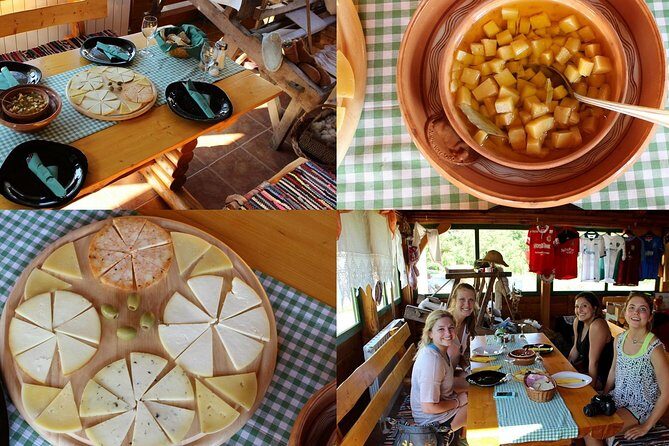
- What you’ll eat and drink across the 4 tasting stops
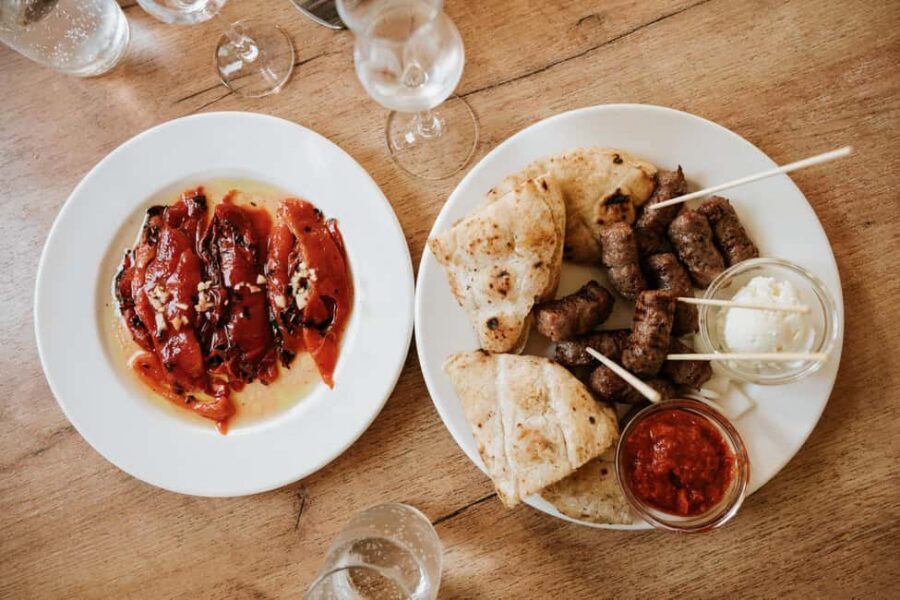
- Stop 1: an Istrian cold appetizer pairing
- Stop 2: warm Zagreb-region appetizers at Dolac
- Stop 3: Zagreb and Zagorje main dish
- Stop 4: dessert surprise with dessert wines
- Rakija and wine notes you should plan for
- Grič and Bloody Bridge: the walk to the final bite
- Practical tips so you get the most from the walk
- Who should book this tour, and who might skip it
- Should you book this Zagreb food and old town walking tour?
- FAQ
- How long is the Zagreb restaurants, food & old town walking tour?
- What’s included in the tour price?
- Where do you meet and where does the tour end?
- How many people are in the group?
- Is there a vegetarian option, and can I do gluten-free or vegan?
- Does the tour run in bad weather?
Key highlights you’ll actually care about
- Small group (max 15) means more conversation and fewer people blocking your view in tight old-town streets.
- Four restaurant tastings spread through the walk, including a dessert finale with dessert wine pairings.
- Wine + rakija included, not just water and a cookie—expect several wine types and 1 rakija (brandy).
- Old town landmarks are part of the route, from Dolac to the cathedral spires and the Bloody Bridge story.
- Hilly walking and stairs are part of the deal, so comfy shoes really matter.
- Multiple guides get called out by name, including Damjan, Damien, Ivan, and Patrik, for making history and food feel connected.
Why this 4 pm Zagreb food walk is such a smart first plan

I like this tour format because it solves two problems at once: where to eat and what you’re actually looking at in old Zagreb. Starting at 4:00 pm also gives you a natural rhythm—afternoon light into evening atmosphere—so the city feels alive while you’re walking between stops.
The price, $107.68 per person, makes more sense when you zoom out from the label. You’re paying for a guided route, multiple restaurant tastings, and wine pairings plus rakija—not just a guided stroll with a single snack stop. It’s a good option when you want a structured plan but still feel free to explore afterward.
Small group size helps too. With up to 15 people, you’re more likely to hear the guide clearly and ask questions while you’re on the move rather than waiting your turn.
Other Upper Town & Old Town walks in Zagreb


Ban Jelačić Square and European Square: the quick Zagreb orientation
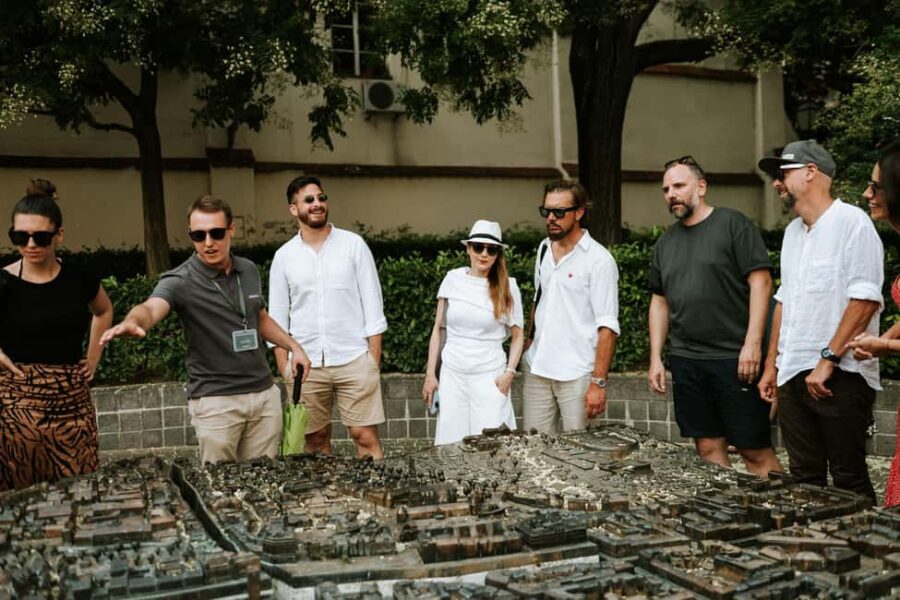
You’ll begin at Trg J. Jelačića (Ban Jelačić Square) in the Gornji Grad – Medveščak area, locally called Jelačić plac. This spot sits below the old city cores of Kaptol and Gradec, so the setting alone explains why Zagreb grew the way it did.
Ban Jelačić Square matters because it’s the heart of the city, where big events happen. It’s also a handy “meeting-of-eras” point: you’re close enough to old-town history to understand the buildings, but it’s still clearly the modern pulse.
A short walk later you reach European Square, where the cathedral watches over the scene and outdoor events pop up. You can also view a miniature model of Zagreb, which is a surprisingly useful trick—suddenly the streets and neighborhoods you’ll walk through later feel less random.
Dolac Market: why this farmers market is more than a photo stop

From European Square, you head toward Dolac Market—a farmers market with deep roots in Zagreb dating back to 1930. The market is one of the city’s most visited spots, and the layout gives you an immediate sense of how locals shop.
Dolac is a mix of open-air stalls and a sheltered section beside it. That matters on a walking tour because you get variety without turning it into a long detour.
Then you move into restaurant stop mode, where the tour shifts from “look around” to “taste what you’re seeing.” At the Dolac area restaurant, you’ll sample warm appetizers from the Zagreb region, which keeps the walk comfortable by giving you a real food reset.
The old town walk that links streets to stories
Between food stops, you’ll get a guided stroll through some of Zagreb’s most recognizable textures. One highlight is Tkalčićeva Street, which many people consider the most lively introduction to everyday Zagreb life—cafés, smaller restaurants, traditional shops, and boutiques all clustered in one place.
After that, you’ll reach the Stone Gates, one of Zagreb’s important monuments. These gates were part of the city’s defense system back in the 13th century, and today they serve a more peaceful role as an oath site where people sometimes light candles to pray. It’s a rare moment on a food tour where the mood shifts from eating to quiet reflection.
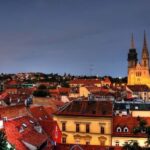
Next up is Zagreb Cathedral, a Roman Catholic church known for its Gothic style and two spires visible from multiple parts of the city. The tour also notes the cathedral treasury, which holds important religious documents and items—so you’re not just looking at architecture; you’re learning why the building is treated as a serious landmark.
From there, you arrive at Saint Mark’s Square, which shares its name with a church and is also the location of the Croatian parliament. Even if you’re not into politics, it’s a useful stop because it shows how Zagreb’s old center works as both a historic and official space.
Gradec viewpoints: Stone Gate to funicular to Strossmayer promenade
As you continue through the old town, you’ll pass another Gradec symbol: a defense tower and one of the remaining bits of the ancient city’s defense system. This is the kind of detail that makes the walking feel more meaningful—your guide ties the streets to why the city was built this way.
Then comes an iconic vertical moment: the tour passes the Uspinjača funicular (stairs). This funicular is described as the first form of public transportation in Zagreb and even in the world, which is exactly the sort of fact that makes an overlooked corner feel worth slowing down for.
From there, you reach Strossmayer promenade, where you can take in panoramic views of Zagreb. This is one of those stops where the tour basically says: stop walking, look up, take your photos, and let the city geography click into place.
Other Zagreb food tours we have reviewed




What you’ll eat and drink across the 4 tasting stops
This tour is built around four restaurant moments, each designed to keep the pacing moving and the food variety noticeable. The stated time blocks for the tasting stops are roughly 30 minutes, 40 minutes, 40 minutes, and 40 minutes at each restaurant stop, which helps you understand why the total experience lands at about 3 to 4 hours once walking time is included.
Stop 1: an Istrian cold appetizer pairing
At the first restaurant (on Ul. Augusta Cesarca 2), you’ll start with a cold appetizer from Istria, along with wine tasting. The tour frames Istra as a culinary region with distinct habits, so the tastings feel like a geography lesson rather than random picks.
Stop 2: warm Zagreb-region appetizers at Dolac
Next, you eat warm items at a restaurant near Dolac 2. This stop focuses on Zagreb-region warm appetizers, with food and drinks that are meant to “fill your belly” and set you up for the walking and stairs ahead.
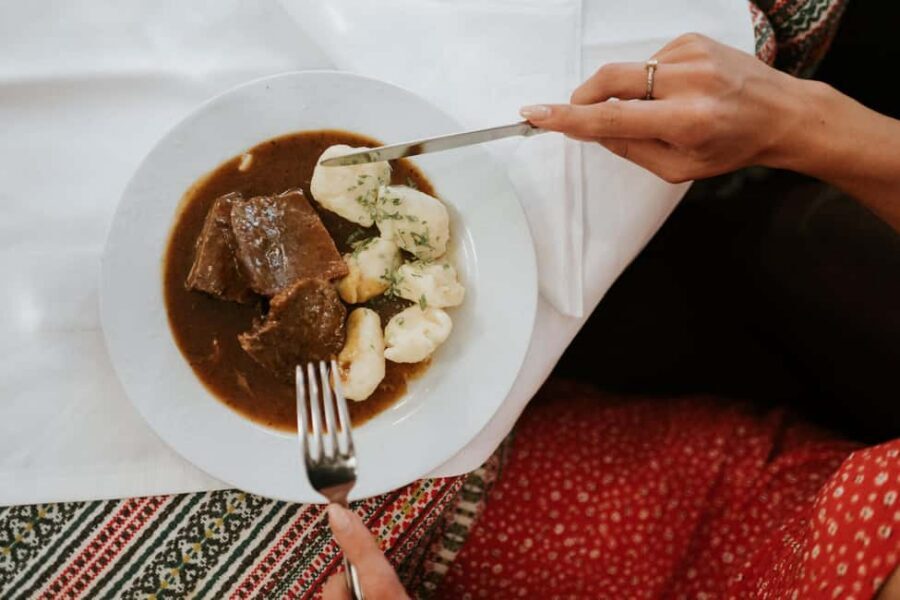
Stop 3: Zagreb and Zagorje main dish
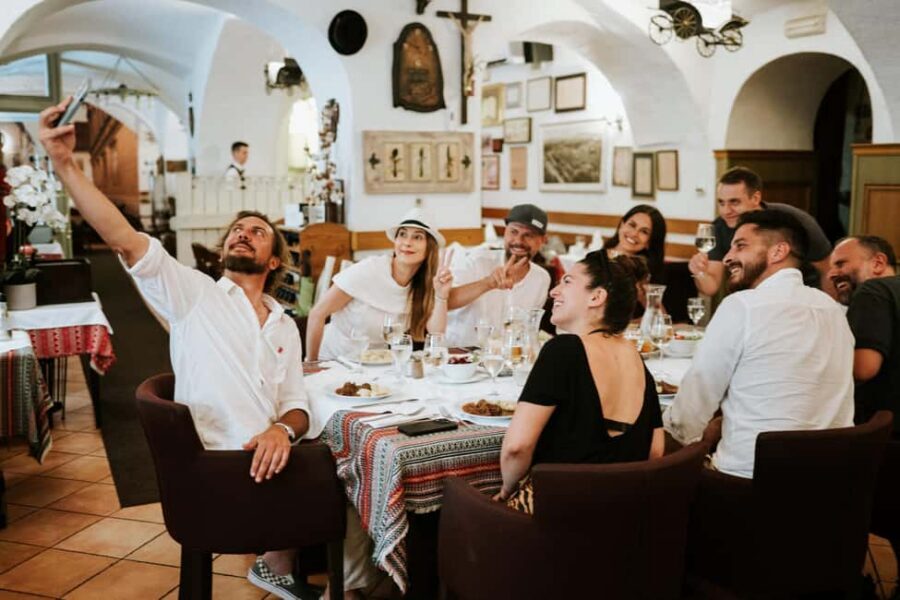
The third restaurant (on Mesnička ul. 6) brings the main dish from the Zagreb and Zagorje regions. You’ll also learn about the local culinary culture as you taste. One practical advantage here: the stop description notes that the restaurant may offer sightseeing-style context through historical replicas and pictures, so you’re not trapped in a single room with only food and no atmosphere.
Stop 4: dessert surprise with dessert wines
The final restaurant (on Skalinska ul. 5) shifts to dessert. You’ll get a regional dessert surprise plus several regional wines used for desserts. Reviews strongly suggest this ending feels like a true finish, not a token dessert.
Rakija and wine notes you should plan for
You’ll also include rakija tasting—the tour lists 1 Croatian rakija (brandy)—and multiple wine sorts. If you don’t drink wine much, do what one reviewer advised: tell your guide at the start so the experience can match your comfort level.
Grič and Bloody Bridge: the walk to the final bite

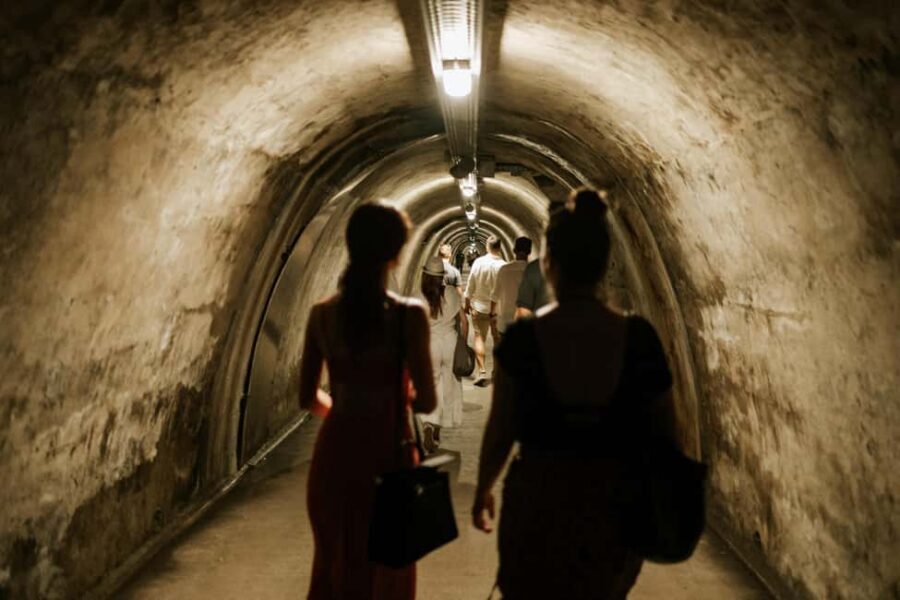
After the third restaurant, you’ll pass Tunnel Grič, a historic structure under the city center. The tour explains it was built during World War 2, and before becoming a pedestrian tunnel it served as a bomb shelter and promenade. It’s a good contrast to the cheerful street sections—you feel the layers of history under your feet.
Then you move toward Bloody Bridge, a street name tied to conflicts between the two early city settlements: Kaptol and Gradec. Even though you’re only walking a small street, the story makes it feel like a battlefield-era passage rather than just a shortcut.
Finally, you reach the last restaurant for that dessert and sweet-wine pairing finish.
Practical tips so you get the most from the walk
A few things can make or break your experience, and they’re worth taking seriously:
Wear comfortable shoes. Multiple people specifically call out cobblestones and lots of stairs, and the route includes hillier sections plus the funicular area near Uspinjača.
Consider your drink and diet preferences up front. The tour includes wine and rakija, and it states there’s no gluten-free menu and it’s not recommended for vegans. If you’re vegetarian, there’s a note that a vegetarian menu is available on request.
If you’re short on time in Zagreb, this is a strong use of it. The route hits a stack of major landmarks—Dolac, Stone Gates, cathedral spires, Saint Mark’s Square, Strossmayer promenade, Tunnel Grič—so you’re not wasting hours trying to stitch together your own route.
One more reality check: on rare occasions, service hiccups happen. There was one reported case of a guide not showing due to a technical booking-system error, and the company issued a full refund afterward. That doesn’t mean it’ll happen to you, but it’s a reminder to keep your eyes on your confirmation details and your meeting location timing.
Who should book this tour, and who might skip it
This is a great match if you want an efficient, guided way to do old town Zagreb while eating well. It’s ideal for first-timers, couples, and solo visitors who want a structured plan that still includes free time after for your own exploring.
It’s also a solid choice if you like wine pairings with food. The tour is built around multiple wine stops, plus dessert wines at the end, so it’s not a light snack-and-sip situation.
You might want to skip if you’re vegan or need gluten-free meals. The tour data is clear about limitations there. You should also be cautious if you hate walking uphill or on uneven streets, because the route is designed as a walking experience with stairs.
Should you book this Zagreb food and old town walking tour?
My take: book it if you want a guided “greatest hits” Zagreb route with actual meals and drink pairings built in. The combination of Dolac Market area tastings, major old-town monuments like the cathedral and Stone Gates, and the viewpoint payoff at Strossmayer promenade makes it a practical use of a half-day.
Don’t book it blindly if dietary restrictions are strict, or if you’re not prepared for hills and stairs. Also, check your start time and meeting point carefully since the tour begins at 4:00 pm and ends at the last restaurant on Ul. Ivana Tkalčića 16 area (inside the old-center dining strip).
If you get those basics right, this tour is one of the easier ways to leave Zagreb knowing where to go next for dinner—because you’ll already have learned the city’s food map.
FAQ
How long is the Zagreb restaurants, food & old town walking tour?
It runs about 3 to 4 hours.
What’s included in the tour price?
You get a professional local guide plus food tastings, wine tasting (several Croatian wine sorts), and rakija tasting (1 Croatian rakija / brandy).
Where do you meet and where does the tour end?
You meet at Trg J. Jelačića 10000, Gornji Grad – Medveščak, Zagreb and end at Ul. Ivana Tkalčića 16, 10000, Zagreb.
How many people are in the group?
The tour has a maximum group size of 15 travelers.
Is there a vegetarian option, and can I do gluten-free or vegan?
Vegetarian menus are available on request. There is no gluten-free menu, and the tour is not recommended for vegans.
Does the tour run in bad weather?
The tour notes it functions in all weather conditions, but the cancellation policy also says poor weather can trigger a different date or a full refund.