REVIEW · ZAGREB
Walking tour of Zagreb
Book on Viator →Operated by pathfinder TOURS · Bookable on Viator
Zagreb makes sense when you walk it. This 2–3 hour route stitches together key sights with a licensed guide who explains the city’s history and daily life, plus a funicular ride to help you climb without turning it into a hike. I especially like the small-group feel, where you can ask questions and get real, practical answers. I also love how the stops are spaced so you’re not just staring at buildings—you’re learning what they meant, and why people still care.
One thing to plan for: access can change. The WWII tunnel and funicular might not operate on certain dates, and the funicular is closed for renovation until March 2026—so check your dates and be flexible about how much of the route you’ll do exactly as listed.
In This Review
- Key Points That Matter Before You Go
- Why This Zagreb Walk Works (2–3 Hours, Real Stops, Real Stories)
- Starting at Zrinjevac Park: Photos, Stories, and an Easy Kickoff
- Bogovićeva Street and Ban Jelačić Square: The City’s Social Core
- Zagreb Cathedral and Dolac Market: Landmarks With Texture, Not Just Views
- Tunel Gric: WWII-Era Space and a Clever Shortcut
- Funicular Ride to Gornji Grad: Short Lift, Big Payoff
- Lotrščak Tower and the Grič Cannon: Old Defense Meets Daily Ritual
- Upper Town Gornji Grad: Panoramas, St. Mark’s, and Zagreb’s Quirks
- Petrini Pyli Gate and Tkalčićeva Street: Finishing With a City You Can Feel
- Price and Value: Why $24.20 Can Be a Smart Move
- Practical Planning: Weather, Shoes, and How to Find the Clock
- Guides Make It: The Humor and Q&A Effect
- Should You Book This Zagreb Walking Tour?
- FAQ
- How long is the Zagreb walking tour?
- How much does the tour cost?
- What language is the tour offered in?
- Where do I meet the guide?
- Where does the tour end?
- Is the funicular ride included?
- Are there any ticket costs for the stops?
- Does the tour include Tunel Gric?
- How many people are in the group?
- Can I cancel and get a refund?
Key Points That Matter Before You Go
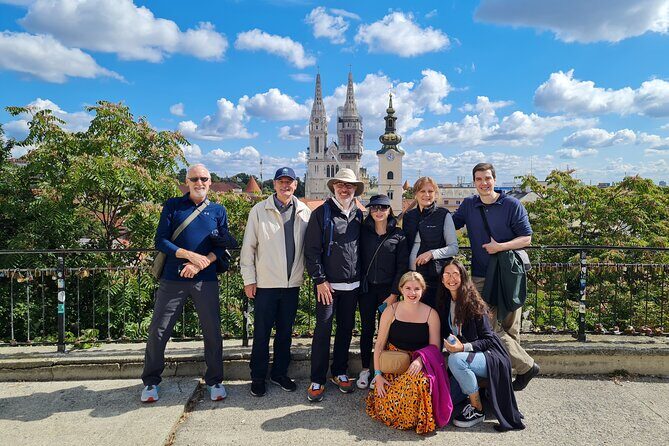
- Small-group size (max 25): easier to ask questions and keep the pace comfortable.
- Guides with sharp local stories: names like Robert, Marko, Marco, Lucia, and Iva come up again and again for their humor and clear explanations.
- Dolac Market for real local texture: it’s Zagreb’s oldest green market, built for seeing, smelling, and tasting the local food vibe.
- Tunel Gric as a WWII-era shortcut: a working-feeling tunnel stop that also saves time in the center.
- Funicular ticket included, if operating: currently affected by a renovation closure until March 2026.
- A fast tour of the Upper Town viewpoints: you’ll reach the Gornji Grad panorama area in time for photos without spending all day.
Why This Zagreb Walk Works (2–3 Hours, Real Stops, Real Stories)
This is a great first-day Zagreb plan because it hits both “Zagreb” faces. You start in the green, open space around Zrinjevac, then you move through the main-square energy, the market streets, and finally into the Upper Town (Gornji Grad) where the views do the talking. In a short window, you get the history-heavy landmarks and the lived-in parts of town: places where locals actually wander, shop, and eat.
The pace is a big reason it works. The tour is timed in chunks, so you can look around, take photos, and still hear the context from your guide. It’s also the kind of format that makes questions feel normal. If you care about what’s worth seeing next, this is the moment to ask.
If you’re price-sensitive, this one also makes sense. At $24.20 per person, you’re paying for a licensed guide and a tight route that saves you effort trying to piece together Zagreb on your own. Many stops are not ticketed separately (at least in the standard flow), so you’re not stacking extra costs while you walk.
Other walking tours we've reviewed in Zagreb


Starting at Zrinjevac Park: Photos, Stories, and an Easy Kickoff
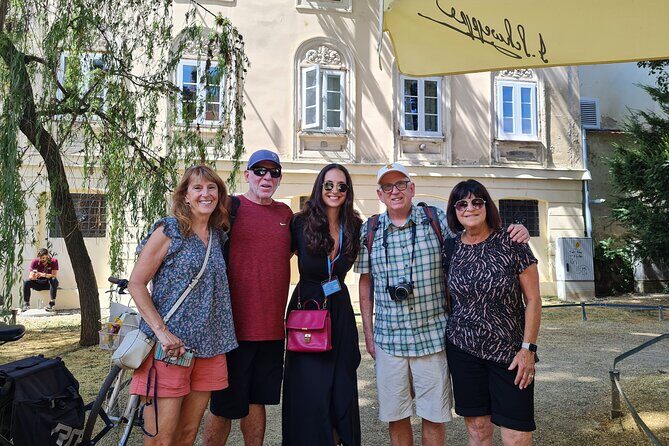
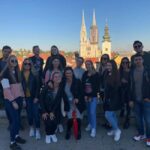
You begin at Zrinjevac 2 near Zrinjevac Park. This spot is a smart start: it gives you open-air breathing room before the walking gets more city-dense. It’s also an easy place to spot your bearings with the park layout, plus it’s a natural photo pause—think selfies and wide shots while the guide sets the stage.
A practical tip from people who’ve done this: don’t rely fully on Google Maps or Apple Maps for the exact meeting point. Many have found it’s clearer to meet by the clock in the park rather than the map pin. If you want the lowest-stress start, arrive 10 minutes early and wait in that central area.
You’ll also get a quick “here’s how Zagreb works” introduction before moving into the denser streets. That helps later when you’re looking up at towers and down at markets.
Bogovićeva Street and Ban Jelačić Square: The City’s Social Core
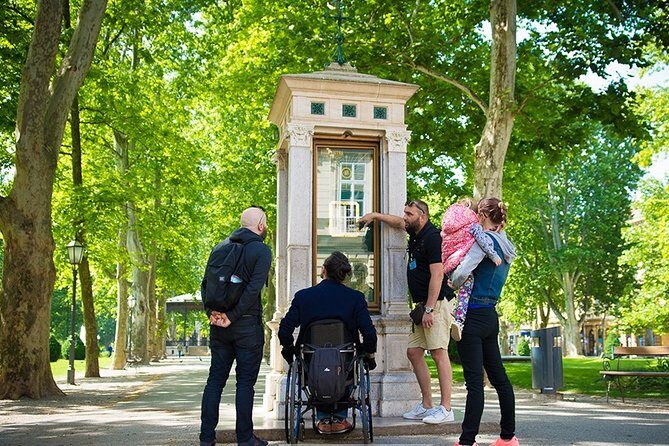
From Zrinjevac you head to Bogovićeva ulica, a street known for bars and restaurants. This stop is short, but it sets an important tone: Zagreb isn’t just old stone and viewpoints. It’s also nightlife-friendly and café-ready, and the guide will connect that feel to how the city developed.
Next comes Ban Josip Jelačić Square, Zagreb’s main meeting point. This is where you feel the city rhythm. It’s not just a photo stop—it’s a useful landmark for understanding where major parts of town relate to each other. When you know this square, you navigate the rest of the day with less guessing.
If you’re traveling solo or you like to know where you’ll be standing later, treat this as your orientation hub. After this, the tour shifts you toward the historic heart.
Zagreb Cathedral and Dolac Market: Landmarks With Texture, Not Just Views
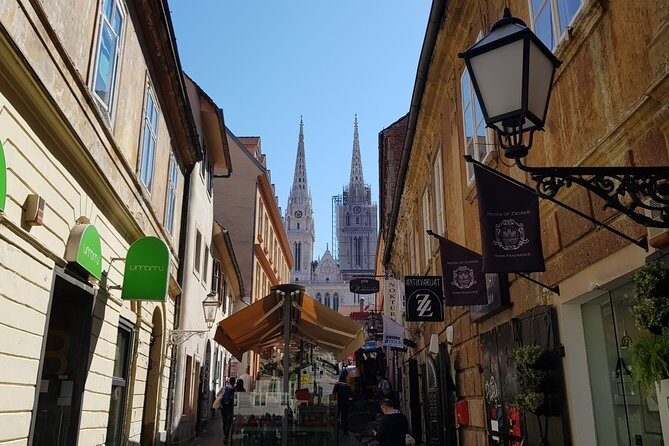
The tour then moves to Zagreb Cathedral, a monumental historic landmark and one of the city’s best-known symbols. The key value here is interpretation. A guide can explain why this cathedral matters in the bigger story of Zagreb—how places become identity markers.
One caution: due to the 2020 earthquake, parts of the cathedral area may involve construction materials and limited access. That means you might not be able to go inside, and your photos could have scaffolding or barriers in the frame. The good news is you’ll still understand the site, even if the setting isn’t perfectly clean.
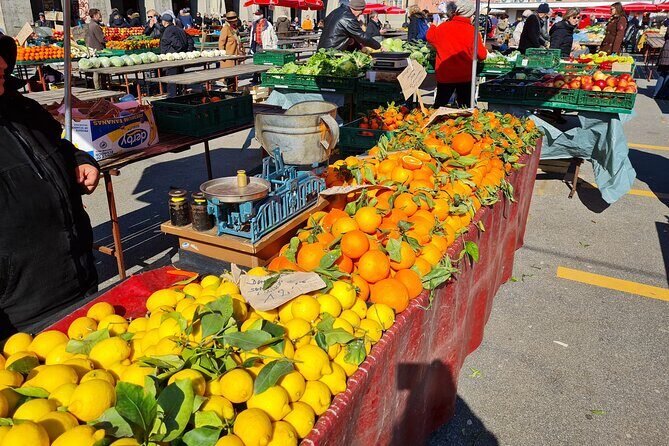
After that, you hit Dolac Market, Zagreb’s oldest green market. This stop is one of my favorite types of travel moments because it’s multi-sensory. You’re not just seeing a building—you’re standing in the flow of food culture. The guide talks about local products and what people buy, which helps you later when you spot markets on your own.
Even if you don’t plan to eat right there, Dolac is worth it for learning the local food vocabulary and for understanding what “market culture” looks like in Zagreb.
Tunel Gric: WWII-Era Space and a Clever Shortcut
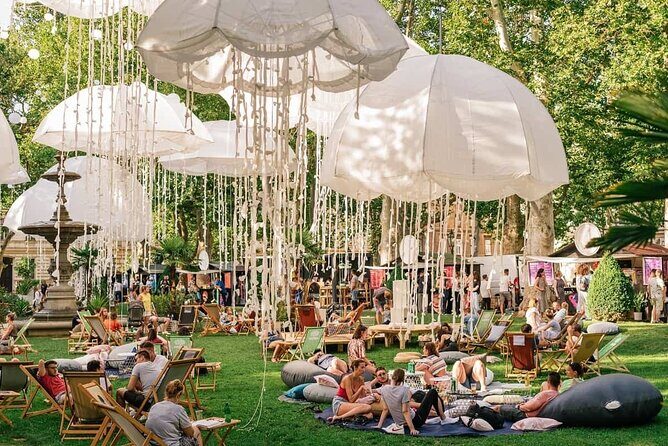
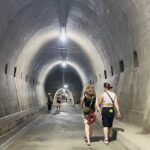
Next is Tunel Gric, a WWII tunnel under Grič Hill. This stop works on two levels. First, it’s history in a physical space, not a museum panel. Second, it also does practical city math: it’s used today as a shortcut through the central area.
You’ll spend a short amount of time there, but it’s long enough to understand what it was for and how it functions in the city now. If you’re walking multiple days, this kind of stop also helps you mentally map shortcuts and walking routes.
Again, note the tour operator warns that the tunnel might not operate on certain dates. If it’s closed when you go, don’t be surprised if the day feels slightly different. The overall route is still designed to keep you moving through the core sights.



Funicular Ride to Gornji Grad: Short Lift, Big Payoff
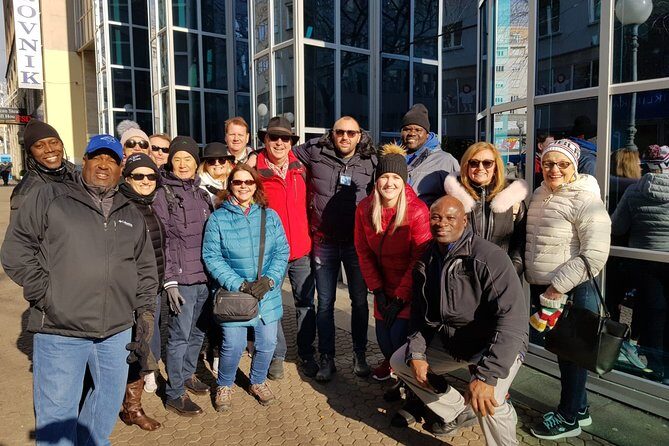
This tour includes a Zagreb Funicular Railway ticket when it’s operating. The payoff is obvious: it’s the most efficient way to reach the historic Upper Town without exhausting yourself. The itinerary also calls out that it’s the shortest funicular ride in the world, which is a fun detail to notice while you’re on it.
But the big reality check: the funicular is closed for renovation until March 2026. If you’re traveling after this closure, expect that your tour experience may differ from the standard plan. The good part is the tour is built around the Upper Town anyway, so your guide can still help you get the core viewpoints and sights.
Even with the renovation factor, the Upper Town climb is still the anchor of this walking tour. Once you’re up there, everything starts to make more sense: why the city built upward, and how the skyline became Zagreb’s signature.
Lotrščak Tower and the Grič Cannon: Old Defense Meets Daily Ritual
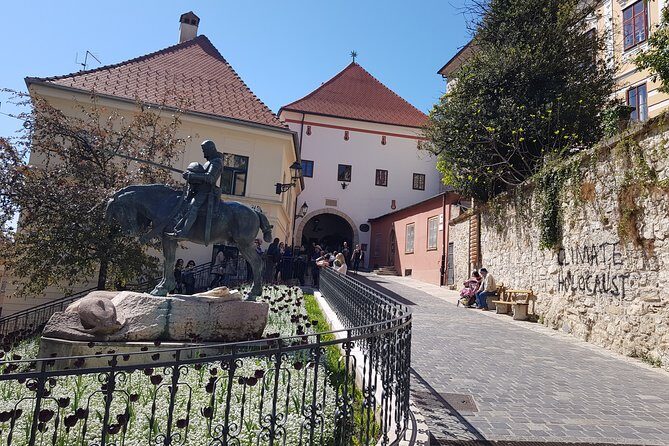
After the funicular, you reach Lotrščak Tower and the area around it. This is a historic guard tower with the famous Grič cannon. One of the neat things people often pick up is the idea that the cannon fires daily at noon. Even if you don’t catch the moment, it’s a memorable detail that connects military architecture to present-day rhythm.
This stop is short, but it’s positioned perfectly. It’s a moment to pause, look out, and let your guide tie together medieval Zagreb with later history. You’re also getting a final push of “wow factor” before you fully enter the Upper Town viewpoint zone.
Upper Town Gornji Grad: Panoramas, St. Mark’s, and Zagreb’s Quirks
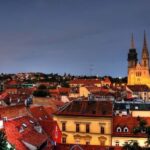
Then it’s into Gornji Grad, the Upper Town. This is where the walking tour earns its keep. You get a panoramic view, time for photos, and a guided loop through the heart of medieval Zagreb.
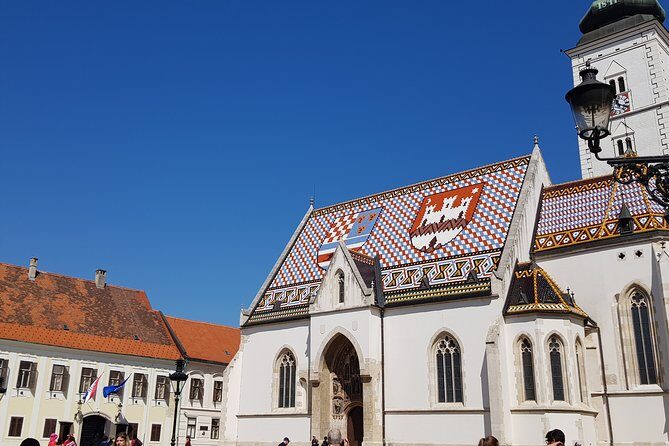
You’ll likely look toward (or learn about) St. Mark’s Church, the Museum of Broken Relationships, and key government buildings like the Croatian Government Building and the Croatian Parliament. Even if you don’t go inside museums, being shown where they sit helps you choose what to do later.
The charm of this zone is that it feels designed for lingering—tight streets, strong visual landmarks, and an atmosphere that’s different from the lower parts of town. If you’ve only got a couple of hours to orient yourself, this viewpoint time is the part you’ll remember later when you’re planning where to spend more time.
Petrini Pyli Gate and Tkalčićeva Street: Finishing With a City You Can Feel
The tour then slips through Petrini Pyli, a medieval city gate area. This kind of stop is small but meaningful. It gives you the “cities have walls and entries” context, and it helps you understand why Zagreb’s old center feels contained even when it’s right in the middle of modern life.
After that, you descend to Tkalčićeva Street, Zagreb’s famous pedestrian zone. It’s packed with bars and restaurants, and it often feels like there’s always something going on. This is a great finish because it puts you where you can immediately pivot into the rest of your day—coffee, a casual meal, or just people-watching.
The tour ends on Zagreb’s main square area close to the starting zone, so you’re not stuck miles away from where you began.
Price and Value: Why $24.20 Can Be a Smart Move
Let’s talk value in plain terms.
You’re paying for:
- a licensed guide (the big cost driver),
- a compact route that hits multiple major landmarks in a short time,
- and a funicular ticket when operating.
At $24.20 per person, that’s a solid deal compared to paying separately for transportation and then still trying to figure out what matters. Plus, you don’t need to have any special interests. The guide covers history and culture, but the stops also match how people actually enjoy Zagreb today.
If you’re the type who likes a structured start—especially on your first day—this is one of those purchases that tends to pay back fast. You’ll leave with a mental map and a shortlist of what to revisit.
The only real “value risk” is if the funicular and tunnels aren’t operating on your dates and the day feels slightly pared back. Still, the core Upper Town viewpoint is the soul of this walk, and the route remains designed to hit it.
Practical Planning: Weather, Shoes, and How to Find the Clock
This is a walking tour, and the operator notes it requires good weather. If you’re traveling in rainy season, have a backup plan for alternate activities on wet days. Wear shoes you’re comfortable in for city walking. Also, if there are construction zones (cathedral area is the one people often note), you’ll want to keep expectations realistic for photos.
If you get cold easily, dress for it. One common piece of advice is to bring warm layers, since you’ll be outside for the whole 2–3 hour loop.
And for your start: arrive a little early and look for the meeting spot by Zrinjevac Park’s clock area. It’s a small detail, but it can save you stress at the beginning.
Guides Make It: The Humor and Q&A Effect
What really pushes this tour above the typical “stand here, take a picture” model is the human factor. People consistently highlight that the guides are funny, engaging, and able to explain history with clear links to everyday life.
Names that come up in the guide mix include Robert and Marko/Marco, plus Lucia and Iva. The common theme is an easy conversation style—so if you ask about Zagreb’s politics, military history, or why certain streets feel the way they do, you’re not stuck with generic answers. Some guides also share restaurant recommendations, which can be a handy shortcut when you’re hungry and deciding on the spot.
Should You Book This Zagreb Walking Tour?
Yes, if you want a fast, guided orientation that covers Zagreb’s main landmarks plus the feel of the city. This is especially worth it early in your trip. You’ll learn how the Lower Town, market area, and Upper Town connect, and you’ll get a foundation for what to explore next.
Be cautious if your trip date falls during planned closures or if you strongly want the funicular ride exactly as listed. The funicular is closed for renovation until March 2026, and the WWII tunnel may also be limited on certain days. If you can be flexible, you’ll still get a worthwhile walk.
FAQ
How long is the Zagreb walking tour?
It runs about 2 to 3 hours.
How much does the tour cost?
The price is $24.20 per person.
What language is the tour offered in?
The tour is offered in English.
Where do I meet the guide?
The start point is Zrinjevac 2, 10000 Zagreb, Croatia.
Where does the tour end?
The tour ends at the Ban Josip Jelačić statue area on Zagreb’s main square close to the starting point.
Is the funicular ride included?
A ticket for the funicular ride is included if it’s operating.
Are there any ticket costs for the stops?
The itinerary lists the stops with admission tickets free for the activities included in the walk.
Does the tour include Tunel Gric?
Yes, Tunel Gric is part of the route, but the tunnel may not operate on certain dates.
How many people are in the group?
The group size is capped at a maximum of 25 travelers.
Can I cancel and get a refund?
Yes—free cancellation is available up to 24 hours in advance for a full refund. If it’s canceled due to poor weather, you’ll be offered a different date or a full refund.
If you tell me your travel month and how much you care about cathedral interiors versus viewpoints, I can help you decide whether this is the best first-day move or if you should pair it with another Zagreb plan.