REVIEW · ZAGREB
Zagreb Small Group Guided Walking Tour with WW2 Tunnels
Book on Viator →Operated by Petros d.o.o · Bookable on Viator
Zagreb hides its WWII story underground. You get that plus the big-student-of-the-city stuff: medieval squares, a jaw-dropping cathedral, food stops, and the WWII Gric Tunnel—all on foot with a funicular ride when it’s running.
What I like most is the way the walk gives you context fast, not just stop-and-pose sightseeing. The tour is led by licensed locals—people like Petra, Tom, Maya, and others—so you’re hearing what daily life and history feel like in Zagreb.
One thing to plan around: the tunnel can be closed for events, and the funicular is closed for renovation until March 2026. If you dislike stairs, this matters.
In This Review
- Key highlights worth your attention
- Meeting at Zrinjevac: where the tour starts and your feet warm up
- Jelachic Square and Zagreb’s name: the center of local life
- Zagreb Cathedral and neo-Gothic impact: what to notice while you’re staring up
- Dolac Market and Tkalčićeva Street: food culture in real life
- Gric Tunnel WWII stop: history you can’t fake
- Funicular ride reality check and the stairs factor
- Lotrščak Tower and the cannon at noon
- Upper Town (Gornji Grad / Gradec): views, politics, and St Mark’s roof
- Petrini pyli (Stone Gate) and ending back at the main square
- Price and value: why $24.20 can make sense here
- Who this Zagreb walk suits best (and who might want a backup plan)
- Should you book this Zagreb small-group walk with WWII tunnels?
- FAQ
- How long is the Zagreb small-group guided walking tour?
- Is the tour offered in English?
- How big is the group?
- What’s included besides the guided walk?
- What if the WWII Gric Tunnel is closed during my visit?
- Is the funicular ride guaranteed right now?
- Is Dolac Market always visited?
- Can I cancel for free if my plans change?
Key highlights worth your attention
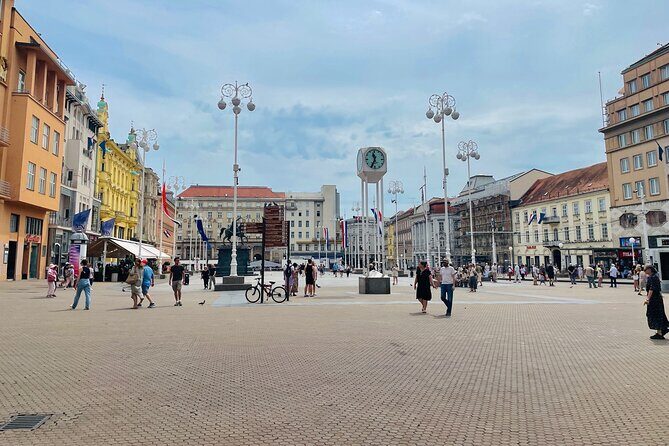
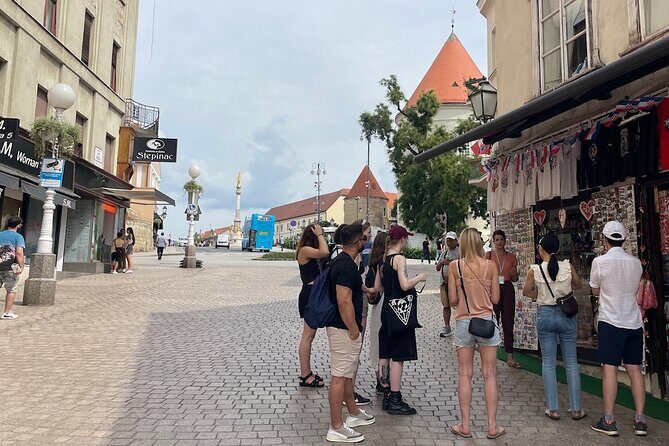
- Max 16 people so questions don’t get swallowed by the crowd
- WWII Gric Tunnel stop, with a note that access can change
- Lotrščak cannon at noon tied to the tower visit
- Upper Town viewpoints from Strossmayer promenade and sights around Gradec
- Stone Gate (Petrini pyli) with a small chapel and Our Lady image
Meeting at Zrinjevac: where the tour starts and your feet warm up
You begin at Zrinjevac Park, right in front of the Meteorological station. There’s a small display that shows temperature and barometric pressure on the park’s north side, which is a nice little “this is a living city” touch instead of only postcard landmarks.
From there, your guide sets the tone with a quick, clear introduction to Zagreb’s story starting back in medieval times. It’s not a lecture. It’s more like getting the map in your head first—so later stops make sense, instead of feeling like random buildings.
Practical note: this is a walking tour, about 2 hours 30 minutes. With the way the stops are paced, you’ll want comfortable shoes and an eye on the weather. Rain turns “pretty stroll” into “soaked stroll,” fast.
Other WW2 Tunnels tours we have reviewed in Zagreb

Jelachic Square and Zagreb’s name: the center of local life
Next is Ban Jelačić Square, the main meeting point for locals. The square works as a natural anchor for the tour, because it’s where the city’s energy funnels in and out.
This stop isn’t just about location. Your guide explains how Zagreb got its name, tying language and local identity to the physical place you’re standing in. It’s a small story, but it’s exactly the kind that makes a city feel personal.
If you like city-center orientation, this is where you get it. When you later walk toward the cathedral and toward the Upper Town, you’ll understand the “why” behind the route.
Zagreb Cathedral and neo-Gothic impact: what to notice while you’re staring up
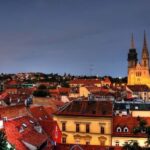
At the Cathedral of Zagreb, you’ll see a monumental neo-Gothic building that’s hard to ignore. People tend to notice the size first. Then you start seeing the details: how it dominates the surrounding space and how the style signals the eras that shaped the city.
Your guide uses this stop to connect architecture to history and identity, so it’s not only photos. It’s also learning what kind of place Zagreb was becoming when that church was taking shape.
Tip: take a minute here even if you’re tempted to rush onward. This is one of the best “look up and slow down” moments of the tour.
Dolac Market and Tkalčićeva Street: food culture in real life
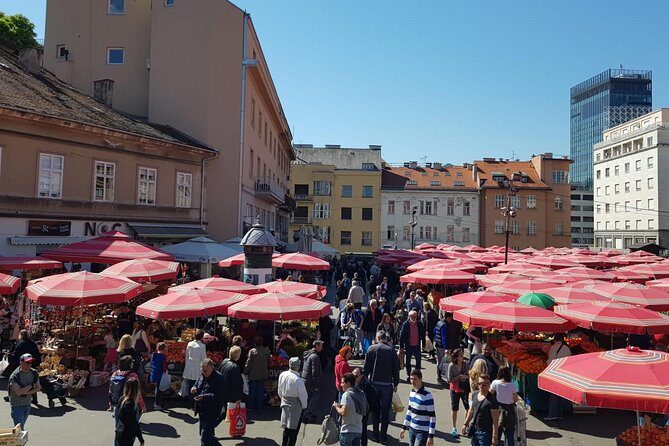
Then you head to Dolac Market, described as the largest farmers market in Croatia. This is where the tour shifts from monuments to everyday culture. You’ll hear about local cuisine and you’ll spot the statue to Kumica, which adds a human scale to the market scene.
One big scheduling detail: Dolac Market is closed for afternoon tours. If your tour falls later in the day, you may not see the market in action the way you expect, or the stop may be adjusted around closure timing. Plan around that and don’t assume it’s open every time.
Afterward, you walk to Tkalčićeva Street, often known as the bar street. This is a good stop for understanding Croatian coffee culture and the laid-back philosophy around lingering. It’s not a nightlife tour, and you’re not stuck inside bars. It’s more about learning the rhythm of the street.
If you’re traveling in colder or wet weather: this stretch can feel long if you’re soaked, but it’s also where the city feels most lived-in.
Gric Tunnel WWII stop: history you can’t fake
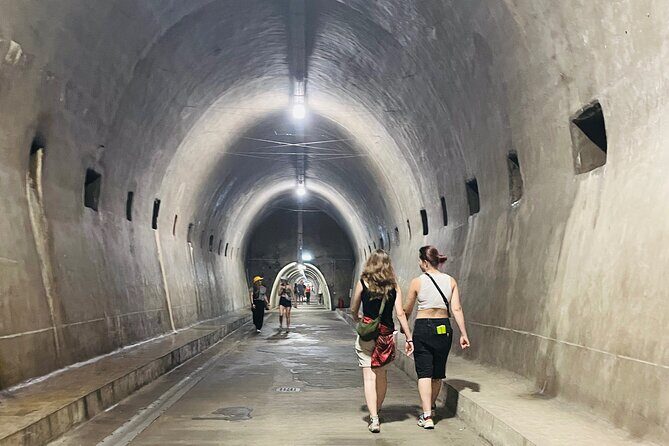
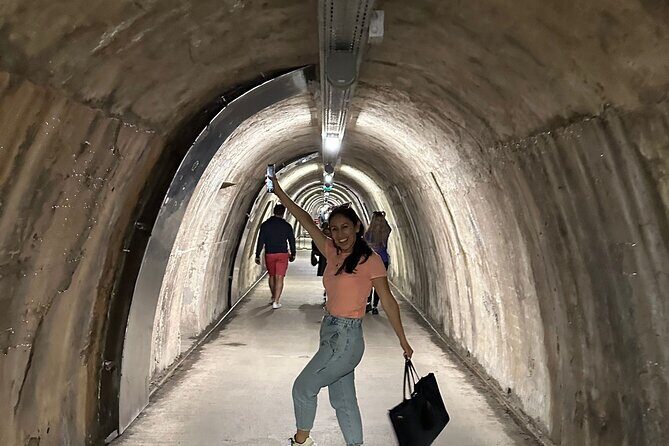
This is the big storyline shift: you visit Tunel Gric, built during World War II. Going underground changes everything. Even if you’ve read about the war before, the tunnel makes the history physical.
Do know this: the tunnel can occasionally be closed to visitors because of events like exhibitions or theatre shows. When that happens, you won’t be able to visit it.
That’s the main drawback of this otherwise strong stop. Still, the rest of the route is designed to give you the city context, so you’re not left with nothing but “sorry, closed.”
What I’d do: if the tunnel is the reason you booked, check your day’s timing and stay flexible. And bring a layer, because tunnels are usually cooler than street level.
Other walking tours we've reviewed in Zagreb


Funicular ride reality check and the stairs factor
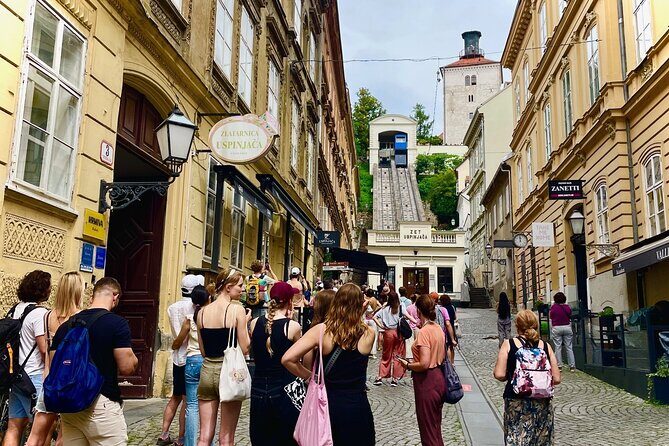
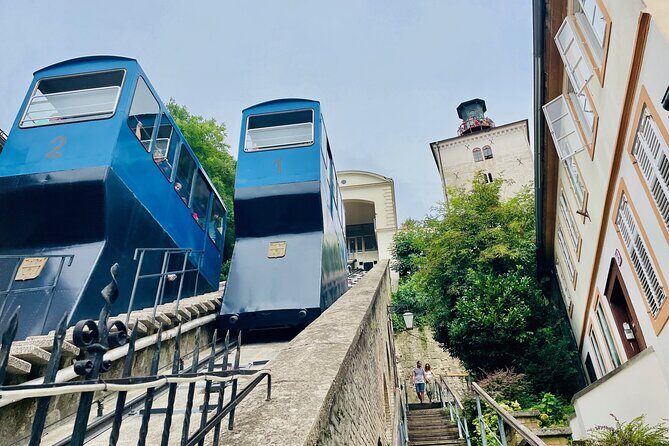
The tour includes a ride on the Zagreb funicular—often described as the shortest funicular in the world and the oldest public transportation in the city, serving for almost 135 years. On paper, it’s a fun, quick break in the walking.
But here’s the current situation: the funicular is closed due to renovation until March 2026. One review also flags that during renovations, you should be ready to walk a lot of stairs.
So how should you plan?
- If your trip is before March 2026, expect more walking effort than you might think.
- Wear shoes with grip. Old stone + rain + stairs is not a combo you want to test.
The upside: even without the funicular, this is still a rewarding route because the Upper Town viewpoints make the climb feel worth it.
Lotrščak Tower and the cannon at noon
Another highlight is Lotrščak Tower, where you’ll see the Grič cannon that fires each day at noon. Even if you’re not big on history, it’s a memorable moment because it’s part of daily city tradition.
This stop is short, but it lands. You’ll feel the “Zagreb has habits” vibe. It’s also a good reminder that some of the most famous sights aren’t static museums. They’re living rituals.
Timing note: if your tour starts later or moves slowly, you might miss the exact noon moment. Your guide can’t control everything, but it’s still worth arriving with a little time buffer.
Upper Town (Gornji Grad / Gradec): views, politics, and St Mark’s roof
Now you’re in Upper Town (Gornji Grad), specifically Gradec, one of the medieval settlements that formed Zagreb. This is where the city turns scenic and symbolic at the same time.
You’ll walk the Strossmayer promenade, often the go-to spot for panoramic views over Zagreb’s rooftops. It’s also where you can appreciate why locals care about their city geography.
On this stretch, you’ll also see:
- The Museum of Broken Relationships area (you’ll view it from outside)
- The seats of Croatian Parliament and Government
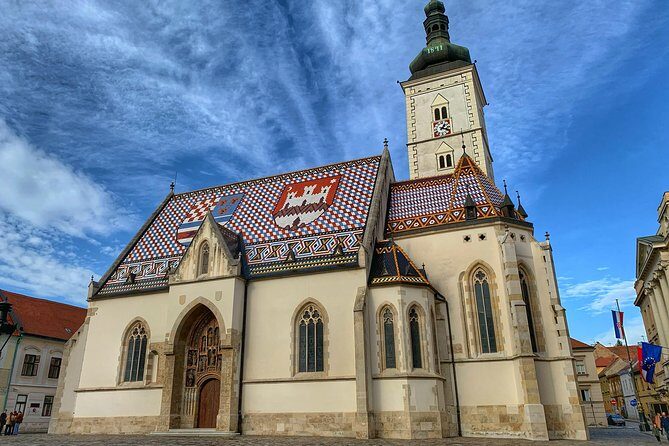
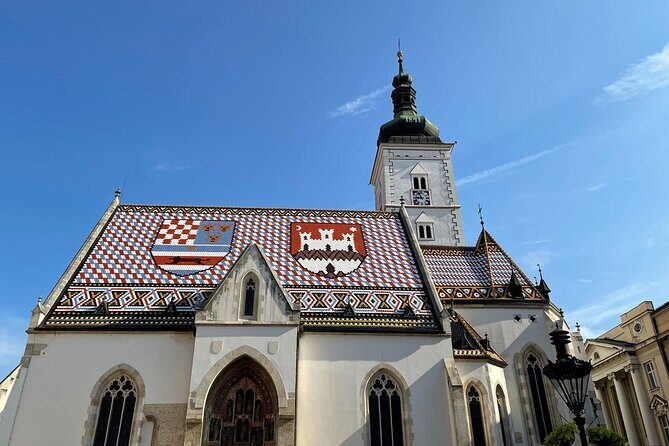
- St Mark’s Church, famous for its colorful roof
This cluster is valuable because it connects culture, civic life, and visual identity in a single walk. You don’t need a separate museum day to understand Zagreb’s character.
If you like photos, this is your zone. If you like history, this is also your zone. Either way, you’ll get your money’s worth here.
Petrini pyli (Stone Gate) and ending back at the main square
The tour winds down at Petrini pyli, the Stone Gate. This is the only medieval city gate still standing in its original form, and it’s a great “last chapter” stop because it’s compact but meaningful.
Inside the gate area, there’s a small chapel housing a picture of Our Lady, the patron saint of Zagreb. It’s not a long stop, but it leaves you with a final piece of city devotion and symbolism.
Then you finish back at Ban Jelačić Square, where there’s always movement and you can easily continue your day on your own. It’s also a good location to grab food, since you’re back in the center.
Price and value: why $24.20 can make sense here
At $24.20 per person for about 2.5 hours, this tour is priced like a serious “first day in Zagreb” product. The value is the combination:
- a licensed local guide
- a tight loop through major sights
- the big narrative anchor of the WWII Gric Tunnel
- plus the funicular ride when available
If you’re the type who hates guessing what to see, paying for a guided orientation often saves you time and energy. Zagreb is compact enough that walking makes sense, but the stories you hear about names, architecture, and local customs are what you’re really buying.
The main value tradeoff is the fixed nature of the tunnel and funicular stops. If the funicular is closed on your date, you’re paying the same price but doing more walking. If the tunnel is closed, the main signature element changes.
So I’d treat this tour as a strong starting point, but not as a guarantee of every single attraction being open.
Who this Zagreb walk suits best (and who might want a backup plan)
This tour fits you if:
- You want a fast orientation to Zagreb in one go
- You enjoy WWII context without feeling like you’re stuck underground the whole time
- You like asking questions and getting specific local answers in a group limited to 16
It may be less ideal if:
- You’re traveling with mobility limits and don’t want stairs (especially if the funicular is closed)
- The tunnel is the only thing you care about, and you’re unwilling to accept that events can affect access
One more practical point: many people find this a great first-evening or first-day option because it helps you plan the rest of your trip after you’ve seen the layout.
Should you book this Zagreb small-group walk with WWII tunnels?
I think you should book it if you want a confident, local-led intro to Zagreb that covers both top sights and the WWII thread. The small group size, the repeated nods to guides like Petra and Maya, and the combination of tunnel + tower + Upper Town sights make this a high-impact tour for the time.
I’d pause and plan carefully if you’re traveling during the funicular closure window or if your heart is set on entering the tunnel no matter what. In those cases, wear good shoes, carry a light layer, and keep expectations flexible. Zagreb rewards that mindset.
FAQ
How long is the Zagreb small-group guided walking tour?
It runs for about 2 hours 30 minutes.
Is the tour offered in English?
Yes, English is listed as an offered language.
How big is the group?
The tour is limited to a maximum of 16 travelers.
What’s included besides the guided walk?
A ride on the city funicular is included in the price, and your tour uses a mobile ticket. A licensed local guide is also included.
What if the WWII Gric Tunnel is closed during my visit?
The tunnel may be closed if there’s an event in it, like an exhibition or theatre show. If it’s closed, it won’t be possible to visit the tunnel.
Is the funicular ride guaranteed right now?
The funicular is closed due to renovation until March 2026, so you should expect the ride may not be available during that period.
Is Dolac Market always visited?
Dolac Market is closed for afternoon tours and on public holidays, so timing matters.
Can I cancel for free if my plans change?
Yes. You can cancel up to 24 hours in advance for a full refund. If the tour is canceled due to poor weather, you’ll be offered a different date or a full refund.