REVIEW · ZAGREB
Exclusive old Zagreb walking tour
Book on GetYourGuide →Operated by Domagoj Tours · Bookable on GetYourGuide
Zagreb clicks fast on a short walk. This exclusive old Zagreb route strings together the city’s major historic zones from King Tomislav Square to Flower Square, with a small-group feel that keeps the pace human and the questions easy.
I really like how the tour turns architecture into a story you can track step by step, from Kaptol and Zagreb Cathedral to Gradec on the Medvednica slope. You’ll also get standout night-photo stops near Lotršćak. One thing to keep in mind: at 90 minutes, you’re moving on foot, so it’s best for seeing highlights and getting oriented, not for slow museum time inside every stop.
In This Review
- Key things I’d mark on your map before you go
- Where this route makes the most sense: King Tomislav to Ban Jelačić
- Zagreb Cathedral and Kaptol: learning the city’s first chapters
- Dolac and Opatovina open-air market: the city in daily-use form
- Gradec on Medvednica: why Zagreb split and how it connected
- Old town Zagreb and St Mark’s Square: civic power meets church stones
- Lookout Gradec, Strossmayer Walk, and the Lotršćak night-photo moment
- Ilica Street, the Zagreb Funicular line, and Flower Square at night
- Price and value: is $35 worth 90 minutes in Zagreb?
- Who should book this evening Old Zagreb tour
- A quick decision guide: should you book
- FAQ
- How long is the Exclusive old Zagreb walking tour?
- Where does the tour meet?
- What languages are available?
- Is the tour wheelchair accessible?
- How much does it cost?
- Can I cancel for a full refund?
- Is reserve & pay later available?
Key things I’d mark on your map before you go
- King Tomislav Square evening start: easier way to learn the layout without fighting daytime crowds.
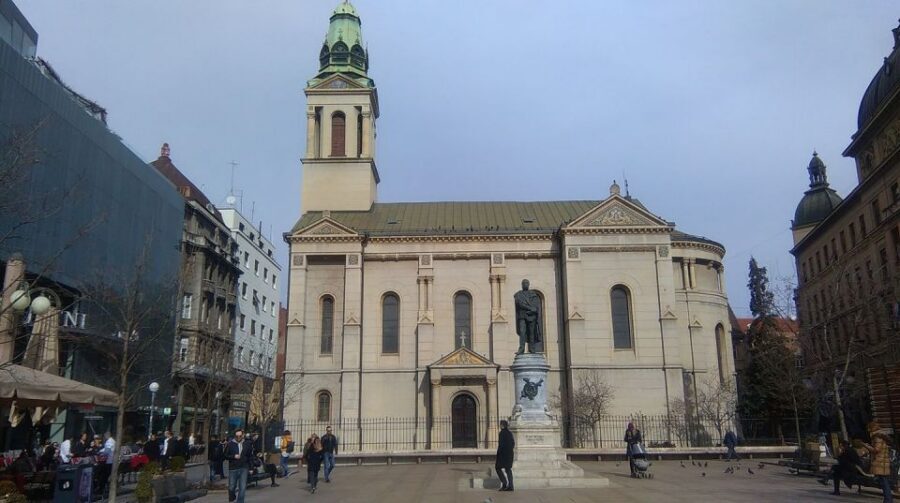
- Kaptol + Zagreb Cathedral: you’ll understand why this area matters in Zagreb’s origin story.
- Dolac and Opatovina market zone: everyday Zagreb context, not just postcard views.
- Gradec and Kamenita Vrata: the twin-city vibe explained, plus one of the best-preserved old monuments.
- St Mark’s Square and the Museum of Broken Relationships area: major civic sights and modern cultural counterpoints in one loop.
- Lotršćak viewpoint at night: built-in photo time before you follow the funicular line toward Ilica Street and Flower Square.
Where this route makes the most sense: King Tomislav to Ban Jelačić
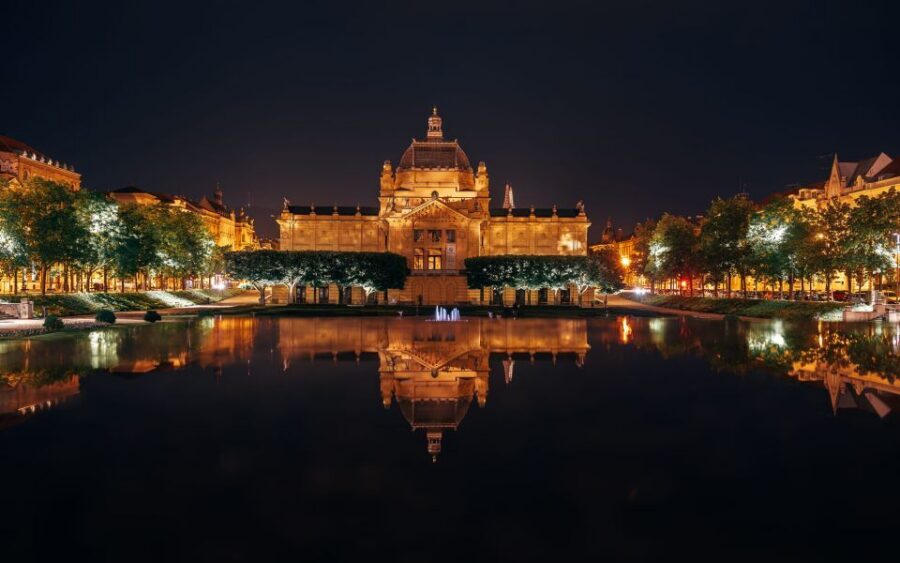
I like tours that start where the city naturally funnels people, and King Tomislav Square does exactly that. From there, you’ll work your way toward Nikola Zrinjski Square and then into Ban Jelačić main square. It’s a good “spine” for first-time orientation, because those squares sit at the center of daily movement in Zagreb.
Starting in the evening also changes the tone. You get the chance to read façades and church exteriors with nicer light, and the walking feels more like a stroll than a timed checklist. If you’re the type who wants to understand how Zagreb is organized before you pick restaurants, this opening stretch helps you make sense of the rest of your trip.
Other Upper Town & Old Town walks in Zagreb


Zagreb Cathedral and Kaptol: learning the city’s first chapters
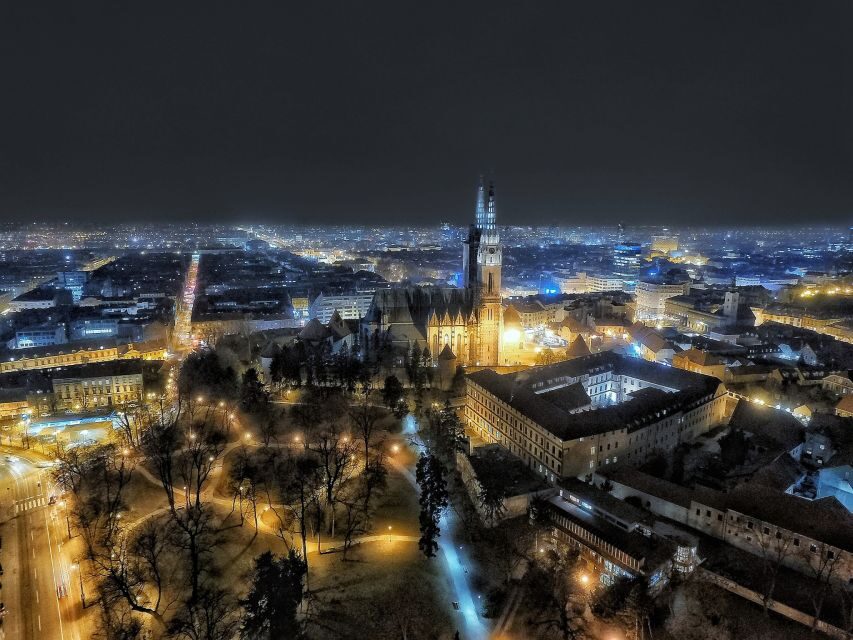
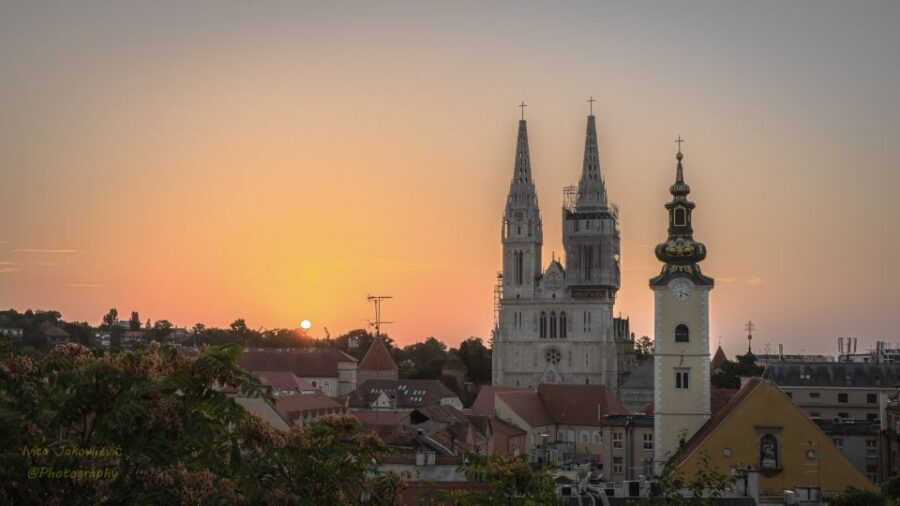
One of the best parts of this walk is how it treats Zagreb Cathedral and Kaptol as more than names on a sign. You’ll move into old Kaptol, described as part of the Zagreb Archdiocese, and the guide ties the big religious landmarks to the area’s role in Zagreb’s development.
Kaptol matters because it’s tied to one side of Zagreb’s early foundations. You’ll hear the idea that today’s Zagreb grew from distinct parts that gradually connected, and Kaptol is the anchor on one side of that story. You’ll also see enough of the cathedral area and surrounding architecture to help you recognize it later, even if you come back on your own.
Possible drawback? If you’re hoping for a lot of indoor time inside the cathedral, the tour is built for walking and interpretation. You’ll likely get the most value from seeing the spaces from the outside and soaking up the context the guide provides.
Dolac and Opatovina open-air market: the city in daily-use form
After the major landmarks, the tour shifts to a place locals keep coming back to: Dolac and Opatovina. This is the part of the evening walk that reminds you Zagreb isn’t just monuments. It’s a working city, with markets that show what residents care about week to week.
Even if you don’t plan to buy anything, the market area helps you understand how people move and gather. You’ll also get cultural and practical background that makes later meals easier to choose. This is where the guide’s storytelling helps you read the city like a local, not like a museum visitor.
A small practical note: open-air markets can be lively or quiet depending on the time. Either way, you’ll walk through the market zone as part of the larger route, so don’t build your whole evening around waiting at stalls.
Gradec on Medvednica: why Zagreb split and how it connected
Then you head toward Gradec, the older part of Zagreb on the slope of Medvednica. The tour frames Gradec as the other origin point that, together with Kaptol, shaped today’s city. That explanation matters because it helps you stop thinking of Zagreb as one flat downtown and start seeing it as layered districts with different roles.
You’ll also see Kamenita Vrata, described as a port and one of the best-preserved monuments of old Zagreb. The detail I found useful is the physical form: it’s a building shaped like a rectangular tower. Even if you’ve never studied Zagreb’s past, you’ll recognize that the city used distinctive structures as gateways and markers between neighborhoods.
This stretch is also where the walking feels a bit more “old-town.” If you want to understand why streets and viewpoints line up the way they do, Gradec is the right section to learn it.
Old town Zagreb and St Mark’s Square: civic power meets church stones
Once you reach the old-town area, you’ll pass by key civic and cultural stops. The tour includes the City Council and Parliament areas, plus the Museum of Broken Relationships. That mix is actually useful: it shows Zagreb has room for both official history and modern, sometimes surprising cultural expression.
Next comes St Mark’s Square, highlighted as the place where you’ll see churches and historic buildings. This is one of the easiest stops to appreciate visually because squares give you a natural way to take in architecture at a glance. The guide’s job here is to connect what you see to what it meant, and that’s where the stories help you remember.
One consideration: squares can be busy, even at night. The value here is not just the sights, but the guide’s pacing and the fact you’ll understand what to look for while you’re standing there.
Other walking tours we've reviewed in Zagreb


Lookout Gradec, Strossmayer Walk, and the Lotršćak night-photo moment
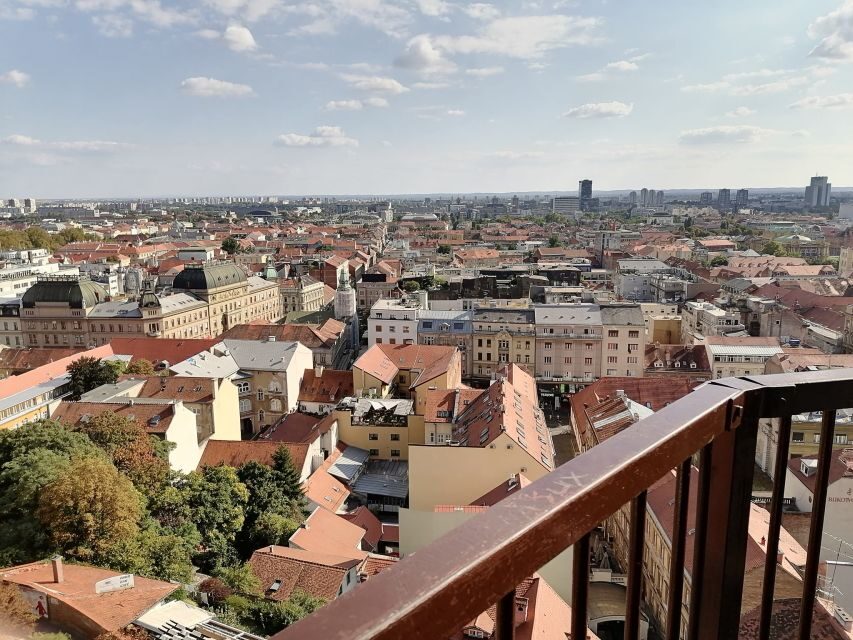
For me, the highlight sequence is the one that leads toward views. You’ll visit Lookout Gradec, then continue via Strossmayer walk to a Zagreb viewpoint beneath the ancient Tower Lotršćak. That’s your chance for the kind of photos you usually only get if you plan ahead.
This is also where timing really matters. The route is built to get you to vantage points in the evening, which makes the skyline feel more dramatic. It’s not just pretty scenery; it’s practical too. From these viewpoints you can trace the direction of your later wandering and understand where the neighborhoods sit in relation to each other.
If night photos are a priority, this tour is a solid choice because the viewing stops are part of the planned walk, not something you have to improvise at the last minute. If night photography isn’t your thing, the same parts still help you learn the layout, just with less emphasis on taking pictures.
Ilica Street, the Zagreb Funicular line, and Flower Square at night
After the viewpoint, the tour follows the Zagreb funicular line toward Ilica Street, described as the longest street in Zagreb. This transition is smart because it links the city’s elevation and viewpoints to the everyday street grid you’ll actually use later to get to cafés and shops.
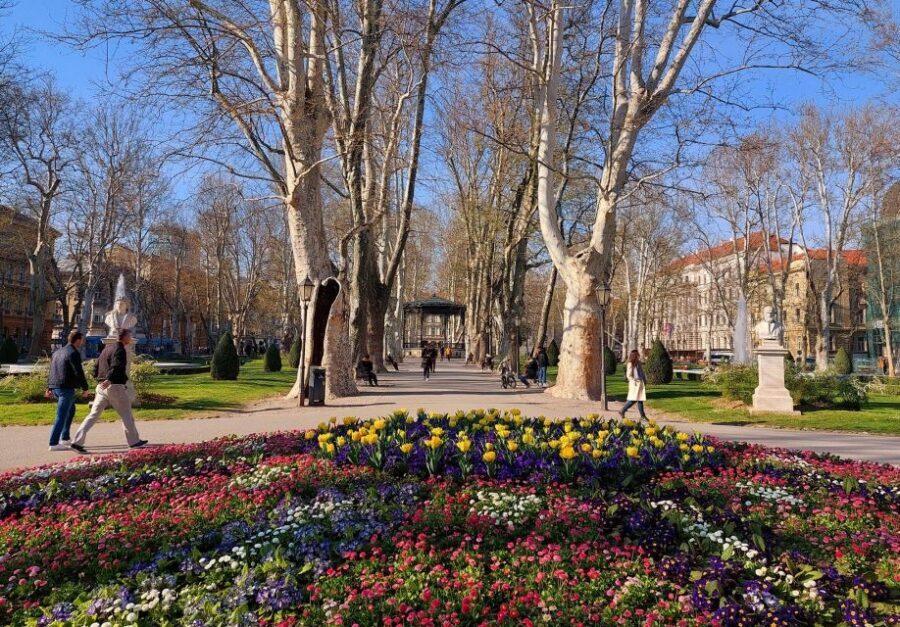
You’ll also pass the Zagreb Octogone and finish at Flower square, where Zagreb youth tends to hang out at pubs at night. That ending does two jobs at once: it puts you near a lively area for your next stop, and it gives you a “what Zagreb feels like now” moment right after the older districts.
If you’re worried about ending too late, keep in mind the tour duration is fixed at 90 minutes. You’ll finish with enough time to decide where to go next, but the walk itself won’t turn into a long evening commitment.
Price and value: is $35 worth 90 minutes in Zagreb?
At $35 per person, this isn’t the cheapest way to walk Old Zagreb. But you’re paying for three things that add real value: a live English guide, an efficient route that covers major areas in one evening, and interpretation that helps you understand what you’re seeing.
The value gets stronger if you’re the kind of traveler who doesn’t just want photos, but wants context. The tour is built around major landmarks like Zagreb Cathedral, key districts like Kaptol and Gradec, and viewpoint timing around Lotršćak. That’s a lot of ground in 90 minutes, and a guide helps you avoid the typical beginner trap: walking past important spots without understanding why they matter.
Also, I like the human side of the experience: it’s described as a personalized, relaxed walk with no overcrowded group size. That matters. In a crowded tour, you miss details and you stop asking questions. Here, the guide’s style is part of the payoff.
Who should book this evening Old Zagreb tour
You’ll probably love it if you want:
- A first-night orientation to Zagreb that makes your next day easier
- A walk that connects architecture, culture, and city origins across Kaptol and Gradec
- Evening viewpoints for photos, especially around Lotršćak
- A route that’s wheelchair accessible, which usually also helps if you’re pushing a stroller
If you’re someone who only likes slow, sit-down pacing, you might find the 90 minutes a little fast. And if you want heavy museum time, this tour is more for highlights plus strong context than for extended indoor stops.
A quick decision guide: should you book
If you want the quickest path to understanding Zagreb without turning your evening into a stressful route-planning session, this tour is a strong pick. The route makes sense, the landmarks are major, and the guide-led explanations are the difference between seeing buildings and actually getting Zagreb.
I’d skip it only if your schedule demands long indoor visits or you prefer to learn at your own pace with no guiding at all. Otherwise, book it, wear comfortable shoes, and plan to use the tour’s ending area as your springboard for dinner and your first real night out.
FAQ
How long is the Exclusive old Zagreb walking tour?
The tour lasts 90 minutes.
Where does the tour meet?
You meet at King Tomislav square in the evening hours.
What languages are available?
The live tour guide speaks English.
Is the tour wheelchair accessible?
Yes, the tour is wheelchair accessible.
How much does it cost?
The price is $35 per person.
Can I cancel for a full refund?
Yes. Free cancellation is available up to 24 hours in advance for a full refund.
Is reserve & pay later available?
Yes. You can reserve your spot and pay later to keep your plans flexible.