REVIEW · ZAGREB
The Best of Zagreb Private Walking Tour
Book on Viator →Operated by Servus Tours · Bookable on Viator
Zagreb hits different when you walk it first. This private route is a fast, friendly way to get your bearings and learn how the city fits together, one stop at a time. I like that it mixes big landmarks with everyday places like Dolac Market, so you’re not just staring at buildings. One thing to consider: because it’s a walking tour (about 2 hours), you’ll want decent footwear and a pace that works for you.
What I like most is the way the guide can tailor the story to your questions. I’ve seen guides named Maks, Luceja, Ivan, and Denjan keep the history moving in a clear order, from early rulers like Tomislav to the more recent era, including Tito and wartime context. The second big win is that you’ll cover a lot of Zagreb’s main sights without dealing with traffic or parking.
The only drawback I’d flag is time. Two hours is great for a first look, but it won’t replace longer visits if you want to linger inside churches or spend extra time shopping and eating along the way.
In This Review
- Key Highlights Worth Planning For
- Getting Your Bearings in Zagreb With a Two-Hour Walk
- Price and Value: What $191.56 Means for a Private Group
- Meeting Point and Pickup: Start Smooth, Not Stressy
- The Walk Itself: From Jelacic Square to Ilica
- Ban Josip Jelačić Monument: Zagreb’s Main Meet-Up Square
- Cathedral of Zagreb: The Church That Carries Croatian Stories
- Dolac Market: Zagreb’s Daily Food Pulse
- Tkalčićeva Street: Coffee, Snacks, and Local Trivia
- Stone Gate (Kamenita Vrata): A Medieval Thread Into the Past
- St. Mark’s Square: Photos, Church Colors, and Quick Context
- Lotrščak Tower: The Cannon Moment and the Funicular Trick
- Ilica: Zagreb’s Big Known Street, With Real Atmosphere
- Zrinjevac: One Square, Many Stories
- Why the Private Format Feels Better Than You Expect
- Practical Tips to Get the Most From This Tour
- Who This Tour Fits Best
- Should You Book This Private Zagreb Walk?
- FAQ
- How long is the Best of Zagreb Private Walking Tour?
- What is the meeting point for the tour?
- Do you offer pickup?
- Is this a private tour?
- What language is the tour offered in?
- Is there a mobile ticket?
- Are entrance fees charged for the stops?
- How far in advance is this tour commonly booked?
- What is the cancellation policy?
Key Highlights Worth Planning For
- Private group up to 15 means the guide can keep pace with your questions and interests.
- A tight 2-hour route helps you see the old-town core efficiently, mainly on foot.
- Dolac Market and Tkalčićeva Street give you local food and café energy in the middle of sightseeing.
- St. Mark’s Square and Stone Gate deliver the recognizable Zagreb postcard scenes, with context.
- Lotrščak Tower and the 12:00 cannon add a quick, memorable local moment (and the funicular reference helps you get there easily).
- Pickup is available if you’re centrally located, with a clear meeting option if you aren’t.
Getting Your Bearings in Zagreb With a Two-Hour Walk
Zagreb is one of those cities where the best way to understand it is to walk. You feel the change in neighborhoods, you catch the skyline from key squares, and you start learning how locals move around. This tour is built to do that quickly, with a private group and a simple format: meet, walk, stop, explain.
The tour lasts about 2 hours, and it’s designed to hit the main “you’ll hear about this anyway” places. That makes it especially useful on your first day, when you’re still figuring out what’s where and what you want to do next. It also means you get plenty of photo moments without spending your whole afternoon commuting.
Two practical advantages matter more than you might think. First, you avoid traffic delays by keeping the route on foot. Second, you get context while you’re looking at the actual sites, not later from a guidebook with your feet already worn out.
Other private walking tours in Zagreb


Price and Value: What $191.56 Means for a Private Group
The price is $191.56 per group for up to 15 people. That sounds like a lot if you compare it to a cheaper join-in group, but private tours work differently: you’re paying for the flexibility and the guided flow, not just a spot on a route.
So when does it feel like good value?
- If you’re traveling as a family or small group and you want a calmer pace.
- If you want history explained in order, with time for questions.
- If you’d otherwise spend time piecing together your own plan and still end up missing context at key stops.
Your total cost gets easier to swallow when you split it across a group. And if you’re the type of traveler who likes to ask follow-ups, private format matters. In past experiences with guides like Maks, Luceja, Ivan, and Denjan, the best moments aren’t just the facts, but the way questions about Croatia’s history can turn into a clearer picture of what you’re seeing.
Meeting Point and Pickup: Start Smooth, Not Stressy
You start at Manduševac Trg bana Josipa Jelačića in the Gornji Grad–Medveščak area. The tour ends back at the meeting point, which helps with planning your next meal or museum visit.
Pickup is available if you’re centrally located. If you’re not, you can meet in front of the fountain at Ban Jelacic Square, which is the main square and also a common local meeting spot. Either way, you’ll want to plan for one key goal: show up a few minutes early so you can settle in and start on time.
Because it’s a mobile ticket experience and you receive confirmation at booking time, you’ll usually avoid last-minute email hunting. Service animals are allowed, and the route is near public transportation, which can help if you need to adjust your timing.
The Walk Itself: From Jelacic Square to Ilica
This itinerary is built around the idea of walking the city’s “main threads.” You start with a central meeting point, then move from major civic sites to churches, markets, and the old-town gates. By the time you reach funicular-and-tower territory, you’ve already trained your eye on what makes Zagreb feel like Zagreb.
Here’s what each stop does for you, and what you’ll want to watch for.
Ban Josip Jelačić Monument: Zagreb’s Main Meet-Up Square
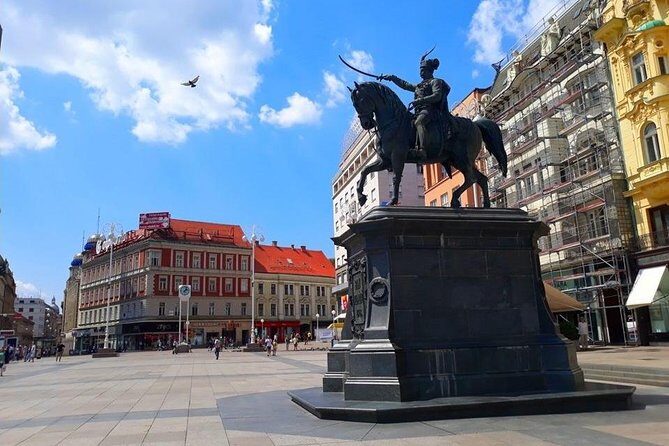
Stop 1 is Ban Josip Jelačić Square, a favorite meeting place for locals. It’s also a history hub in plain sight, full of stories and trivia tied to the city. This is where you’ll get that first “OK, I get it” feeling, because the square is easy to read from multiple angles.
What to enjoy: the sense of place. You’re standing in a location locals naturally use, not just a tourist backdrop.
Time on site: about 20 minutes, which gives you room for photos and orientation.
If you’re unsure where you’ll go next in Zagreb, this opening stop helps. It’s the kind of place where you can quickly understand how the old center lays out.
Other walking tours we've reviewed in Zagreb





Cathedral of Zagreb: The Church That Carries Croatian Stories
Stop 2 is the Cathedral of Zagreb, described as the most important church in the city. Even if you’re not a serious church tourist, it’s the type of stop that helps you connect Zagreb’s identity to the people who lived here across generations.
What to enjoy: the chance to learn how Croatian history is tied to this church.
Time on site: about 10 minutes, with admission listed as free.
Because the tour is short overall, you won’t get an all-day cathedral experience. But you will get the guided framework to make later visits more meaningful if you choose to return.
Dolac Market: Zagreb’s Daily Food Pulse
Stop 3 is Dolac Market, often described as the belly of the city. This is where you see Zagreb as a living place, not just a museum. You can spot the rhythms of local buying and the kinds of ingredients that shape Croatian food culture.
Why this stop matters: it slows the tour down in a good way, giving you something hands-on to notice.
Time on site: about 10 minutes, with admission listed as free.
Even if you don’t buy anything, Dolac is an excellent way to learn what people mean when they talk about local gastronomy. If you do want a bite later, this is usually the stop that helps you pick flavors that actually make sense for Zagreb.
Tkalčićeva Street: Coffee, Snacks, and Local Trivia
Stop 4 is Tkalčićeva Street, one of Zagreb’s best-known streets for taking a break. It’s a place to grab a coffee or a drink, and it’s also where the guide shares unusual and interesting local history trivia.
What to enjoy: the street-level feeling. You’re not in a formal square anymore. You’re in a space locals use for downtime.
Time on site: about 10 minutes, free admission listed.
This stop is a nice reset between major sights. It’s also a good moment to ask the guide for practical advice on where to eat next, since you’ll be right in the middle of the city’s social energy.
Stone Gate (Kamenita Vrata): A Medieval Thread Into the Past
Stop 5 is Stone Gate (Kamenita Vrata), presented as a medieval access point to Gradec. It’s also described as a saint place for locals, which means the guide can connect it to belief and community memory rather than treating it like a random wall fragment.
What to enjoy: the sense of reaching back through the city’s older layers.
Time on site: about 10 minutes, free admission listed.
If you like when a city’s architecture doubles as a story, this is one of your stronger stops. It also balances the more modern squares and streets you’ve already seen.
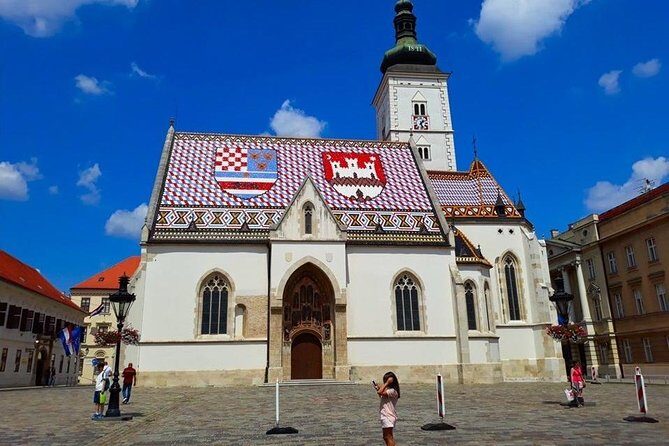
St. Mark’s Square: Photos, Church Colors, and Quick Context
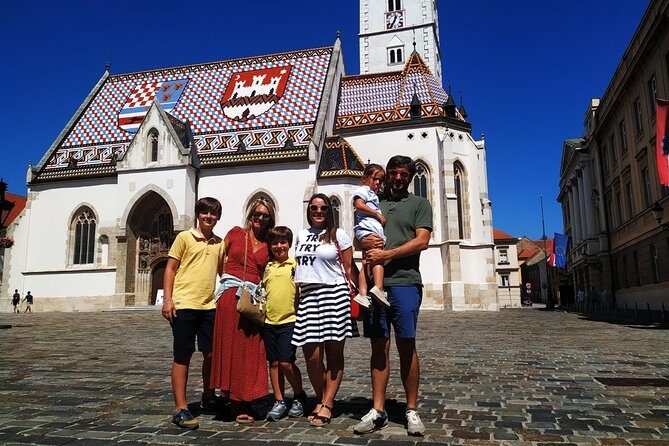
Stop 6 is St. Mark’s Square, where you’ll get the classic photo setup in front of St. Mark’s Church. This is where the guide can explain what you’re looking at so the photos don’t feel empty afterward.
What to enjoy: that recognizable Zagreb postcard look, with explanation attached.
Time on site: about 10 minutes, free admission listed.
This is also a good spot to check your energy and hydration. Ten minutes goes fast, but it’s enough to get the shot you want and still keep the walk flowing.
Lotrščak Tower: The Cannon Moment and the Funicular Trick
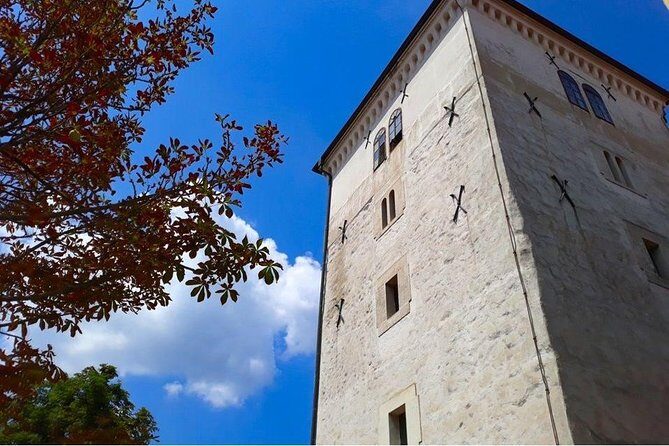
Stop 7 is Lotrščak Tower. The tour highlights that you can hear a cannon sound daily at 12:00am, and if you’re near the city center, it can be a memorable local moment. The route to the tower is suggested via the city’s funicular, described as the world’s shortest public transportation.
What to enjoy: a real-time city rhythm moment, not just a static view.
Time on site: about 10 minutes, free admission listed.
Even if you don’t time it perfectly, the tower stop helps you understand why Zagreb works visually from different elevations. The funicular detail is useful too, because it’s a practical way to move between layers of the city without turning it into a long climb.
Ilica: Zagreb’s Big Known Street, With Real Atmosphere
Stop 8 is Ilica, one of the best-known and most popular streets in Zagreb. The tour frames it as a place where you’ll see why people love it so much, and the stop works well for sensing the city’s everyday pace.
What to enjoy: the contrast to the quieter corners you saw earlier.
Time on site: about 10 minutes, free admission listed.
This stop also helps you plan your next day. Once you know how Ilica feels, you can decide if you want to keep exploring in that direction on your own.
Zrinjevac: One Square, Many Stories
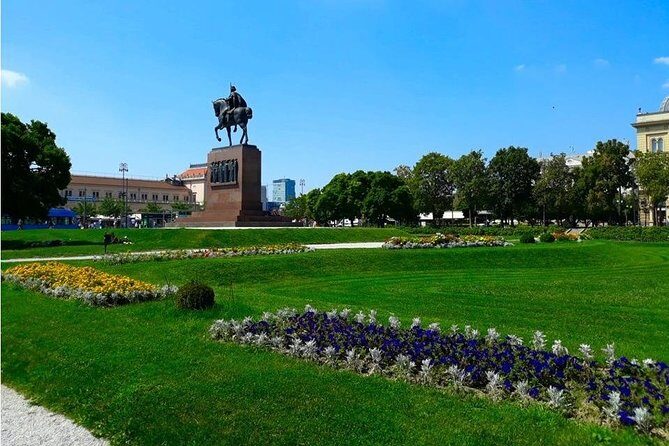
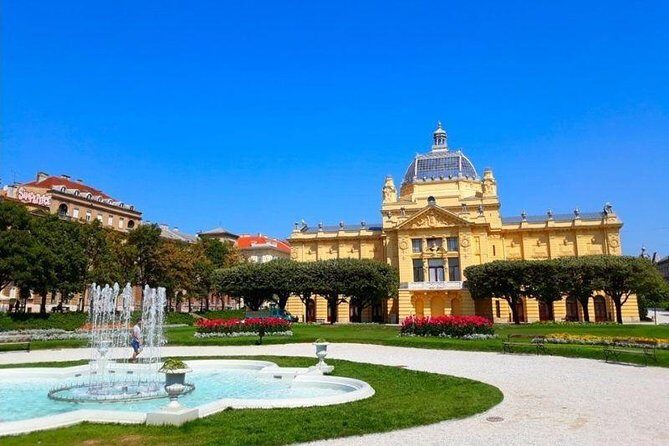
Stop 9 is Zrinjevac, described as one square with million stories. This final stop is a gentle way to end, with a sense of how Zagreb’s social life spills into parks and squares rather than staying only in shopping streets.
What to enjoy: a calmer landing after the busier lanes.
Time on site: about 15 minutes, free admission listed.
Because the tour ends back at the meeting point, this last stretch is also your chance to decide what you want to do next—food, a museum, or an extra wander with less pressure.
Why the Private Format Feels Better Than You Expect
A private tour isn’t just about avoiding crowds. It’s about how you experience the story.
Guides named Maks, Luceja, Ivan, and Denjan have stood out for clear explanations and a history story told in sequence, not scattered facts. In one case, the guide’s recount went from early kings like Tomislav and carried forward through later periods, including wartime context and Tito-era history. That kind of ordered storytelling helps you connect dots faster when you’re still new to a place.
You also get room for questions. If history is your thing, you can ask how the city changed over time, or why certain symbols show up in architecture and squares. If food is your thing, you can ask for a practical direction for a restaurant after Dolac and Tkalčićeva.
And if you’re traveling with kids, the format can work well. One family highlighted that even with a 17-month-old in the group, the guide kept the tone engaging enough to keep attention.
Practical Tips to Get the Most From This Tour
A walking tour lives or dies on small decisions. Here’s how to make your two hours feel smooth.
Wear shoes you trust. The itinerary covers a compact slice of central Zagreb, but you’re still walking between squares and levels.
Bring a light layer. City weather shifts quickly in many seasons, and you’ll be outside for most of the time.
Use the guide’s history answers as a map. When someone explains why Stone Gate matters or how the cathedral fits Croatian history, that knowledge makes every later sight more interesting.
If you want a meal after, pay attention during Dolac Market and Tkalčićeva Street. Those are your best cues for what Zagreb tastes like, and they often lead to better food choices than random picks.
Who This Tour Fits Best
This tour is a strong fit if you:
- Are visiting Zagreb for the first time and want a highlights sweep with context.
- Prefer walking and want to avoid traffic while still covering real ground.
- Like history that comes with a clear timeline and room for questions.
- Want a private experience without needing to plan your own route.
It might be less ideal if you:
- Want to spend long stretches inside buildings without time limits.
- Are planning to do several museums right away and need longer on each stop.
Should You Book This Private Zagreb Walk?
If your goal is to get oriented quickly and understand why Zagreb’s landmarks matter, this is a smart booking. The route hits the city’s most recognizable squares and streets, then threads them together with history and local context—so you don’t leave with only photos, you leave with a clearer mental map.
I’d book it especially if you value guided explanations and you’ll use the knowledge to plan the rest of your trip. It’s also a good move if your group wants a slower, more personal pace than a large join-in tour.
If you’re the kind of traveler who likes total freedom and spends most of the day wandering without stopping, you might skip it and build your own route. But for most first-timers, a structured two hours like this makes the rest of your Zagreb days easier.
FAQ
How long is the Best of Zagreb Private Walking Tour?
It lasts about 2 hours.
What is the meeting point for the tour?
The start point is Manduševac Trg bana Josipa Jelačića, 10000, Gornji Grad – Medveščak, Zagreb, Croatia.
Do you offer pickup?
Yes. Pickup is offered if your address is centrally located. You can also meet in front of the fountain at Ban Jelacic Square.
Is this a private tour?
Yes. It is private, and only your group will participate.
What language is the tour offered in?
The tour is offered in English.
Is there a mobile ticket?
Yes, a mobile ticket is included.
Are entrance fees charged for the stops?
The listed admissions for the stops are marked as free.
How far in advance is this tour commonly booked?
On average, it is booked 68 days in advance.
What is the cancellation policy?
You can cancel for a full refund up to 24 hours in advance. If you cancel less than 24 hours before the start time, the amount paid is not refunded.