REVIEW · ZAGREB
4-hour Private Zagreb & the Mountain Tour in a Yugo car
Book on Viator →Operated by YUGOcar adventure · Bookable on Viator
A classic Yugo turns Zagreb into a time machine. This private tour pairs a licensed local guide (like Teo) with an old-school ride and a route that mixes city icons with real everyday Zagreb moments. I love the feel of cruising the streets in a 35-year-old car, and I like how the stops are timed for viewpoints, churches, squares, and that famous noon cannon moment.
The only real drawback to consider is comfort and pace: you’ll be in a small vintage car for part of the day, and you’ll do some walking in hills around the Upper Town and at the Medvedgrad fortress.
In This Review
- Key highlights you’ll actually care about
- A classic Yugo car makes the Zagreb drive feel personal
- Meeting at Lisinski and what 3 to 4 hours feels like
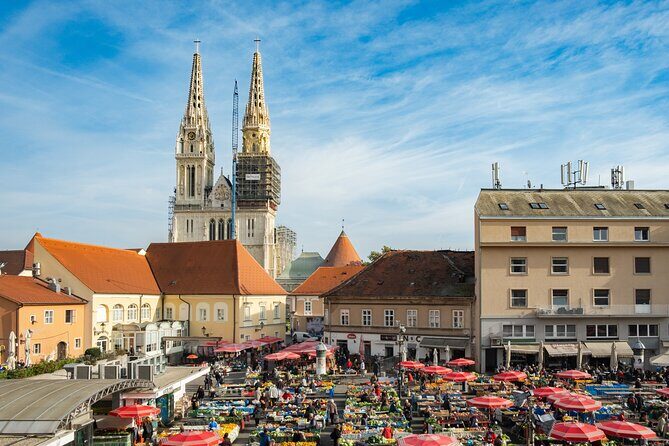
- Upper Town stop-by-stop: cathedral, colorful roof church, and the noon cannon
- The cathedral: rebuilt more than once and still Croatia’s tallest landmark
- A church with a colorful roof you can’t ignore
- Lotrščak Tower at noon: a quick ritual that anchors the tour
- A neo-baroque yellow building on the most-loved central square
- Central Zagreb highlights: parks, the Budapest-to-Zagreb art story, and King Tomislav
- The Green Horseshoe: one park, eight connected ones
- An art space with a Budapest origin, now in Zagreb
- King Tomislav reference: a square named after the 10th-century first king
- A late-19th-century building that ties together the city’s styling
- Up Medvednica to Sljeme: ruins, ruins-with-a-view, and coffee in the mountains
- The old hospital ruins: a strange, memorable pause
- The viewpoint and city perspective
- Coffee at a mountain hut
- Timing and admission
- Medvedgrad fortress: included admission and 1 hour of real wall time
- What to expect in that hour
- Teo as your guide: why a licensed local makes the difference
- Price and value: what $126.03 buys in a private day
- Who should book this Yugo Zagreb & Medvednica tour
- Should you book the Yugo Private Zagreb & the Mountain Tour?
- FAQ
- How long is the Yugo Zagreb & the Mountain Tour?
- Is this a private tour?
- What time does the tour start?
- Where do we meet?
- Is pickup available?
- What language is the tour guide?
- What’s included in the tour price?
- Are tickets or confirmations handled digitally?
Key highlights you’ll actually care about
- Classic Yugo sightseeing that makes the drive part of the story, not just the commute
- Upper Town focus on landmarks you can quickly identify and enjoy at street level
- Noon cannon timing at Lotrščak Tower, a simple moment that gives the day structure
- Medvednica (Sljeme) viewpoint break with coffee after a scenic drive
- Medvedgrad fortress with admission included, so you can spend more time looking and less time planning
- Private guide control of what you want to linger on, instead of a fixed group script
A classic Yugo car makes the Zagreb drive feel personal
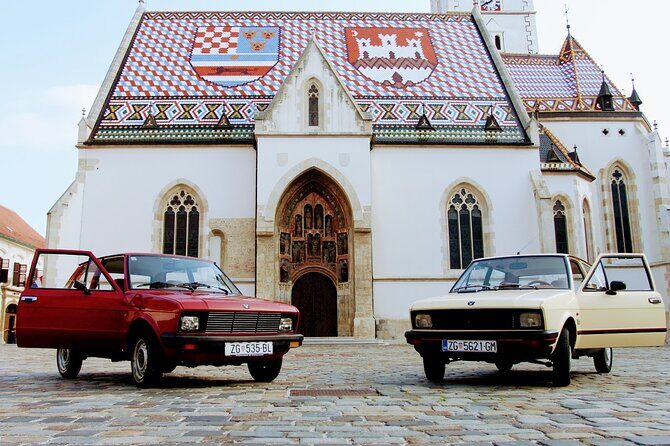
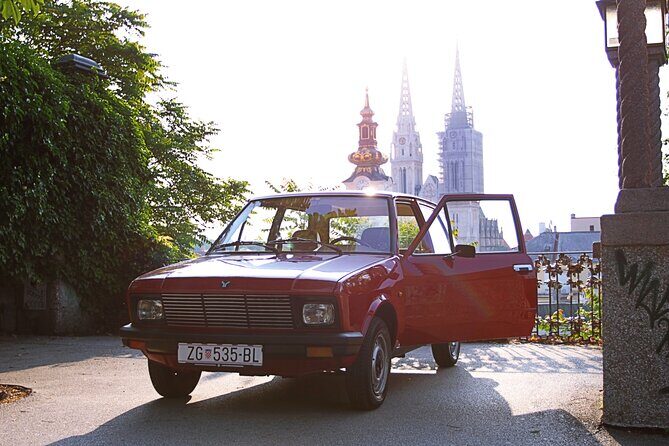
Most city tours start with where you sit. This one starts with what you’re riding in: an original, classic Yugo that’s about 35 years old. It’s not about luxury. It’s about character.
That matters in Zagreb because so much of the charm is in the streetscape—turns, sightlines, and how the city climbs. A vintage car naturally slows the pace and keeps you paying attention. You’re more likely to notice the changes between neighborhoods than if you’re buried behind tinted windows in a modern van.
I also like the practical angle: a private vehicle means your guide can adjust for where you want photos, or for timing that makes the noon cannon possible. If you want a more relaxed day with fewer logistical headaches, this setup supports that.
Other private tours in Zagreb


Meeting at Lisinski and what 3 to 4 hours feels like
You start at the Lisinski concert hall area, at Trg Stjepana Radića 4. Pickup is available from in front of Lisinski, or at your accommodation if it’s within the city limits and car-accessible (up to 3 km from Lisinski).
The tour is scheduled for 9:30 am and runs about 3 to 4 hours. That’s a sweet spot: long enough to get beyond the postcard core of the city, short enough that you’re not exhausted before the mountain portion.
Because it’s private, the flow is meant to be efficient. You’ll hit several Upper Town and central stops, then move up to Medvednica and finish with Medvedgrad. The rhythm is quick but not rushed, assuming you’re comfortable with moderate walking.
Upper Town stop-by-stop: cathedral, colorful roof church, and the noon cannon
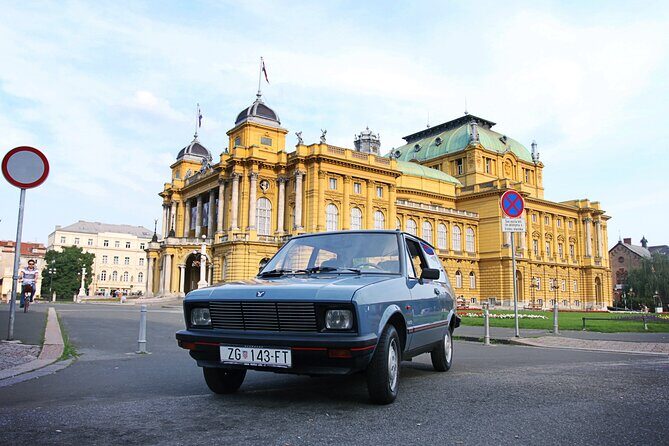
Zagreb’s Upper Town is where the city feels historic without needing a long bus ride. In this tour, you get a sequence of landmarks that are easy to understand while you’re standing there, not after you’re home reading a map.
The cathedral: rebuilt more than once and still Croatia’s tallest landmark
The tour begins with a cathedral that has been rebuilt multiple times, but still holds a big status point: it’s the tallest building in Croatia. Even if you’re not a cathedral superfan, this kind of landmark gives you an instant height reference for the rest of the hilltop view. It also helps you understand why so many Upper Town streets feel steep and dramatic.
One thing to watch for is how the cathedral changes with angles. From different spots on the hill, you get different silhouettes, and your guide can point out which views make the building look its most commanding.
A church with a colorful roof you can’t ignore
Next comes a one-of-a-kind church in the Upper Town with a colorful roof. This is the kind of stop where you don’t need long explanations. You just need time to look up and around, then let the details register—especially the roofline and its vivid patterning against older stone and tighter streets.
This is also a good moment for photos that don’t look like you’re shooting from a parking lot. The route is built so you can capture the church in context of the neighborhood.




Lotrščak Tower at noon: a quick ritual that anchors the tour
At noon, a cannon fires from Lotrščak Tower. The tour builds in this rhythm, so you’re not just hearing about it—you’re positioned to experience the moment.
The cannon is a short event, but it gives the day a beat. It’s the rare city tradition that’s both memorable and easy to plan around because it happens at a fixed time. If your schedule is flexible, arrive with your timing in mind and don’t sprint to the next stop the instant the group moves.
A neo-baroque yellow building on the most-loved central square
You’ll also see a neo-baroque yellow standout on what the route describes as Zagreb’s most beautiful square. This stop works as a breather after the hilltop walking. Central squares are flatter, but the architecture still tells you what Zagreb valued at the turn of the century—style, display, and civic identity.
If you like cities where public buildings blend art and pride, this is the kind of stop you’ll enjoy more than you expected. It’s also easier to pause here for quick questions like What is this building used for now?
Central Zagreb highlights: parks, the Budapest-to-Zagreb art story, and King Tomislav
After the Upper Town, the tour threads through the city’s central identity—squares, parks, and arts spaces that help you understand modern Zagreb, not just its old core.
The Green Horseshoe: one park, eight connected ones
You’ll visit the first park in the Green Horseshoe of Zagreb, a chain of eight connected parks that form a green belt. This stop isn’t just scenic. It shows how the city thinks about breathing space inside an urban ring.
Even if you don’t feel like strolling, the value is in the perspective. Your guide can help you see how the parks connect and why this kind of design matters for city life—walking, jogging, meeting up, and getting out of traffic without leaving town.
An art space with a Budapest origin, now in Zagreb
Next is a building that used to be in Budapest and now hosts many well-known exhibitions in Zagreb. That kind of story is why I like guided tours: you get the meaning behind the brickwork.
You don’t need to know the building’s every historical detail to appreciate the idea. It’s a reminder that cultural spaces travel, and cities reuse good architecture to serve new needs. If you care about art and architecture in the practical sense—what gets shown where—this stop gives you that connection.
King Tomislav reference: a square named after the 10th-century first king
You’ll also see a place named after Zagreb’s first king from the 10th century, Tomislav. It’s a quick history cue, but it matters. Names are how cities teach you their origin story without a museum ticket.
This is a useful moment for understanding Zagreb’s self-image: older than many people assume, and proud of its continuity.
A late-19th-century building that ties together the city’s styling
The route includes an astonishing late-19th-century building. Stops like this help you see the city’s evolution as a timeline instead of separate attractions. You’ll likely notice how the architecture matches the civic confidence of that period—solid, formal, built to last.
If you’re the type who enjoys taking mental notes for future streets, this stop is a good one. It makes it easier to recognize similar architectural cues as you wander afterward on your own.
Up Medvednica to Sljeme: ruins, ruins-with-a-view, and coffee in the mountains
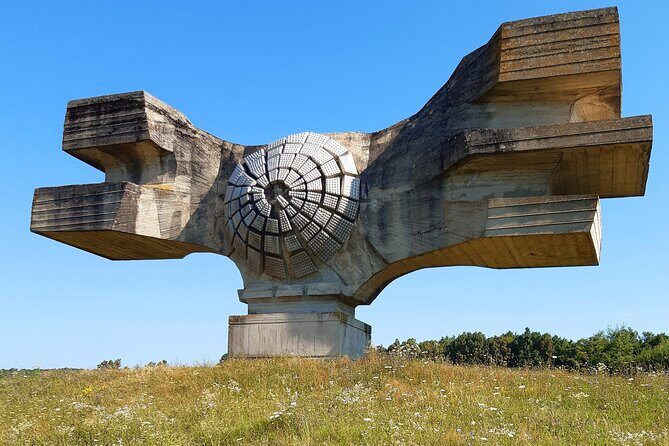
Then the tour shifts gears. You drive up to Medvednica mountain, specifically the Sljeme area. This is where Zagreb stops feeling like just a town you’re touring and starts feeling like a city with real outdoor access.
The old hospital ruins: a strange, memorable pause
On the way up, you visit ruins of an old hospital. Ruins do two useful things on a short tour: they add emotion, and they slow your looking down. Even without a long stop, you get a chance to understand that the mountain has its own history, not just scenic value.
One practical note: because you’re on a mountain, light and weather can change. If you can, bring a light layer and expect that “comfortable” can shift quickly once you’re higher up.
The viewpoint and city perspective
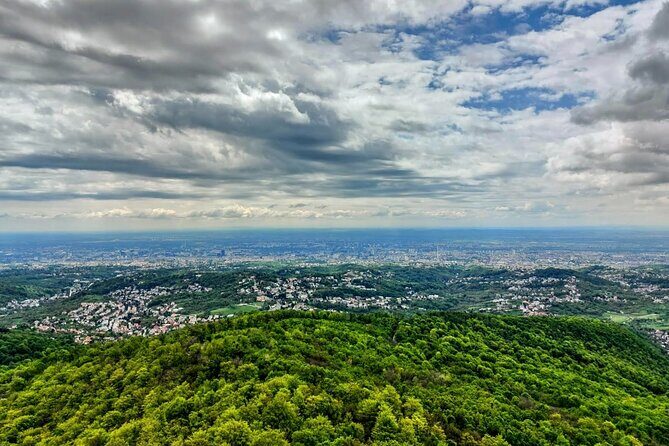
You’ll enjoy the view of the city from the mountain area. This is the kind of viewpoint that makes the rest of Zagreb click in your mind. From up there, you see how the river, the neighborhoods, and the hilltop core relate.
A guide’s value here is in pointing out what you’re looking at, so the view becomes information, not just a photo backdrop.
Coffee at a mountain hut
Finally, you have coffee in one of the mountain huts. This is a smart move in a half-day tour. It gives you a warm break and a social reset after the drive and the ruins. It also helps you avoid the most common “we’re out of time” problem—tourists trying to do one more thing without actually taking a break.
Timing and admission
This Medvednica portion includes about 30 minutes, and the admission ticket is listed as free for this part. That makes it a low-stress segment if you’d rather spend your time on experiences instead of ticket logic.
Medvedgrad fortress: included admission and 1 hour of real wall time
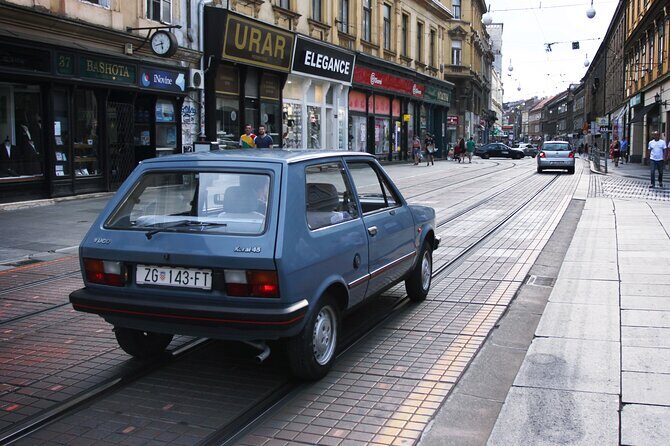
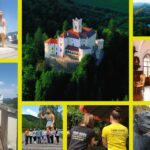
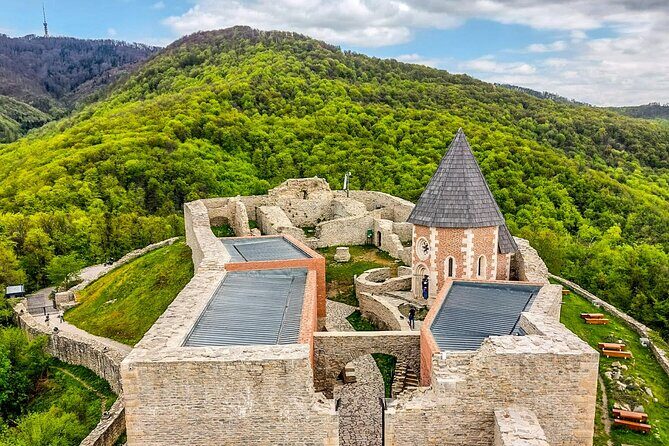
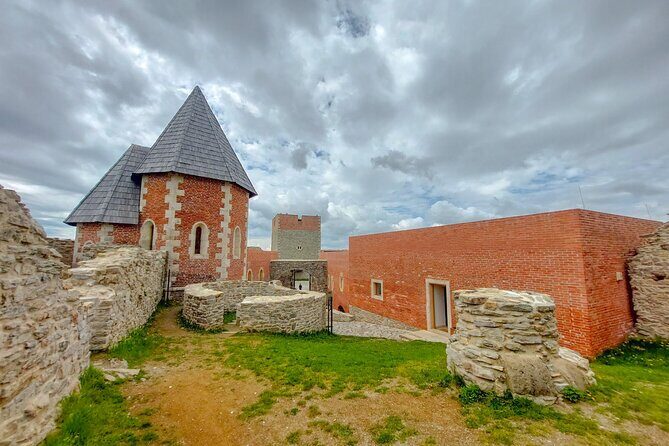
The tour’s second mountain anchor is Medvedgrad, a medieval fortress. You get about 1 hour on-site, and admission is included.
This is the part of the day you’ll likely remember because fortress visits feel different from city sights. Instead of standing in front of buildings, you walk through them. The structure frames views, and the stone makes the distance feel real.
The fortress is also a good fit for a private tour because your guide can focus on what you care about: architecture, defensive design, or simply where to stand for the best panoramas. If you’re traveling with someone who likes photos, fortress time pays off fast.
What to expect in that hour
Plan for a bit of uneven ground and stairs or ramps, depending on your exact route. You won’t need a long trek, but you should be ready to walk at a steady pace and stop when the view calls for it.
Because you’re not paying extra admission at the gate, you can stay in the moment instead of splitting focus at the start.
Teo as your guide: why a licensed local makes the difference
This tour is led by a licensed local guide, and one guide name you’ll see associated with the experience is Teo. What I like about this kind of guiding is the balance: landmarks are explained in plain language, and the city gets connected to everyday life.
Teo’s style is described as nice, knowledgeable, and enthusiastic. The practical payoff for you is simple. You won’t just collect photos. You’ll get meaning fast—why a stop matters, what you’re looking at, and what you can notice if you return to Zagreb later on your own.
In a short tour, that matters more than perfect details about every stone. You want the ideas that help you navigate and appreciate.
Price and value: what $126.03 buys in a private day
The price is listed at $126.03 per person for a private tour lasting about 3 to 4 hours. On paper, that’s not a bargain-basement sightseeing ticket. It’s also not meant to be. It’s priced for a private guide plus private transportation plus included fortress admission.
Here’s how I judge value in this kind of experience:
- You’re paying to avoid the headache of coordinating transport while still seeing a lot in limited time.
- You’re paying for a guide who can time you for the noon cannon moment and point out what to look for at viewpoints.
- You’re paying for the included Medvedgrad admission, so the mountain portion stays simple.
If you’re a solo traveler, it may be worth it if you want maximum attention and a fast route. If you’re traveling with a partner or a small group, the private format usually starts to feel more sensible because you’re effectively paying for convenience and focus.
Who should book this Yugo Zagreb & Medvednica tour
This tour is a good match if you want a few things at once:
- Historic Zagreb with context, not just a checklist of monuments
- A private guide who can answer questions and adjust your pace
- A memorable transport experience in a classic car, not a generic van ride
- Mountain views and a fortress without needing to plan a full day
You might feel less excited if you dislike cars with older design, prefer long museum-style visits, or want a very slow walking tour. The route is designed for getting around efficiently.
Should you book the Yugo Private Zagreb & the Mountain Tour?
If you like practical sightseeing with personality, I think this one is worth booking. The combination of Upper Town highlights, a structured noon tradition, and a mountain viewpoint with Medvedgrad makes it feel like a complete mini-adventure instead of scattered stops.
Book it if you want a guide-led day that stays manageable in time and gives you real visual payoff. Skip it if you expect a modern-car, low-walking, no-surprises experience.
One last tip: wear shoes you trust for uneven ground and be ready for light temperature shifts on Medvednica. Do that, and you’ll get the best version of Zagreb in a single half-day.
FAQ
How long is the Yugo Zagreb & the Mountain Tour?
It lasts about 3 to 4 hours.
Is this a private tour?
Yes. It’s a private tour, and only your group participates.
What time does the tour start?
The start time is 9:30 am.
Where do we meet?
The meeting point is in front of the Lisinski concert hall, at Trg Stjepana Radića 4, 10000, Zagreb, Croatia.
Is pickup available?
Pickup is offered in front of Lisinski, or at your accommodation if it’s within the city limits and car-accessible (up to 3 km from Lisinski).
What language is the tour guide?
The tour is offered in English.
What’s included in the tour price?
It includes private transportation, an experienced licensed local guide, a ride in an original classic Yugo, and admission to the Medvedgrad fortress.
Are tickets or confirmations handled digitally?
You receive a mobile ticket, and you’ll get confirmation within 48 hours of booking, subject to availability.