REVIEW · ZAGREB
Private Walking Tour of Zagreb
Book on Viator →Operated by Petros d.o.o · Bookable on Viator
Zagreb clicks into place fast on foot. This private, 2.5-hour walk is designed to get you oriented quickly, with an expert explaining what you’re seeing as you move between Lower and Upper Town. I also like the hotel pickup/drop-off option for selected hotels, which saves time and makes a first day feel easier.
Two things I really like: you get a truly private experience (only your group), so the guide can pace it around your energy and questions, and you’re guided through the city’s key landmarks in a logical loop. The result is you see more than you would on your own in the same time window.
One drawback to consider: the route includes some walking and likely some stairs (especially since the funicular is listed as closed for renovation until March 2026). If you’re tight on mobility or need step-free movement, ask questions before booking so you can plan your best version of this tour.
In This Review
- Key highlights you’ll feel right away
- A two-and-a-half-hour plan that makes Zagreb make sense
- Price and value: what $78.44 buys you
- Where you start, where you end, and how that affects your day
- Stop-by-stop: what you’ll see and what to watch for
- Zrinjevac Park, Zagreb’s green lungs (Stop 1)
- Ban Josip Jelačić Square, where locals meet (Stop 2)
- Ulica Tome Bakača: Cathedral viewpoints and the Square of the European Union (Stop 3)
- Cathedral of Zagreb: Assumption and Zagreb’s big-story past (Stop 4)
- Dolac Market: where Zagreb eats (Stop 5)
- Tkalčićeva Street: coffee culture in motion (Stop 6)
- Tunel Gric: a different Zagreb layer (Stop 7)
- Funicular Railway: included ticket, listed closure until March 2026 (Stop 8)
- Lotrščak Tower and the Gric cannon (Stop 9)
- Strossmayer Promenade: Zagreb rooftops in one glance (Stop 10)
- Ćirilometodska ulica and the Museum of Broken Relationships (Stop 11)
- St. Mark’s Square: color, patterns, and the church facade (Stop 12)
- Petrini Pyli (Stone Gate): a medieval survivor (Stop 13)
- Radiceva back toward Lower Town (Stop 14)
- Ilica: Zagreb’s shopping street starts here (Stop 15)
- How the guide experience tends to feel in real life
- Weather, walking, and what to pack so the tour stays fun
- Should you book this private Zagreb walking tour?
- FAQ
- How long is the private walking tour of Zagreb?
- What does the tour cost?
- Is hotel pickup included?
- Is this tour truly private?
- Where do I start and where does it end?
- Is the funicular included in the tour?
- What happens if Dolac Market is closed?
- Does the tour run in bad weather?
- Can I get a full refund if I cancel?
Key highlights you’ll feel right away
- Pickup from select hotels so you don’t have to hunt for the meeting point with tired feet
- Private format that works well for first-time visitors and short stays
- A guided path across Lower and Upper Town, so the city’s layout makes sense fast
- Icon stops that actually matter: Cathedral, St. Mark’s Square, Stone Gate, Dolac Market
- Tunnel Gric and the Lotrščak area add a different side of Zagreb beyond the main streets
- Coffee-and-market stops that show daily life, not just monuments
A two-and-a-half-hour plan that makes Zagreb make sense
If Zagreb feels like two cities stitched together, that’s not your imagination. It’s built as an upper and lower town, and this tour is shaped to help you understand that split without turning your day into a maze. With a licensed local guide leading the way, you’ll get the “why” behind the sights, not just the “what.”
The pace is set up for a smooth city walk rather than a hard workout. One guide-led experience noted a gentle rhythm, with the main physical challenge being stairs when the funicular is being worked on. That’s useful to know if you’re planning around limited mobility or traveling with someone who needs a slower step rate.
Other private walking tours in Zagreb


Price and value: what $78.44 buys you
At $78.44 per person for a private tour of about 2 hours 30 minutes, you’re paying for two things that are hard to replicate alone: a guided route that covers the core sights in one go, and a guide who can tailor what you care about. If you’re in Zagreb for a layover, a short city break, or just one “first day” window, this can be good value because it reduces guesswork.
Also, this tour tends to book well in advance (the average booking window here is around 97 days). That usually means people consider it a safe way to see the essentials without wasting daylight. If your dates are fixed, it’s smart to reserve sooner.
Where you start, where you end, and how that affects your day
You can begin either at Zrinjevac 2 or via hotel pickup from selected hotels. Ending at Ban Josip Jelačić Square is convenient because it’s a natural hub for onward plans: shopping on nearby streets, meeting up with your group, or continuing independently toward museums and restaurants.
This is also described as being near public transportation. That matters if you want flexibility: if pickup isn’t available for your hotel, you can still reach the starting area without a long trek.
Stop-by-stop: what you’ll see and what to watch for
Zrinjevac Park, Zagreb’s green lungs (Stop 1)
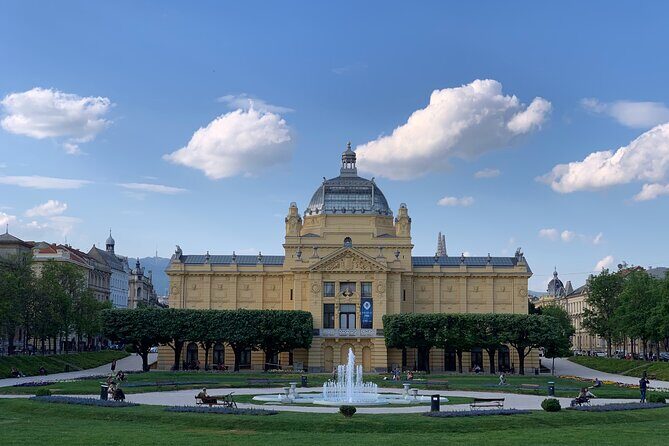
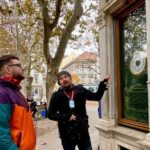
Your tour starts with Zrinjevac, often described as the prettiest park in Zagreb’s famous green “horseshoe” shape. Expect a calm first landing spot: benches, trees, and an easy atmosphere that helps you switch from travel mode into city mode.
This is a smart warm-up stop because it sets the tone. You’re also told this park is like a breath of fresh air in the city. If it’s sunny, take a minute just to look around before you start walking again.
Other walking tours we've reviewed in Zagreb


Ban Josip Jelačić Square, where locals meet (Stop 2)
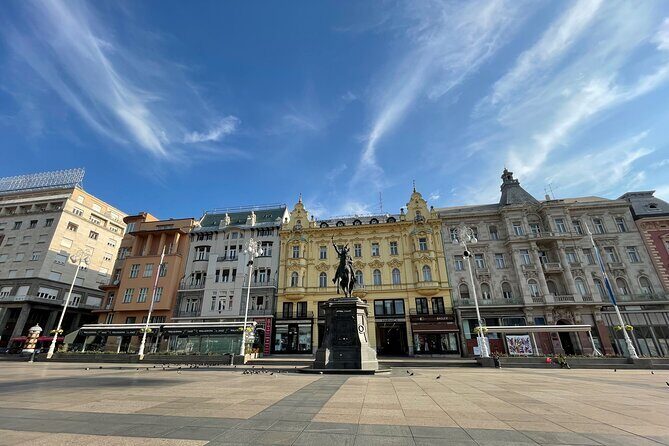
Then it’s onto Ban Josip Jelačić Square (Jelačić Square), the go-to meeting point in the center. You’ll feel the square’s role right away: it’s a landmark that ties the city’s daily movement together.
This is also a useful reference point for the rest of your stay. After the tour, you can orient yourself quickly: if you know where this square is, you know where you are in Zagreb.
Ulica Tome Bakača: Cathedral viewpoints and the Square of the European Union (Stop 3)
Next comes Ulica Tome Bakača, a short segment that gives you views toward the Cathedral area and the nearby Square of the European Union. Even though the time here is brief, it helps you connect streets to landmarks.
If you like photos, this is where you’ll benefit from pausing. The value isn’t just the view—it’s learning the visual geography of Upper Town from angles that come up naturally as you walk.
Cathedral of Zagreb: Assumption and Zagreb’s big-story past (Stop 4)
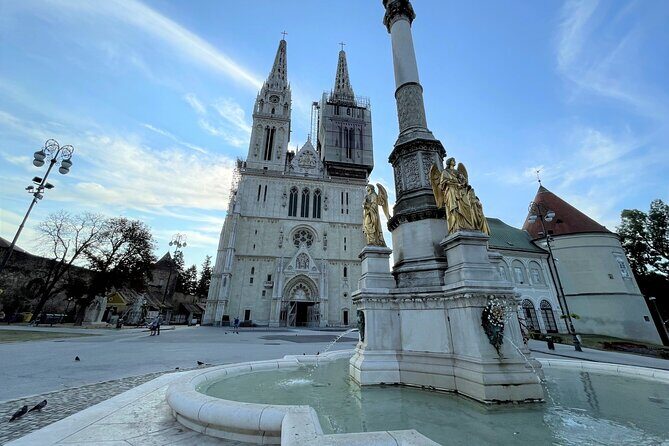
You’ll reach the Cathedral of the Assumption of the Blessed Virgin Mary, a major Zagreb landmark with a history that’s explained as you stand there. The key thing is the guide doesn’t treat it like a random big church. They connect it to how the city grew and what makes this monument “Zagreb” rather than just another European Cathedral.
Also, the timing here is long enough to actually notice details. If you’re the type who likes architecture and symbolism, this is one of the stops you’ll remember.
Dolac Market: where Zagreb eats (Stop 5)
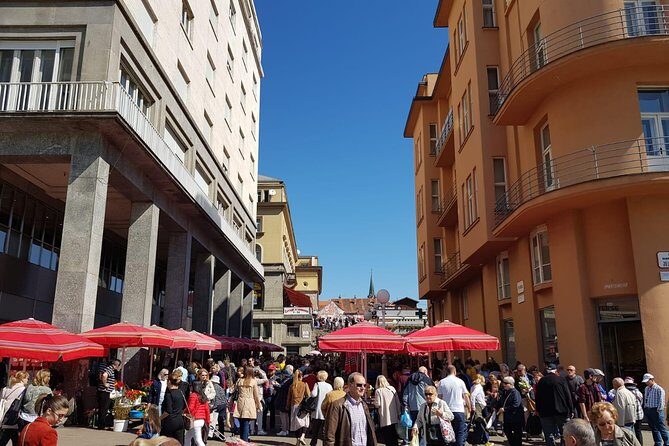
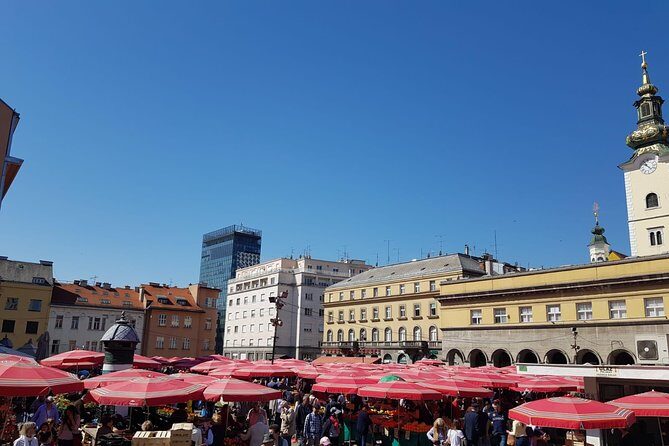
Then you arrive at Dolac Market, a lively farmers-market style stop. It’s a great place to see everyday life: vendors, local produce, and the energy of a market that’s part of the city’s routine.
Two practical notes: Dolac is closed in the afternoon and on public holidays. So if you book this tour on a day/time when the market is off, you may not get the same full market experience. Still, even outside peak hours, it helps you understand why locals use this area.
Tkalčićeva Street: coffee culture in motion (Stop 6)
A short walk brings you to Tkalčićeva Street, known for its café vibe. This stop is less about a single monument and more about understanding what Zagreb feels like when it’s awake.
If you’re planning your own restaurant evening, this is a good “sighting” walk. You’ll leave with a better sense of where locals go for coffee and casual hangouts—useful when you want dinner plans that feel like part of daily life, not a tourist checklist.
Tunel Gric: a different Zagreb layer (Stop 7)
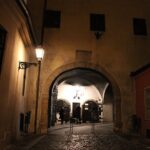
Next is Tunel Gric, the tunnel beneath Upper Town. It’s one of those places that makes Zagreb feel deeper than postcard streets, because it shows how the city moves and what’s underneath.
There’s a catch: the tunnel may be closed due to events (like exhibitions or shows). If it’s closed on your day, don’t panic. Your guide will usually pivot with what’s still accessible and keep the story moving—ask them on the spot what’s possible that day.
Funicular Railway: included ticket, listed closure until March 2026 (Stop 8)
This is the part people often expect to be smooth: the funicular. Here’s the practical issue: the tour notes the funicular is closed due to renovation until March 2026, even though the funicular portion is listed as included.
So you’ll want to plan for date-specific reality. If your tour lands before the reopening, expect that the funicular ride may not happen. Also, stairs become more relevant then, and one guide experience specifically flagged stair climbing as the main challenge.
Lotrščak Tower and the Gric cannon (Stop 9)
Then you’re at Lotrščak Tower, which houses the Gric cannon. This is a classic “lookout + story” stop. You’ll get the historical context behind the tower and why this cannon matters in Zagreb’s identity.
It’s also a breather in the route—short, focused, and scenic. If you like when a place has a specific local twist (not just general European history), this is where the tour earns its keep.
Strossmayer Promenade: Zagreb rooftops in one glance (Stop 10)
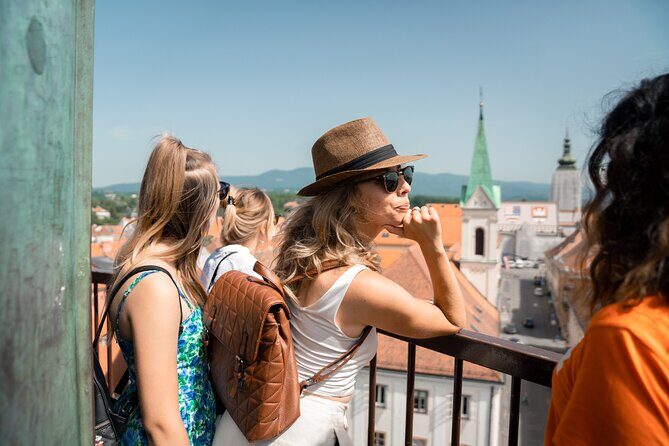
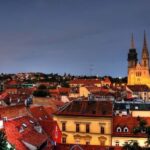
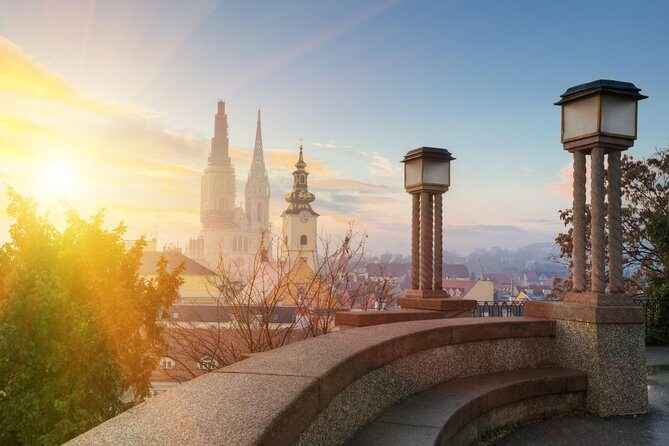
From there, Strossmayer Promenade brings you to one of the best places for panoramic views of the city’s rooftops. This is the kind of stop that makes your photos look better than they would with random walking.
Even if the view doesn’t blow your mind in every season, it helps you connect everything you’ve seen so far. When you finally look over the city, Lower Town and Upper Town stop feeling like separate areas and start feeling like one system.
Ćirilometodska ulica and the Museum of Broken Relationships (Stop 11)
A short walk takes you to Ćirilometodska ulica, tied to the story of the Museum of Broken Relationships. This is one of Zagreb’s most talked-about quirks, and the tour uses it to show a different kind of local culture—one that can be serious, odd, and moving without being overly formal.
Since the time here is brief, the goal is understanding what the museum represents and why Zagreb would put it here. If the museum is on your list, this stop can be the reason you’ll go after the walk.
St. Mark’s Square: color, patterns, and the church facade (Stop 12)
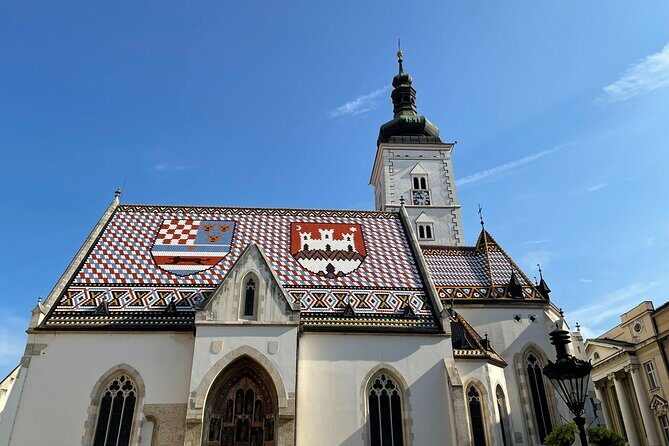
At St. Mark’s Square, you’ll spend enough time to appreciate St. Mark’s Church and its famous visual character. The square is a highlight stop for a reason: it’s photogenic, central to Upper Town life, and packed with detail.
This is where your guide’s storytelling really helps. Instead of just admiring a church, you’ll understand why it’s a symbol and how it fits Zagreb’s wider identity.
Petrini Pyli (Stone Gate): a medieval survivor (Stop 13)
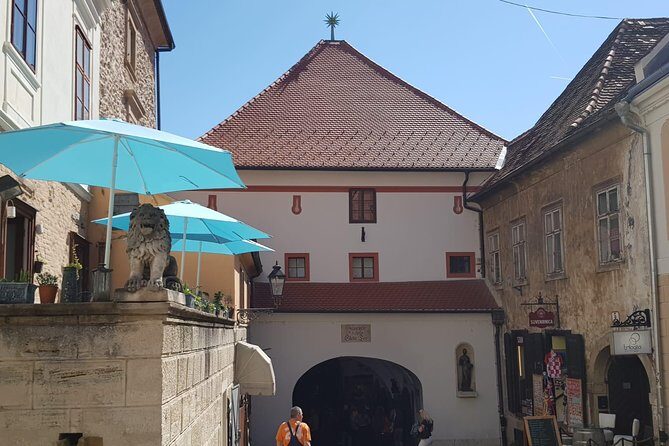
Next is Petrini Pyli, the Stone Gate, described as the only medieval city gate that survived to the present day. That one detail alone makes it worth stopping for.
It’s also a nice “time travel” moment. You’ll feel the contrast between medieval walls and modern streets, and that’s exactly the kind of contrast this route is built to highlight.
Radiceva back toward Lower Town (Stop 14)
You then walk via Radiceva Street to return toward Lower Town. This section works like a transition: after all the Upper Town landmarks, it helps you reset and shift your head back down toward daily-city Zagreb.
If you’re planning to keep exploring after the tour, this direction is useful. You’re not just dropped off; you’re guided along a logical path that keeps you close to where you want to go next.
Ilica: Zagreb’s shopping street starts here (Stop 15)
Finally, you reach Ilica, the shopping street that starts at the main center. This closing stop is practical. It gives you a simple next step: wander, browse, or head toward dinner without needing a taxi or another long orientation walk.
It also makes the tour feel complete. You’ve gone from parks and squares, to monuments and markets, and you end where many people naturally continue their day.
How the guide experience tends to feel in real life
The biggest “quality signal” across guide names like Petra, Maja (or Mia), Thomas, Tomislav, Goran, and Petros is that they’re praised for being on-time, friendly, and strong at turning facts into stories you remember. In practical terms, that means you’re not stuck with a script.
One consistent pattern from guide styles: they explain layout and context so you don’t just see the sights—you understand the city’s logic. Many people also call out humor and the ability to answer questions, which makes this especially good if you’re the type who likes asking why things look the way they do.
Weather, walking, and what to pack so the tour stays fun
This tour operates in all weather conditions, so dress appropriately. If it’s rainy, bring something you can walk in without slipping. If it’s hot, plan for sun and hydration.
The route is mostly easy to moderate, but you should wear comfortable shoes. Also, because the funicular may not be usable depending on renovation status, assume some walking effort and possibly stairs.
A hat and water are sensible. One guide-led experience mentioned taking water and using a hat in heat, and that advice holds up for nearly any city day.
Should you book this private Zagreb walking tour?
Book it if:
- You want a fast, guided orientation to Zagreb’s Upper and Lower Town layout
- You’re short on time and want the core landmarks covered in one smooth loop
- You prefer a private format where your guide can set the pace, answer questions, and adjust to interests
- You’ll likely appreciate small cultural stops like Dolac Market and Tkalčićeva Street
Skip or ask for alternatives if:
- You need step-free travel or you’re very sensitive to stairs, given the funicular situation and the route’s walking demands
- Your travel dates fall when Tunel Gric or Dolac Market are likely closed (tunnel can be blocked by events; Dolac is closed in the afternoon and on public holidays)
- You want strictly inside-the-ticket attractions only—this is a walking-and-seeing tour, and access can shift based on closures
If your goal is to get your bearings fast and leave with a real sense of Zagreb, this tour is built for that. The price isn’t cheap, but the private guide time and tightly planned route can be a smart use of limited sightseeing hours.
FAQ
How long is the private walking tour of Zagreb?
It runs about 2 hours 30 minutes.
What does the tour cost?
The price is $78.44 per person.
Is hotel pickup included?
Pickup and drop-off are included for select hotels. If your hotel isn’t in the pickup area, you’ll start at Zrinjevac.
Is this tour truly private?
Yes. It’s private, meaning only your group participates.
Where do I start and where does it end?
You start at Zrinjevac 2, 10000 Zagreb, Croatia, and end at Ban Josip Jelačić Square (Trg bana Josipa Jelačića), 10000, Gornji Grad – Medveščak, Zagreb, Croatia.
Is the funicular included in the tour?
A funicular railway ticket is listed as included, but the tour information also states the funicular is closed due to renovation until March 2026. Check what will be used on your specific dates.
What happens if Dolac Market is closed?
Dolac Market is closed in the afternoon and on public holidays, so the market portion may not look the same depending on your tour time and date.
Does the tour run in bad weather?
It operates in all weather conditions. You should dress appropriately.
Can I get a full refund if I cancel?
Yes. You can cancel up to 24 hours in advance for a full refund. If you cancel less than 24 hours before the start time, the amount paid won’t be refunded.