REVIEW · ZAGREB
Zagreb Insider Walking Tour
Book on Viator →Operated by Servus Tours · Bookable on Viator
Zagreb clicks into place fast. This Zagreb Insider Walking Tour strings together the city’s famous landmarks and the stuff you’d miss on your own, with a private guide who keeps the walking manageable and the explanations clear. I especially like the chance to walk through Dolac Market with context and then shift gears to Tunel Gric, a WWII site that adds real weight to the day.
The main catch is timing: it’s about 90 minutes, so you should plan to move at a steady pace and not expect long stops or deep museum time.
In This Review
- Key highlights worth your attention
- Starting at Ban Jelačić Square: the walk begins where Zagreb announces itself
- Krvavi Most and the Cathedral of Zagreb: small stops, strong meaning
- Dolac Market: the fastest way to get local food intelligence
- Tkalčićeva Street: a drink and lunch street with history in the margins
- Petrini Pyli and St. Mark’s Church: medieval access and a colorful roof
- Lotrščak Tower: plan your timing around noon
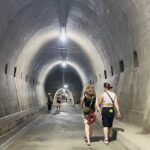
- Tunel Gric: walking into a WWII reality
- Price and how $127.99 fits a short Zagreb visit
- Who should book this Zagreb walking tour?
- A quick reality check on guides and what to expect
- Should you book the Zagreb Insider Walking Tour?
- FAQ
- FAQ
- Where does the tour start?
- How long is the Zagreb Insider Walking Tour?
- Is this tour private?
- Is pickup available?
- Do I need an admission ticket for the listed stops?
- Is there a mobile ticket?
- What sights are included on the walk?
- What’s the cancellation policy?
- Are service animals allowed?
Key highlights worth your attention
- Private guide for your group so you can ask questions as you go
- Dolac Market as your shortcut to what locals actually eat and drink
- Lotrščak area timing matters, since something happens around noon here
- Tunel Gric WWII tunnel for a perspective you won’t get from photos alone
- Street-to-landmark flow that helps you understand how Zagreb fits together
Starting at Ban Jelačić Square: the walk begins where Zagreb announces itself
Your tour starts at Ban Jelačić Square, the obvious anchor point in Zagreb, where the city’s central rhythm is easy to spot right away. This is a smart way to begin, because you’re not guessing where to go next. You also get a quick orientation for how the sights relate to each other as the walk unfolds.
At this stop, you’ll learn why the Ban Josip Jelačić Monument matters in Zagreb’s story and how the square functions as a gathering point. It’s only a brief introduction, but it sets the tone: this is not a stop-and-rush checklist. The guide uses these early landmarks to frame what you’ll see later.
Practical tip: if you’re jet-lagged or have limited time, starting here helps you build mental maps faster. And because the tour ends back at the meeting point, it’s low-stress if you’re coordinating other plans.
Other walking tours we've reviewed in Zagreb


Krvavi Most and the Cathedral of Zagreb: small stops, strong meaning
Next comes Krvavi Most, a place with an identity you can sense instantly—because today it’s a street, even though the name points to something older. The story (shared by your guide) explains what happened over time and why the current look doesn’t match the name. It’s the kind of detail you can’t easily Google in five minutes, and it gives the walk a satisfying “wait, how did that change?” feeling.
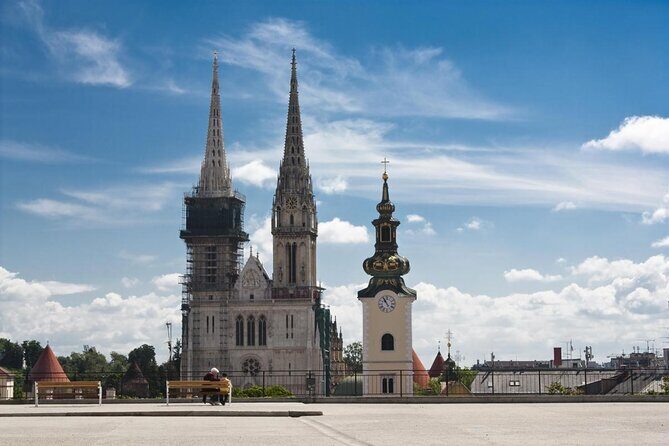
Then you move to the Cathedral of Zagreb, the central church in the city. Even if you’ve seen cathedrals in other countries, I like how this stop is treated as part of the larger civic picture, not just architecture. The guide’s commentary helps you notice what you might otherwise overlook—like the cathedral’s role as a key landmark for understanding the city’s center.
One good thing about both of these stops: they’re short. That’s helpful if you want to keep energy for the food and streets later. The tour also lists admission as free for these viewing stops, so you’re paying mainly for interpretation and time with a real local guide, not for ticketed experiences.
Dolac Market: the fastest way to get local food intelligence
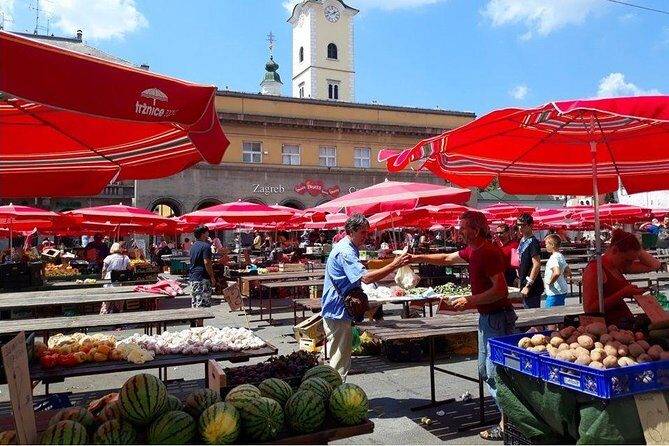
If you only cared about “major attractions,” you could skip ahead. But Dolac Market is exactly why this tour works. It’s described as the bell of the city—an idea that fits, because the market feels like a daily pulse. You’re not just looking at stalls. You’re learning how locals shop, eat, and drink, which is the useful part when you’re trying to pick where to go next.
This is also where the guide’s local recommendations start to feel concrete. You get context for what you see, and then you can translate that into your own meal choices later—whether you want something casual, a sit-down lunch, or a drink stop that’s actually in the neighborhood rhythm.
What I like most: the market stop turns into a practical lesson. It’s not just pretty photos. It’s how to understand Zagreb through what people buy. For first-time visitors, that’s a huge advantage, because it removes the guesswork from your next few hours.
Time reality check: it’s about ten minutes here. If you’re the type who could spend an hour reading labels and sampling everything, you might want a follow-up visit on your own after the tour. But as an orientation stop, it’s excellent.
Tkalčićeva Street: a drink and lunch street with history in the margins
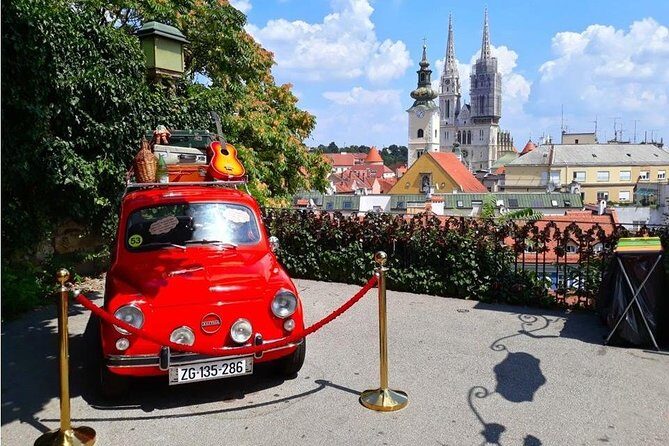
From the market area, you step into Tkalčićeva Street, the kind of place you’d naturally walk past. The difference is you won’t be walking past it blindly. The guide points out history and trivia tucked into the streetscape, and you’ll also get clear pointers for where to grab a drink or lunch.
This stop is one of the most valuable parts of the tour, because it’s where sightseeing and nightlife intersect. You’ll leave with a short list of local picks to use right away, which saves time later—especially if you’re trying to decide where to eat without burning your evening on wrong choices.
A small consideration: because this is a street stop, you may feel the tour’s walking pace more here than at a monument. If you’re picky about slowing down to browse menus, plan to do that after the tour ends. Use the tour to learn, then use your free time to enjoy.
Petrini Pyli and St. Mark’s Church: medieval access and a colorful roof
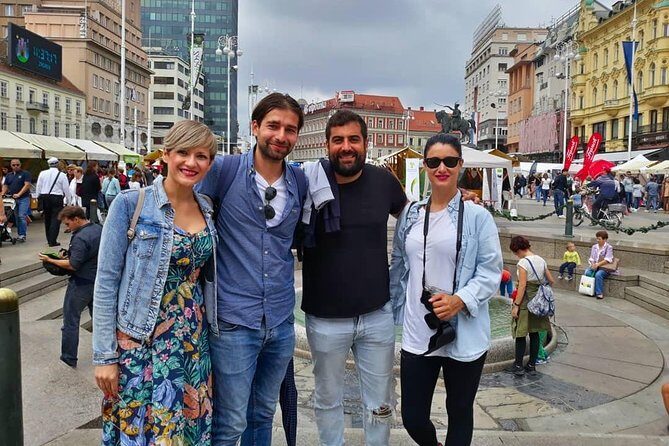
Next you’ll reach Petrini Pyli, described as the original medieval access to the city. This matters because it’s not just “another pretty building.” It’s a reminder that Zagreb’s old structure shaped how people moved, entered, and built the city. When you understand the entry points, you start to read the streets differently while you’re still walking.
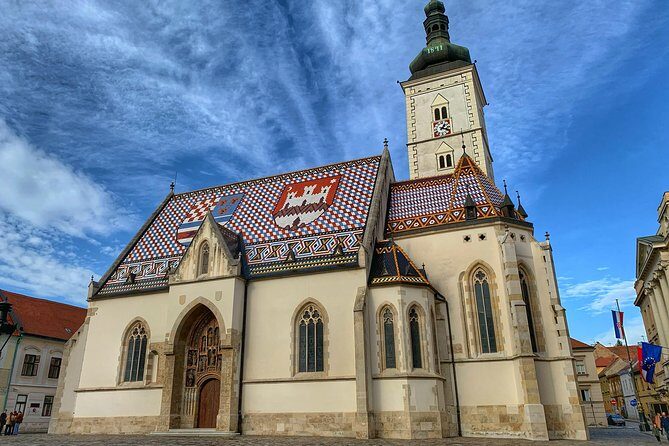
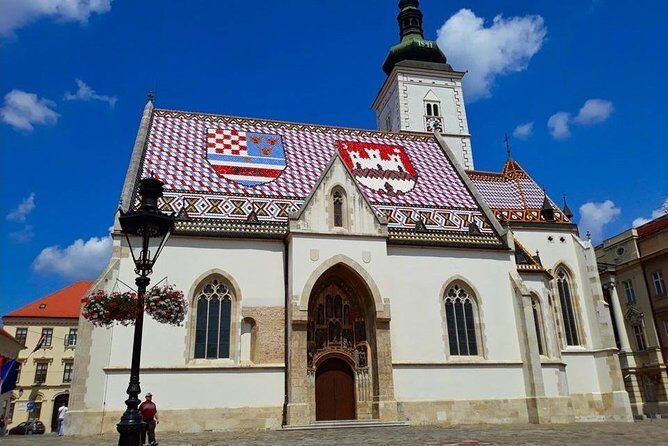
Then comes St. Mark’s Church, famous for its colorful roof. The tour uses the church as a photo-moment—but with context. Even if the roof does most of the work visually, the guide’s explanation helps you connect the church to the broader identity of Zagreb instead of treating it as a standalone landmark.
These two stops together make a nice change of pace: one emphasizes how the city was accessed long ago, and the other shows how the city expressed identity in religious architecture. If you like your walking tours to have variety—streets, churches, and historical structure—this pairing works well.




Lotrščak Tower: plan your timing around noon
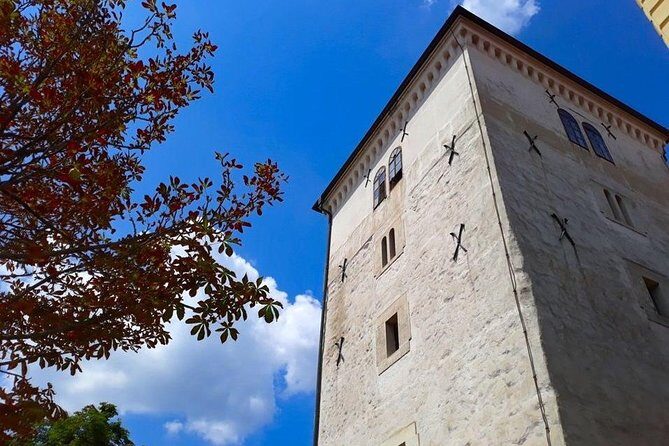
Lotrščak Tower is one of Zagreb’s best-known spots, and the tour explicitly tells you to time it. Around noon, something happens here, and the guide nudges you to wait for it if you can.
That’s a simple but smart tip. Many walking tours rush past key moments. This one builds the chance to see a daily event that adds energy to the stop. Even if you’re not a big “time it perfectly” person, just being aware helps you decide whether to slow down for a few minutes.
Keep expectations realistic: you’re not getting a long attraction visit. This is still a walking tour format, so you’ll be watching, learning, and moving on. But that noon timing can turn an ordinary tower photo into a memory with a story.
Tunel Gric: walking into a WWII reality
Now for the stop that gives the whole tour emotional weight: Tunel Gric, a WWII tunnel. The idea is straightforward—take a walk in the tunnel from the war years. The value here isn’t just the novelty of going underground. It’s that you get perspective on how people lived and moved during a terrifying period, in a way that’s hard to capture from above-ground sites alone.
I like that this tour doesn’t treat the tunnel as an optional add-on. It’s part of the main route, so your understanding of Zagreb becomes more balanced: grand squares and church roofs on one side, and wartime survival infrastructure on the other.
One practical note: because it’s a tunnel, you’ll want to dress for comfort. If you run hot or dislike confined spaces, you might feel it more here than at the open-air stops. But if you’re curious about how cities handle history, this stop is the one that makes the whole day feel more meaningful.
Price and how $127.99 fits a short Zagreb visit
At $127.99 per person, this isn’t the cheapest way to see Zagreb. But the price makes sense if you think of what you’re paying for: private guiding time, interpretation at multiple landmarks, and a tight route that helps you find local recommendations fast.
You’re also getting a few practical perks that help justify the cost:
- Pickup offered, which can remove stress if you’re managing luggage or just don’t want to hunt for transport
- Mobile ticket, so you’re not scrambling with printouts
- Group discounts, which can make it easier to bring friends or travel in pairs
Duration is about 1 hour 30 minutes (about ten minutes per stop, with the walk starting at the monument square and ending back where you began). If you’re short on time, that compact format is exactly what you want.
Also, the tour’s stop list notes admission ticket free for the sites at each stop. That doesn’t mean every attraction is a free-for-all forever, but it does suggest your main payment goes to the guide experience, not to entrance fees at each point.
If your plan is just to take photos and move on, you might find a self-guided walk cheaper. But if you want a local’s framing—what to notice, what it means, and where to go afterward—this is strong value for a first-time Zagreb day.
Who should book this Zagreb walking tour?
This tour is a good match if you:
- want to get your bearings fast in Zagreb
- like walking tours that include food and neighborhood guidance
- prefer a private group where you can ask questions and move at a reasonable pace
- value history explained in plain language at real locations
It also lists that service animals are allowed and that most travelers can participate, which is helpful if you’re deciding on a walking-based experience.
You might reconsider if you:
- hate walking for 90 minutes with limited stop time
- want long stays at each landmark like a slow museum day
- need an ultra-custom route based on specific interests not covered by the core stops
A quick reality check on guides and what to expect
The guides tied to this experience have a reputation for answering questions and sticking to history with confidence. Names mentioned in past tours include Bojan and Dejan, both described as experienced and strong at helping people understand what they’re seeing.
That matters because a walking tour lives or dies on the guide’s ability to connect dots. Here, the route is built to connect dots: civic square → historical bridge site → cathedral → market → street life → medieval access → church roof → noon moment → WWII tunnel. If you’re the type who enjoys that kind of cause-and-effect storytelling, you’ll likely enjoy this format.
Should you book the Zagreb Insider Walking Tour?
I’d book it if you want a smart first look at Zagreb without doing homework. It’s short enough to fit into a busy itinerary, and it focuses on the mix that makes a city feel like a place: landmarks, streets, and a market stop that helps you eat like you live there for a day.
Skip it only if you already know Zagreb well or you prefer total freedom with no guide input. Otherwise, this is one of the more practical ways to turn a single morning or afternoon into real orientation.
FAQ
FAQ
Where does the tour start?
It starts at Ban Jelačić Square (Trg bana Josipa Jelačića, 10000 Zagreb).
How long is the Zagreb Insider Walking Tour?
It runs about 1 hour 30 minutes.
Is this tour private?
Yes. It’s a private tour/activity, and only your group participates.
Is pickup available?
Pickup is offered.
Do I need an admission ticket for the listed stops?
The tour information lists admission ticket free for each stop on the route.
Is there a mobile ticket?
Yes, a mobile ticket is provided.
What sights are included on the walk?
You’ll visit Ban Josip Jelačić Monument, Krvavi Most, the Cathedral of Zagreb, Dolac Market, Tkalčićeva Street, Petrini Pyli, St. Mark’s Church, Lotrščak Tower, and Tunel Gric.
What’s the cancellation policy?
You can cancel for a full refund up to 24 hours in advance. If you cancel less than 24 hours before the start time, the amount is not refunded.
Are service animals allowed?
Yes, service animals are allowed, and most travelers can participate.