REVIEW · ZAGREB
Private Walking Tour of Zagreb
Book on GetYourGuide →Operated by Petros · Bookable on GetYourGuide
Zagreb clicks fast on a smart private walk. You’ll get a focused tour of the city’s main sights, plus a stop that most walking tours skip: the WW2 Tunnels. And because it’s private, the pace can stay comfortable.
I especially like how the route strings together the story of the city, starting at Zrinjevac and working toward the old core around Ban Jelačić. I also love the calm pacing and the way the guide works with real foot traffic and slopes, so the experience feels doable even if your legs need a bit of extra kindness.
One consideration: the funicular is closed for renovation until March 2026. The tour still includes a short stroll near it, but you shouldn’t plan on riding during this period.
In This Review
- Key highlights worth your attention
- Why this private Zagreb walk feels efficient (and not rushed)
- Where the tour starts: Zrinjevac Park and Ban Jelačić’s orbit
- Ban Jelačić Square: names, symbols, and how Zagreb got its identity
- Zagreb Cathedral: what you should look for and why its story matters
- Dolac Market: the belly of Zagreb (and a great way to read local life)
- Tkalčićeva Street: the bar street and the local philosophy of lounging
- The WW2 Tunnels stop: the one highlight that changes your whole perspective
- Funicular near the Upper Town: joy for 135 years, but plan around the closure
- Upper Town (Gradec): medieval streets and panoramic timing
- Strossmayer Promenade: rooftops and the best kind of pause
- Lotrščak Tower: a landmark you’ll recognize fast
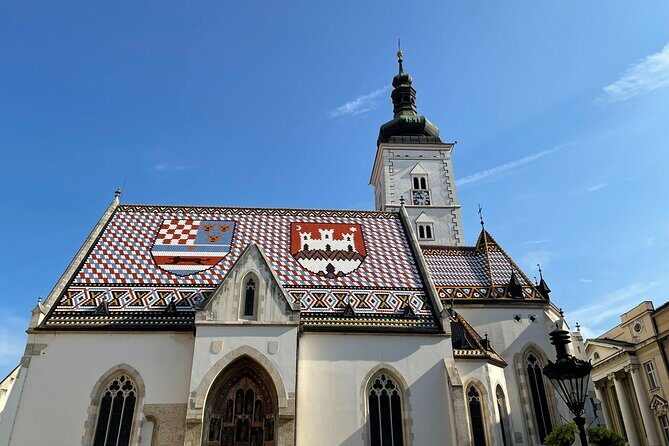
- Saint Mark’s Church: why its rooftop is the Zagreb postcard
- Down toward older Zagreb: 14th-century pharmacy and the Stone Gate
- The oldest pharmacy in Zagreb (14th century)
- Stone Gate: the surviving city wall reminder
- The guide’s stories and the last few local surprises
- Duration and pace: how 150 minutes works in practice
- Price and value: what $76 buys you in Zagreb
- Who should book this tour (and who might want something else)
- Should you book the Private Walking Tour of Zagreb?
- FAQ
- How long is the private walking tour of Zagreb?
- Where do I meet the guide?
- Is the tour private and in English?
- What major sights are included?
- Does the tour include hotel pickup and drop-off?
- What about the funicular during renovations?
Key highlights worth your attention
- Zrinjevac Park start point right by the meteorological station, easy to find before you head into the center
- Ban Jelačić Square to Cathedral with explanations of why Zagreb is named as it is
- Dolac Market and Tkalčićeva Street for everyday Zagreb culture, not just monuments
- WW2 Tunnels included before you move up to Gradec
- Upper Town panoramas from Strossmayer Promenade, plus Lotrščak Tower and Saint Mark’s Church
- Stone Gate and the 14th-century pharmacy for a step back into older Zagreb layers
Why this private Zagreb walk feels efficient (and not rushed)
Zagreb is one of those cities where you can spend a lot of time “seeing stuff” and still not really understand how it all fits together. This tour is built to fix that, with a 150-minute route that keeps the key sights connected in a logical order—park-to-square, square-to-markets, then down-and-up through the old layers of the city.
You’ll appreciate the private format if you like questions, conversation, or you just don’t want to keep matching the speed of a larger group. In a five-star review, the calm pace stood out, especially because it worked for a pregnant visitor tackling stairs and slopes without stress.
Another plus: you’re not just stuck with photo stops. The guide shares context about daily habits, local ideas of lounging, and what people do on certain streets. That’s the difference between a highlights tour and a “now I get it” tour.
Other private walking tours in Zagreb


Where the tour starts: Zrinjevac Park and Ban Jelačić’s orbit
The meeting point is Trg Nikola Šubić Zrinski 2, in Zrinjevac Park, next to the meteorological station. There’s a small display there showing temperature and barometric pressure on the north side of the park, which makes the spot easy to recognize before your walk begins.
This matters because it sets the tone. Zrinjevac gives you a clean starting point right near the main “gravity” of central Zagreb. From here you can orient yourself without immediately feeling packed into alleyways or climbing a hill right away.
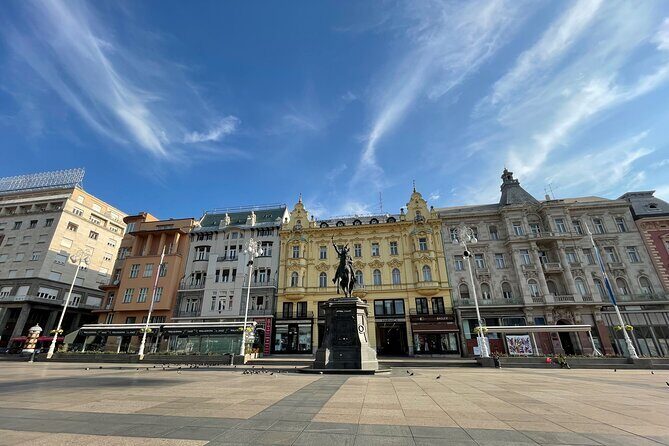
From the start, your guide leads you toward Ban Jelačić Square, the main square that acts like Zagreb’s living room. It’s also a great way to begin because you’ll understand the city before you start climbing.
Ban Jelačić Square: names, symbols, and how Zagreb got its identity
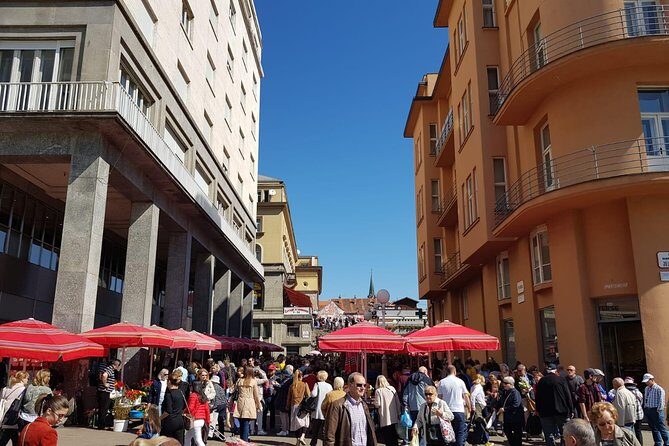
At Ban Jelačić, you’ll learn how Zagreb got its name. That might sound like trivia, but with a good guide it becomes a way to read the city—what it values, what it remembers, and how it evolved from medieval roots into a capital.
Ban Jelačić Square is also where you’ll feel the pull of the city’s different layers. The cathedral, the markets, the streets—everything you’ll see next lines up with this central point. Even if you plan to come back later on your own, this stop gives you a mental map that makes the rest of the day easier.
Zagreb Cathedral: what you should look for and why its story matters
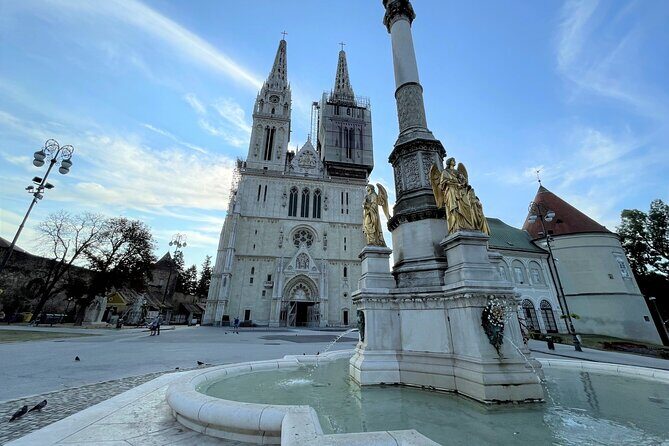
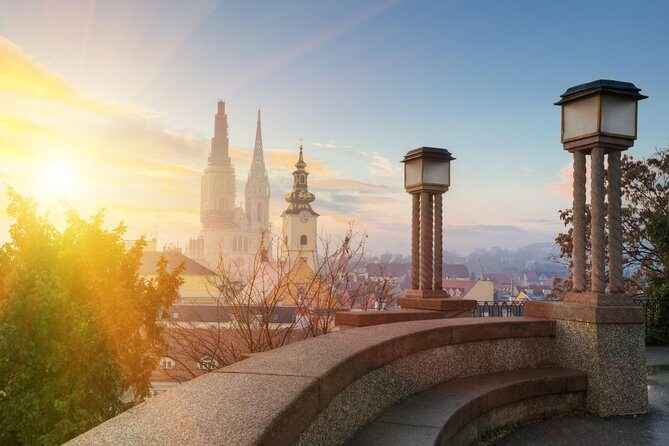
Next comes one of Zagreb’s most important landmarks: the Cathedral of the Assumption of the Blessed Virgin Mary. You’ll hear where the cathedral’s origins come from and why it faced difficulties over time, along with details about renovations.
What I like about this kind of stop is that it changes how you look at buildings. Instead of just admiring the exterior, you’ll understand why the site looks the way it does and what has shaped it through the years. That also helps you spot features later when you walk past on your own.
The cathedral stop is a strong checkpoint in the tour because it’s a moment of structure. After this, the route becomes more street-level—markets, everyday culture, then the unusual WW2 stop.
Dolac Market: the belly of Zagreb (and a great way to read local life)
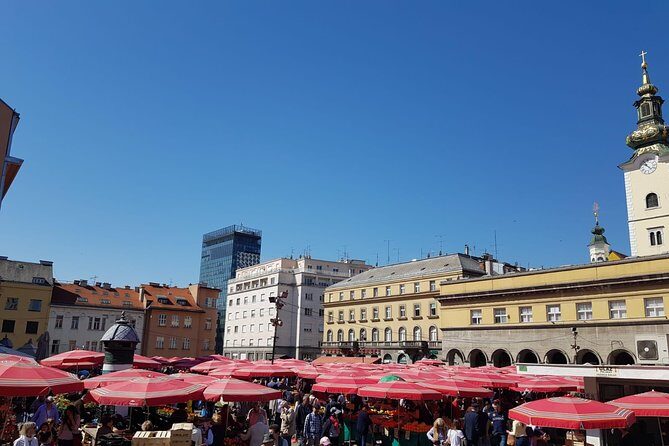
Your route takes you to Dolac Market, often described as the “belly” of Zagreb. This is the place to notice daily patterns: what locals buy, how the space functions, and how the city meets itself in public.
Even if you’re not shopping, Dolac is ideal for getting a feel for Zagreb’s rhythm. Markets like this are practical cultural lessons. They show you how people live when they’re not posing for travel photos.
If you’re the type who likes to learn through real-life settings, this is one of the best places in the itinerary. It’s more than scenery, and it keeps the tour grounded in everyday Zagreb.
Other walking tours we've reviewed in Zagreb



Tkalčićeva Street: the bar street and the local philosophy of lounging
Then you move to Tkalčićeva Street, often known as the bar street. It has a steady stream of people, and the guide connects that energy to what locals think about everyday habits—especially the idea of lounging.
This is a smart inclusion because it stops the tour from becoming purely historical. You’ll still get stories, but now you’re learning how Zagreb feels in day-to-day life. You’ll also be better positioned for your own evening plans afterward, since you’ll know where the action concentrates and what kinds of streets you’ll enjoy walking.
The WW2 Tunnels stop: the one highlight that changes your whole perspective
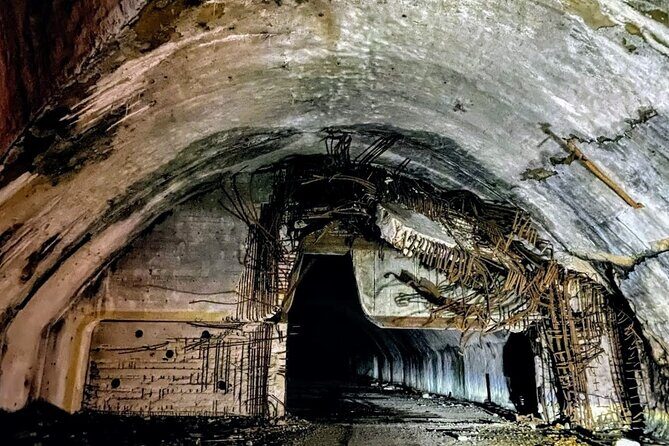
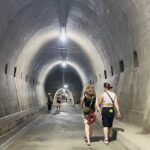
Don’t miss the WW2 Tunnels stop. This is the standout detour that turns a standard “old town highlights” walk into something more memorable and emotionally weighty.
Why it works in the itinerary: it arrives before the tour moves into the Upper Town (Gradec). That means you’ll experience a shift in mood—from heavy, real-world history underground to the brighter views and postcard-style landmarks above.
Also, tunnels are one of those experiences where the guide’s framing really matters. Without context, it can feel like “just passages.” With explanations, you start to understand the point of the space and why it mattered.
Funicular near the Upper Town: joy for 135 years, but plan around the closure
A short stroll away is the funicular, described as the oldest form of public transportation in Zagreb, bringing joy to citizens for over 135 years. But here’s the practical reality: the funicular is closed for renovation until March 2026.
So what should you do with that information? Treat it as a preview. You’ll still get the area and the views that come with being near it, but don’t schedule your day around riding it unless your travel dates are after the reopening.
If you’re okay with walking and enjoy the gradual climb, the closure won’t ruin the tour. It just changes one small expectation.
Upper Town (Gradec): medieval streets and panoramic timing
Once you’re in Gradec, the tour heads into the Upper Town area—one of the two medieval settlements that formed Zagreb. This is where the city starts to look like postcards, but the guide also helps you understand the layout, not just the scenery.
Gradec is where you’ll feel the elevation and the viewpoint advantages. It’s also where you’ll likely appreciate the private structure again: the guide can slow down on steps or regroup when needed.
Strossmayer Promenade: rooftops and the best kind of pause
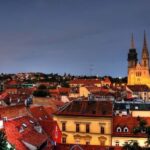
You’ll walk along Strossmayer Promenade, a top spot for panoramic views of Zagreb rooftops. This is the kind of stop where you’ll want a minute to breathe, take photos, and orient yourself visually.
Here’s the value: once you see the rooftops from above, the rest of your sightseeing makes more sense. You can connect what you’ve walked through with what you’re seeing from the hillside.
Lotrščak Tower: a landmark you’ll recognize fast
Next is Lotrščak Tower. This is a classic Gradec marker—visible and memorable—and it anchors your “Upper Town” understanding.
Even if you don’t know anything about towers or fortifications, the guide’s explanations give you something simple: why it’s there, what it meant, and how it fits into the old settlement logic.
Saint Mark’s Church: why its rooftop is the Zagreb postcard
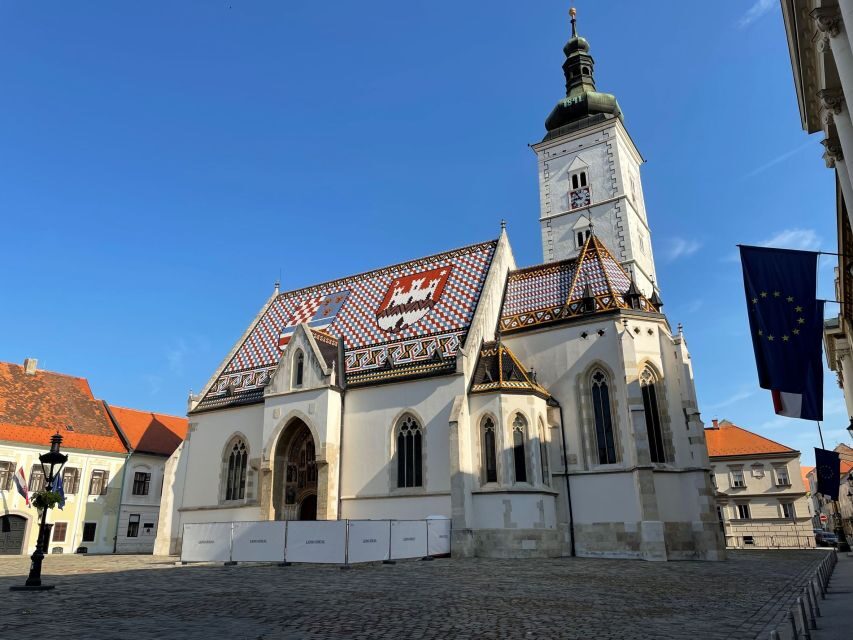
Then comes Saint Mark’s Church, famous for its picturesque rooftop appearance—the one that shows up on postcards sent from Zagreb.
This is one of those moments where you’ll see why a city gets a visual icon. After the WW2 tunnels and cathedral story, this rooftop is a relief: bright, visual, easy to remember.
And because the tour is walking-based, you’ll see it from a few angles, which makes it far more interesting than a quick bus-photo stop.
Down toward older Zagreb: 14th-century pharmacy and the Stone Gate
After Gradec, the route descends into older Zagreb layers—where details become more “human scale” again.
The oldest pharmacy in Zagreb (14th century)
You’ll visit the oldest pharmacy in Zagreb, dating from the 14th century. That’s the kind of detail that makes a walking tour feel real, not generic. A pharmacy isn’t just a shop—it’s a window into what people needed, how medicine worked, and how long institutions can last.
If you like history you can touch (or at least see with your own eyes), this stop tends to land well. It also provides variety after the cathedral and church-adjacent scenery.
Stone Gate: the surviving city wall reminder
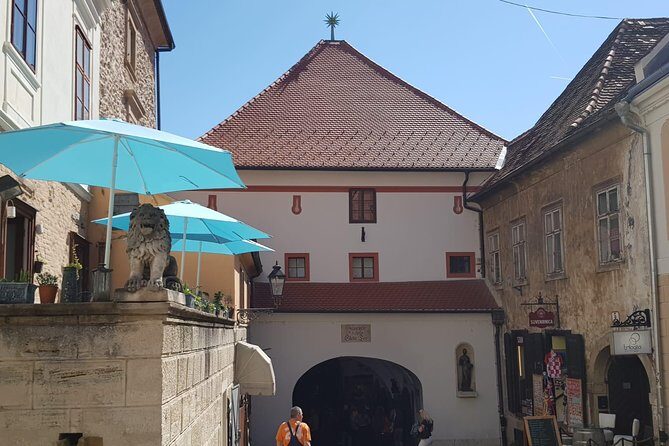
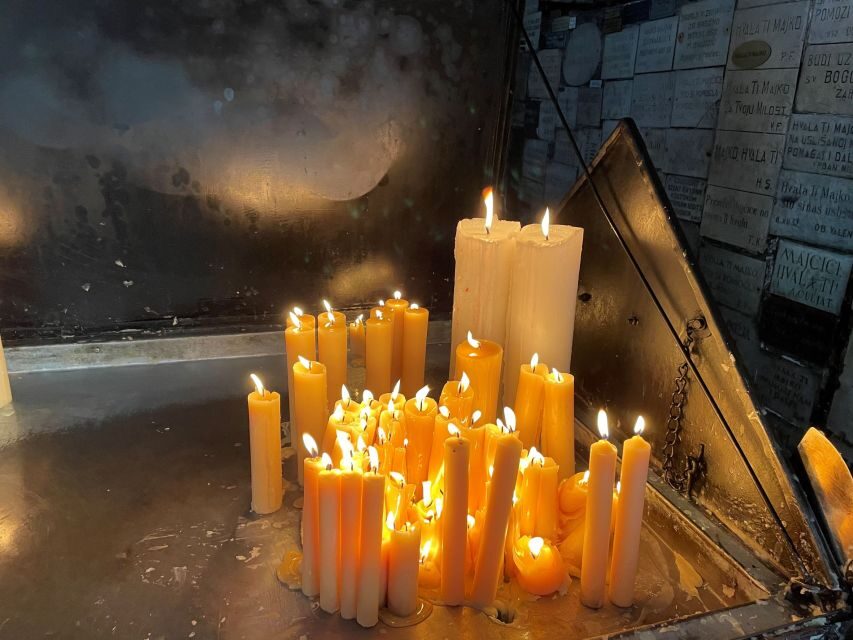
Next is the Stone Gate, part of the city walls and described as the only gate that has survived. Inside, there’s a small chapel housing a miraculous picture depicting Our Lady, the patron saint of Zagreb.
This stop is powerful for two reasons. First, you see a boundary that once mattered for the entire city’s movement and security. Second, you get the religious meaning tied to the city identity.
It’s also a nice “wrap-up moment” in the tour’s logic: you’re moving from major landmarks to smaller, specific places that still carry big meaning.
The guide’s stories and the last few local surprises
After touring the old town sites, your guide shares stories about witchcraft and shows you small city surprises—extra bits you wouldn’t necessarily find on your own.
This is where a private licensed guide really earns their fee. History and folklore aren’t usually written in big signboards. A good guide gives you interpretive context, so you walk away with a richer sense of what people believed, feared, and celebrated.
One review also mentioned an outstanding overview delivered by a professional, and the best part wasn’t just facts—it was how the guide connected the dots across the city.
Duration and pace: how 150 minutes works in practice
The tour runs about 150 minutes. That’s long enough to cover Zagreb’s key highlights without feeling like you’re stuck on a clock all afternoon.
In a perfect world, a walking tour like this feels like a series of short chapters, not a single marathon. That’s exactly what the private format helps with: if you slow down for stairs or want a deeper explanation, you can usually do it without derailing the whole plan.
One review specifically praised the pace as calm enough for a pregnant visitor to keep up. That tells you the route is managed in a way that doesn’t assume you’re on vacation-speed legs.
Price and value: what $76 buys you in Zagreb
At $76 per person, this tour isn’t the cheapest way to see Zagreb—but it’s also not priced like a luxury experience.
What you’re paying for is the combination of:
- a private walk (so you’re not stuck in a crowd)
- a licensed local guide
- a route that covers major landmarks plus the WW2 Tunnels
- hotel pickup and drop-off for centrally located hotels/hostels
For first-time visitors, that can be good value because you’re buying efficiency. You get a guided route that helps you understand Zagreb faster than wandering on your own, and you avoid the common problem of seeing a lot but learning very little.
If you enjoy history and street-level culture, $76 starts to look more like a practical guide fee than a tourist tax.
Who should book this tour (and who might want something else)
This tour is a great fit if:
- you want a high-quality overview of Zagreb’s highlights in one outing
- you like mixing major landmarks with everyday places like Dolac Market and Tkalčićeva Street
- you don’t want to miss the WW2 Tunnels
- you prefer a private pace and space to ask questions
It might be less ideal if:
- you’re strictly focused on museums and indoor experiences only
- you have very limited walking tolerance, because the route includes steps, slopes, and multiple areas across different elevations
But overall, the reviews point to a smooth, non-stressful pace and an experience that feels tailored rather than scripted.
Should you book the Private Walking Tour of Zagreb?
Yes—if you’re in Zagreb for the first time and want a guided path that actually connects the dots. The biggest reason to book is the blend: medieval core landmarks, street-level local life, and the WW2 Tunnels that add real impact and context.
If your dates fall during the funicular closure period, just adjust expectations and focus on the views and walks you’ll still get in Gradec. And if you like tours where the guide shares stories beyond the obvious, this one is built for that.
FAQ
How long is the private walking tour of Zagreb?
The tour lasts about 150 minutes.
Where do I meet the guide?
Meet at Trg Nikola Šubić Zrinski 2 in Zrinjevac Park, next to the meteorological station.
Is the tour private and in English?
Yes. It’s a private group with a live guide speaking English.
What major sights are included?
You’ll see Ban Jelačić Square, the Cathedral of the Assumption of the Blessed Virgin Mary, Dolac Market, Tkalčićeva Street, the WW2 Tunnels, and the Upper Town (Gradec) highlights like Strossmayer Promenade, Lotrščak Tower, and Saint Mark’s Church. You’ll also visit the oldest pharmacy and the Stone Gate.
Does the tour include hotel pickup and drop-off?
Yes, it includes pickup and drop-off for centrally located hotels/hostels.
What about the funicular during renovations?
The funicular is closed for renovation until March 2026, though the tour includes a short stroll near it.