REVIEW · ZAGREB
Back to Yugoslavia Private City Tour in Old-Timer Yugo Car
Book on Viator →Operated by YUGOcar adventure · Bookable on Viator
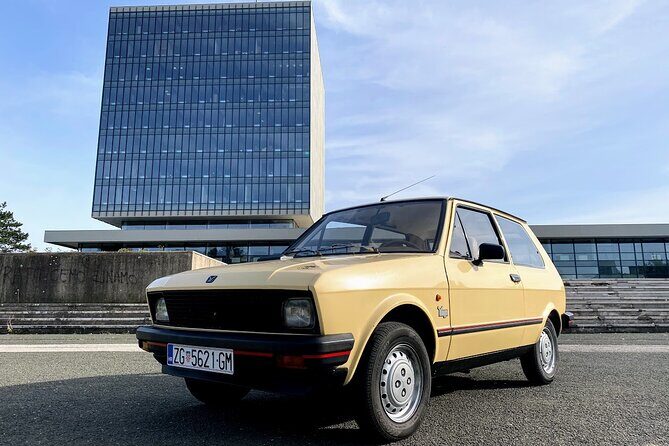
Zagreb has a second storyline you can ride. This private Back to Yugoslavia tour uses an original 35-year-old Yugo car plus a licensed local guide to connect Yugoslav-era politics to everyday streets. You also get a tight, 2.5-hour route that mixes big landmark buildings with quick walks and photo stops.
I like that the stops are chosen for meaning, not just postcards. You’ll see how housing blocks, party headquarters, and major venues shaped daily life and city identity. One possible drawback: the tour requires good weather, and the car is an older classic, so you’ll feel the conditions a bit more than on a modern vehicle.
If you want context for Croatia’s Yugoslav and communist-era landmarks, this is an efficient way to get it, without turning the day into a lecture. With a 5/5 rating across 24 reviews and 100% recommending it, it also suggests solid guide quality for a private tour at this price point.
In This Review
- Key things I’d notice right away
- Why ride a classic Yugo through Zagreb’s socialist landmarks
- Meet at Lisinski and get oriented fast
- Gorica open-air market and the abandoned dishes factory
- Travno and the Mammoth: why apartment blocks matter
- Zagreb fair: the city as a stage for trade and events
- Kockica and The Dice: political power built into architecture
- Sava River levee and Hendrix bridge: where memory meets modern Zagreb
- Concert hall for Eurovision 1990: culture as public memory
- The Lady from Zagreb: a named stop you’ll want to spot
- Dražen Petrović Museum and Cibona tower: sports, civic identity, and memory
- Price and value: what you’re really paying for
- Who this tour suits best
- Tips to make the most of your 2.5 hours
- Should you book this Yugo car tour?
- FAQ
- Where does the tour start and end?
- How long is the tour?
- Is this a private tour and is it offered in English?
- What’s included in the price?
- Are service animals allowed?
- What happens if the weather is bad?
Key things I’d notice right away
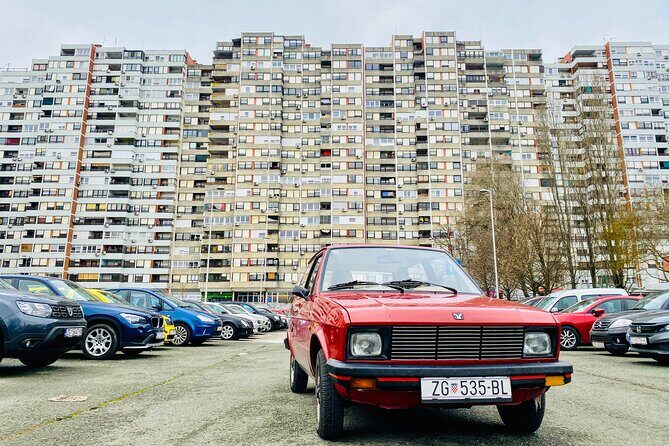
- The original Yugo car ride: a moving time capsule that makes the political landmarks feel personal
- Licensed local guide: explanations tied to what you’re seeing, not generic facts
- Quick, practical stops: short walks at major sites, with time to reset between them
- Yugoslavia-meets-Zagreb mix: housing, party buildings, riverside spaces, and major cultural venues
- Snacks included: small touch, but helpful on a 2.5-hour outing
- Private, bespoke pacing: you focus on what you care about during the route
Why ride a classic Yugo through Zagreb’s socialist landmarks
This is the kind of tour that starts with the right hook: you get in an original Yugo and head into areas shaped by Yugoslav and communist-era planning. That car choice matters. It slows you down just enough to look, and it adds a physical layer to the story, because you’re literally traveling in the era the guide is talking about.
The tour also has a built-in rhythm that works well in Zagreb. You’re not stuck staring at a map while the guide talks. You’ll do a series of short stops where you can step out, orient yourself, and then move on. That matters if you like structure but hate long museum-style timelines.
The route leans toward big, recognizable “statement” buildings and city spaces: mass housing, political headquarters-style architecture, and major public venues. In other words, it’s not only about ideology. It’s also about how the city functioned—where people lived, where power sat, and where big public culture events happened.
That’s also where the value shows up for your time. At $102.41 per person for about 2 hours 30 minutes, you’re paying for a private guide plus private transportation, and the unusual vehicle experience is part of the package, not an add-on.
Other Communism and Yugoslavia history tours in Zagreb


Meet at Lisinski and get oriented fast
The tour starts at the Vatroslav Lisinski Concert Hall area (Trg Stjepana Radića 4). That’s a smart starting point because Lisinski is easy to find, and it puts you near a major cultural anchor in the center.
You’ll end back at Lisinski, unless you choose an end spot within 3 km of the main square. That helps you keep your day from feeling chopped up. You can plan lunch or your next activity without guessing whether you’ll be dropped somewhere inconvenient.
The tour is offered in English, and it’s a private activity, meaning only your group participates. “Private” sounds like a marketing word, but here it matters in practice: you can ask questions as you’re standing in front of the buildings, and the guide can adjust the pace around what grabs you.
Also, you’ll get a mobile ticket, which is a small but real convenience in a city where you’ll likely be using your phone for navigation anyway.
Gorica open-air market and the abandoned dishes factory
Early on, you’ll head to an open-air market area and the abandoned dishes factory called Gorica. This is a strong choice for a Yugoslavia-focused tour because it brings you to the “infrastructure of daily life,” not just political monuments.
Markets are where ordinary routines show up: shopping, bargaining energy, and the texture of how a neighborhood feeds itself. The dishes factory adds the industrial angle—factories and production were a major part of how Yugoslav cities thought about work and modern life. Even if the factory is abandoned now, standing near an old industrial site helps you picture the city when it was actively producing goods, not just hosting events.
The potential downside here is simple: this is a quick stop, not a deep dive. You’ll want to bring curiosity and keep your questions ready, because the value is in the guide’s interpretation while you’re in front of the site.
Travno and the Mammoth: why apartment blocks matter
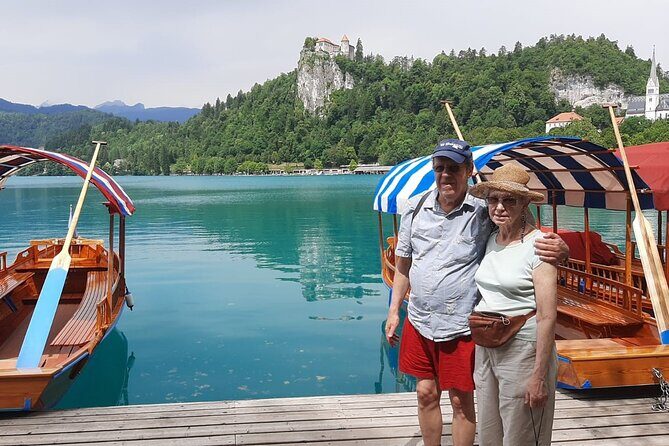
Next comes Travno, with a stop in front of The Mammoth, described as the largest apartment building in Zagreb. If you’re coming to this tour expecting only political speeches and party architecture, this is the part that usually reframes the whole theme.
Mass apartment buildings are more than concrete. They’re how states tried to solve housing needs, and they’re how cities managed growth. When you stand in front of a large block like this, you start seeing planning choices clearly: scale, repetition, and the idea that housing is a system, not just a set of individual homes.
This is also a good “reset stop.” It’s short (about 5 minutes), but it gives you a landmark reference point. Later, when you see other key buildings, you’ll connect the dots between housing, power, and public spaces—without needing a classroom.
If you’re traveling with someone who isn’t super into communism history, this stop can still work because it’s about everyday architecture. It’s easier to discuss how people lived than to debate slogans.
Zagreb fair: the city as a stage for trade and events
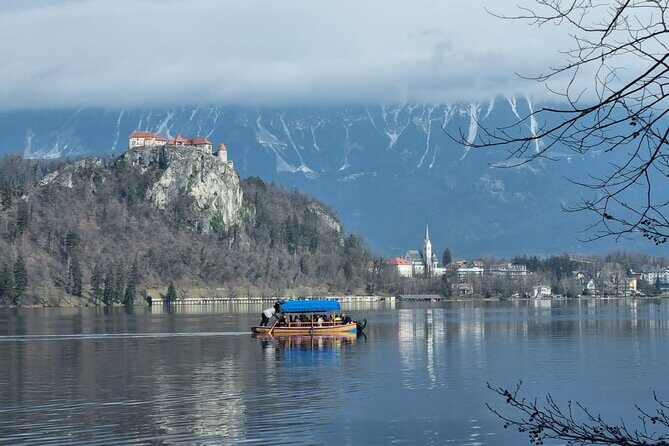
You’ll also pass through or stop around the Zagreb fair, the city’s main venue for different fairs and trade shows. I like this stop because it shifts the story from ideology to civic life.
Fairs and trade shows reflect how a city interacts with the world: what people buy, what industries show up, and which brands or systems get spotlight time. Even without deep technical details, the setting helps you understand how Zagreb presented itself as organized, public-facing, and connected to broader economic activity.
Keep your expectations realistic here. This isn’t a long exhibit visit. It’s more about seeing the urban machine—where large crowds gather, where commerce gets staged, and how that fits into the wider Yugoslav-era story.
Other private walking tours in Zagreb


Kockica and The Dice: political power built into architecture
Then you reach Kockica, with a quick look at The Dice, a building designed to house the Central Committee of Croatian Communists. This is one of the most direct “power landmark” moments on the route.
Buildings like this are useful history tools because they encode messages. Form, size, and location often signal who holds authority and how that authority wanted to be perceived. Standing nearby, you’ll get a sense of how political institutions weren’t hidden away. They were given real visibility, right inside the urban fabric.
This stop is also short (about 5 minutes), so the guide’s explanations matter. If you’re the type who likes to ask follow-up questions, this is a great moment to do it. I’d focus on what the guide says about why this kind of building style made sense at the time and how it shaped the feel of the surrounding area.
Sava River levee and Hendrix bridge: where memory meets modern Zagreb
At the Sava River levee, you’ll walk and see the Hendrix bridge. This is a very different vibe from the political building stops, and that’s exactly why it works in a tour like this.
Rivers are the backbone of a city’s movement and expansion. A levee walk gives you room to breathe between landmark clusters, and it gives your brain a geographic anchor: you’re in Zagreb, not just moving from one site to another.
The Hendrix bridge adds a modern pop element, and that helps the story land. You can compare the political-era framing of space with how Zagreb later chooses symbols—sometimes cultural, sometimes playful, always tied to identity.
The risk here is weather. River walks are the kind of part you’ll feel immediately if it’s too hot, too windy, or too wet. Since the tour requires good weather, you’ll likely be fine, but you should still dress for the outdoors.
Concert hall for Eurovision 1990: culture as public memory

You’ll also stop near the concert hall known as the venue for Eurovision Song Contest in 1990. This is a key moment because it connects the Yugoslav era to a big international cultural event, and culture often becomes the easiest way for people to remember complicated times.
Even if your main interest is communist-era architecture, Eurovision is a practical bridge. It shows how public life and entertainment worked on a scale that mattered beyond national borders. It also signals a shift in what people wanted to feel—song, performance, identity—at a moment that still sits close to the Yugoslav period.
The stop itself is more about perspective than time spent inside. It’s a “look and connect” kind of moment, and that’s appropriate for a tour that stays around 2.5 hours.
The Lady from Zagreb: a named stop you’ll want to spot
Next, you’ll pass by the attraction called The Lady from Zagreb. I like having at least one named, approachable landmark like this in a history-focused tour. It gives you a visual “anchor image” you can remember later, even if the rest of the route is more conceptual.
Since the tour info doesn’t spell out much detail about it, I’d treat it as a moment to ask your guide what the site represents and why it’s linked to Zagreb’s story. That’s how these brief pass-by moments become worth your attention.
Dražen Petrović Museum and Cibona tower: sports, civic identity, and memory
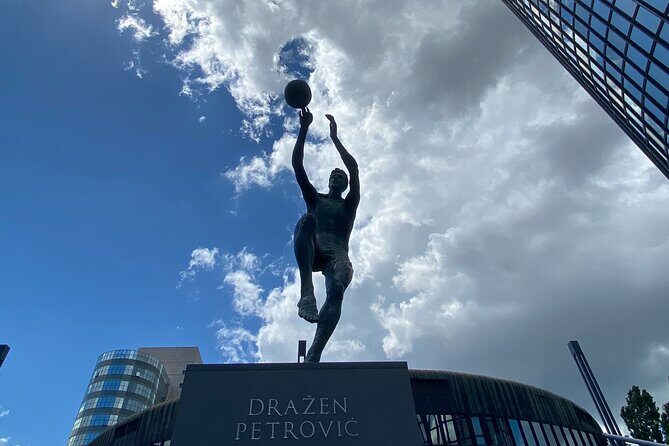
The final major stop is the Dražen Petrovic Museum – Memorial Center, where you’ll see the statue of Dražen Petrović and also the Cibona tower. This section turns the theme again from politics to identity.
Sports figures often become city symbols, and Petrović is one of those names you’ll likely hear across the region. A memorial center makes that symbolism visible, turning achievement and loss into public space. It’s a different kind of “history reading” than communist architecture, but it still fits the broader tour idea: how Zagreb stores memory in places you can stand near.
The Cibona tower adds a skyline component, helping you see how the city’s modern form contrasts with the earlier mass-housing and political buildings you saw. It’s the kind of final contrast that makes the day feel complete.
This stop includes about 10 minutes to take it in. If you want photos, give yourself a few extra seconds here. It’s the part you’ll probably want as proof you actually saw the route’s endpoint.
Price and value: what you’re really paying for
Here’s how I’d judge the $102.41 per person cost in plain terms.
You’re not only paying for a guide’s talk. You’re paying for:
- a private guide (licensed local)
- private transportation
- a ride in an original classic Yugo
- snacks
- an organized route that stays timed around short, meaningful stops
So the value depends on how you travel. If you like curated context and you don’t want to spend the day figuring out which buildings matter, this is likely a good use of money.
If you’re the type who already knows the Yugoslav-era architecture locations and you prefer self-guided wandering, you might not “need” the private aspect. But you’d still be paying for the guide’s ability to interpret what you see, and the Yugo ride is the kind of experience that’s hard to replicate on your own.
Also, your timing is tight in Zagreb. A 2.5-hour private format is ideal if you want history without losing an entire day.
Who this tour suits best
I’d recommend this one if you fit one of these profiles:
- You want a communism and Yugoslav-era city tour that stays practical and visual.
- You like history explained through real streets and buildings, not just museum captions.
- You enjoy unusual transport experiences, and you want the vibe of a story told while you move through it.
- You’re traveling with people who may know some of the background already but want fresh context. One guide story attached to this tour involves Theo, who can mix personal memories with new details, which is a great match for people who lived through that era—or visited often.
It may be less ideal if you want lots of long walking, deep museum time, or a plan that assumes you’ll spend extended periods indoors.
Tips to make the most of your 2.5 hours
- Dress for the outdoors. The tour requires good weather, so you’ll be outside for multiple stops.
- Plan for short bursts. You’re moving from spot to spot, not lingering all day.
- Bring questions about daily life, not only politics. The tour is built to explain everyday life alongside ideology.
- If you’re the photo type, think about priorities. The Mammoth, The Dice/Kockica, the river area, and the museum statue are your likely best photo windows.
Should you book this Yugo car tour?
Yes, if you want a compact, guided Zagreb experience that connects Yugoslav-era planning with the city you see today. The biggest reasons to book are the licensed private guide, the classic Yugo ride, and the smart mix of housing, political architecture, and major cultural stops like the Eurovision 1990 venue.
If you’re sensitive to weather and dislike older vehicles, or if you only want long stays at one site, you may feel rushed. But if you’re after perspective fast, this is an effective, memorable way to “translate” Zagreb’s architecture into a story you can actually understand.
FAQ
Where does the tour start and end?
The tour starts at Koncertna dvorana Vatroslav Lisinski (Trg Stjepana Radića 4, Zagreb). It ends back in front of the Lisinski concert hall, or at a guest’s chosen location within the city limits (within 3 km around the main square).
How long is the tour?
It lasts about 2 hours 30 minutes.
Is this a private tour and is it offered in English?
Yes, it’s private, and it’s offered in English.
What’s included in the price?
The price includes snacks, private transportation, an experienced licensed local guide, the ride in an original 35-year-old classic Yugo car, detailed information about Zagreb’s history and everyday life, and that it’s a private tour.
Are service animals allowed?
Yes, service animals are allowed.
What happens if the weather is bad?
The experience requires good weather. If it’s canceled due to poor weather, you’ll be offered a different date or a full refund.