REVIEW · ZAGREB
Zagreb in a day including cable car to Medvednica Nature park
Book on Viator →Operated by Limitless Balkan · Bookable on Viator
Zagreb is small, but the day is big. This private day trip gives you live guide commentary as you move through the historic core, plus hotel pickup for an easier start. I also like that you get your guide’s full attention for your group, so questions actually get answered instead of brushed off.
The best payoff is the mountain connection. You’ll ride the Sljeme cable car up to Medvednica with the transport already handled, then see how the city changes once the forests kick in. It’s a great contrast day: stone streets below, nature trails above.
A possible drawback is weather. The tour runs in all weather, but the day is clearly planned around good conditions—so if clouds or rain show up, expect the schedule to be more flexible.
In This Review
- Key things you should know before you go
- The format: what a 6 to 8 hour private day really means
- Zrinjevac first: where Zagreb’s “Green Horseshoe” starts
- Ban Jelačić Square and Kaptol: Zagreb’s center of gravity
- Quick culture stops: Dolac Market and St. Francis Church
- Tkalčićeva and Krvavi Most: stories you can walk through
- Grič Tunnel, then the funicular: history with cool air
- Lotrščak Tower and Gornji Grad: views plus the noon cannon
- Stone Gate and Radićeva: sacred stop, then street-level Zagreb
- Big culture blocks: HNK, the Art Pavilion, and the Main Station
- New Zagreb and quiet reflection: Mamutica and Mirogoj
- Up to Medvednica: the cable car payoff and what Sljeme is for
- Price and value: why this costs $300.35 per person
- Who should book this, and who might not love it
- Should you book Zagreb in a Day with Medvednica Nature Park?
- FAQ
- How long is the Zagreb in a day tour with Medvednica?
- Is the tour private and in English?
- What cable car ride is included?
- Are entrance tickets included for everything?
- Do I get pickup?
- Is the day walking-heavy?
Key things you should know before you go
- Private guide attention for your group, not a crowded script.
- Sljeme cable car included, so you skip the hassle and buy-then-stress part.
- Funicular + noon cannon rhythm in the Upper Town, both built into the flow.
- Mix of free stops and paid views, with Lotrščak Tower specifically called out as not included.
- A balance of old Zagreb and newer Zagreb, including Mamutica and Mirogoj Cemetery.
- Medvednica is a real nature park, not just a quick photo spot at the top.
The format: what a 6 to 8 hour private day really means
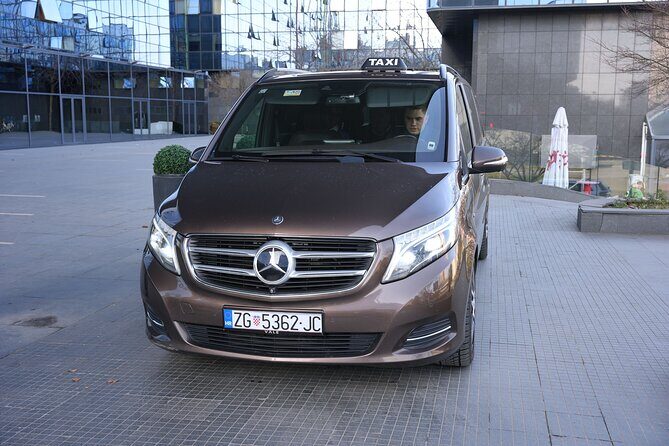
This is built as a smooth day. You’re not just walking for hours; you have air-conditioned private transportation for the driving parts, then short walks for the sights. It’s also a mobile-ticket tour, and you’re guided in English.
Because it’s private, your guide can shift pacing. In the field, that matters: one slower stop for photos, a quicker stop for something you’re less interested in. Your day still has structure, but you’re not trapped in someone else’s itinerary.
The big theme is contrast. You’ll get the classic Zagreb postcard views in the Upper Town, then step into mountain air at Sljeme. If you like cities that show their layers—medieval, Austro-Hungarian era, socialist-era architecture, and nature—you’ll enjoy this.
Other Medvednica Nature Park hikes in Zagreb
Zrinjevac first: where Zagreb’s “Green Horseshoe” starts
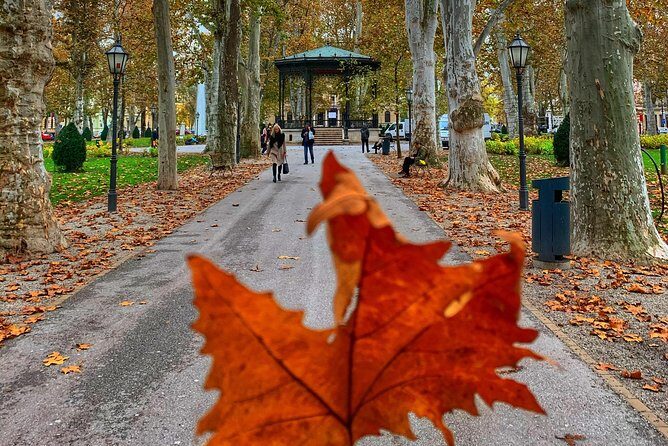
Your day ends and begins at Zrinjevac (Nikola Šubić Zrinski Square), part of the Green Horseshoe—parks and squares that shape the city’s feel. It’s an easy place to get your bearings fast: plane trees, flowerbeds, sculptures, and a park layout that doesn’t fight you.
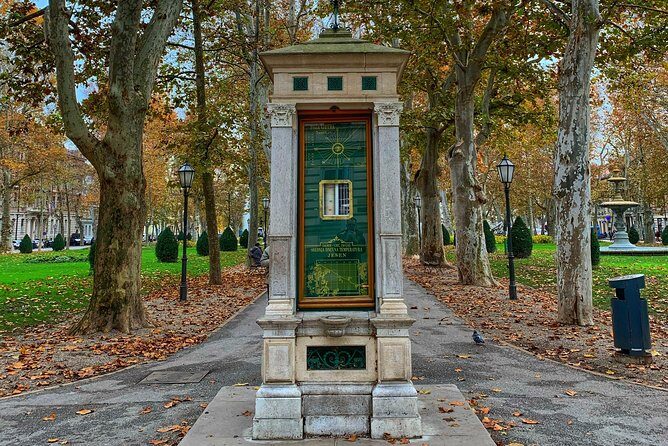
One standout here is the 19th-century meteorological post from 1884. It’s a cast-iron column with instruments for temperature, atmospheric pressure, and humidity—science history in a public park. You’ll get why that matters: it shows Zagreb using smart infrastructure long before it was trendy to call something heritage.
Spend a short moment here and you’ll notice something helpful for the rest of the day. Zagreb’s center isn’t just lanes between buildings. It’s designed as a chain of public green spaces that keep everything walkable and human-scaled.
Ban Jelačić Square and Kaptol: Zagreb’s center of gravity
From Zrinjevac you head to Ban Josip Jelačić Square, the crossroads of Upper and Lower Town. The equestrian statue is the obvious focal point, but the details make it feel alive: Ban Josip Jelačić’s statue was returned to the square in 1990 after being removed during the Yugoslav era.
Around the square, you get a visual mix of architectural styles—classicism up through Art Nouveau. Even if you’re not an architecture person, this stop is useful because it’s where trams, pedestrians, and café life converge.
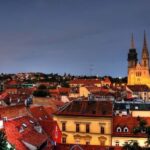
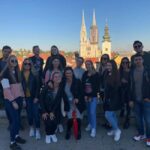
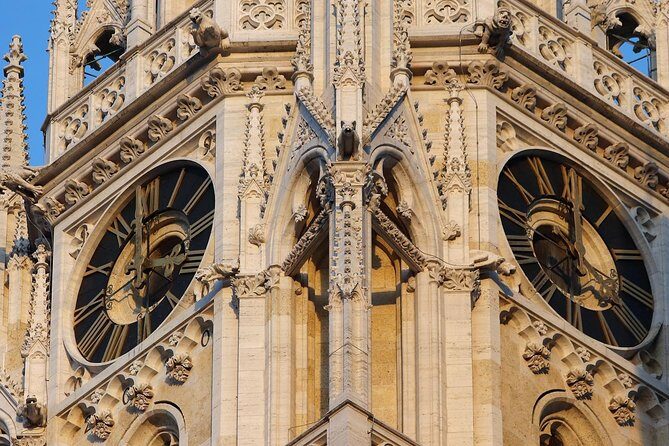
Then you move toward Kaptol and the Zagreb Cathedral (Assumption of the Blessed Virgin Mary). It’s Gothic, with twin spires that define the skyline, and it’s noted as the tallest building in Croatia. The cathedral story includes the 1880 earthquake and later reconstructions, so you’re not just looking at one time period—you’re seeing Zagreb’s resilience in stone.
Quick culture stops: Dolac Market and St. Francis Church
Next up is Dolac Market, the one locals call the belly of Zagreb. The market is known for its red umbrellas, and it opened in 1930. Even on a short visit, it helps you understand how food, routine, and city life connect here.
Dolac is laid out in two levels: open-air produce above, and covered stalls below for butchers, fishmongers, and cheese vendors. If you’re the type who likes eating like you live there, this is where you learn what locals buy when they’re not performing for tourists.
Then you’ll see the Church of Saint Francis of Assisi in the Opatovina area. It’s modest compared to the cathedral, but that’s the point. This stop slows the day down. You get the quieter mood of medieval religious architecture and the mix of Gothic and Baroque influences from centuries of reconstructions, including after the 1880 earthquake.
Tkalčićeva and Krvavi Most: stories you can walk through
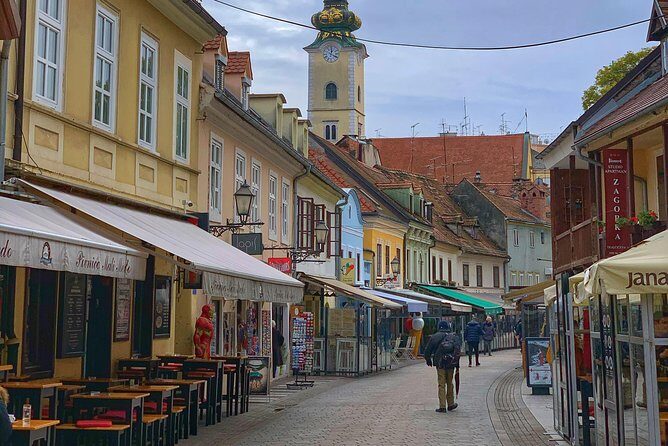
Tkalčićeva Street is one of Zagreb’s main pedestrian strips, and it’s a good place to feel daily rhythm. You’ll walk past cafés, bars, and small shops, but you’ll also get the historical framing: this was once the boundary between rival medieval towns—Kaptol and Gradec.
The best part is how your guide links it to the rest of the day. The medieval rivalry that shaped the map later becomes the reason Upper Town and Lower Town feel different. That connection makes the city “click” faster.
A few steps over is Krvavi Most, meaning Bloody Bridge. It’s a street name today, not a literal bridge, and it points back to clashes between those medieval towns. After you hear the story, the cafés and shops feel less random and more like the city has simply moved past conflict.
If you have limited time, this pair of stops gives you the feeling of Zagreb without needing a long museum entry.



Grič Tunnel, then the funicular: history with cool air
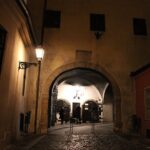
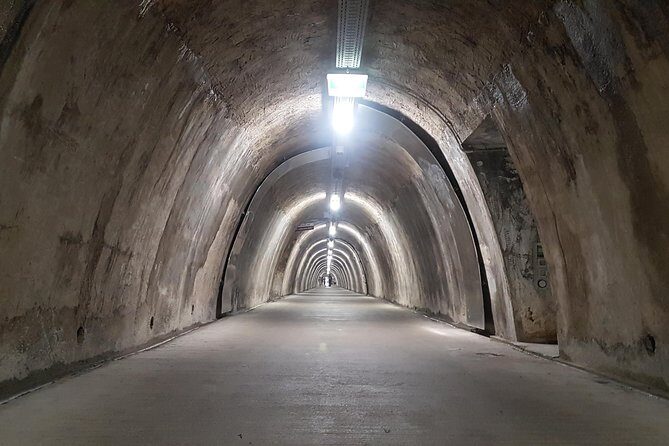
Under the Upper Town you’ll walk through Grič Tunnel (Grič Tunnel). It was built in 1943 as a bomb shelter and safe passage during World War II, and it stretches about 350 meters. The atmosphere changes immediately once you’re inside—cool, arched walls, and that sense of wartime engineering.
After the war it faded from everyday use, but in recent years it’s been reactivated for cultural events and exhibitions. So it’s not just a history stop. It’s history used in a public, modern way.
Then you ride the Zagreb Funicular (Zagrebačka uspinjača). It’s short—about a minute—with a track length of 66 meters and it runs since 1890. For you, it’s practical: you save energy and you avoid the steep grind up to the Upper Town.
The funicular’s value is also visual. You’ll get framed views as you move between Lower Town and the Upper Town, and at the top you’re positioned right for Lotrščak sights.
Lotrščak Tower and Gornji Grad: views plus the noon cannon
At Lotrščak Tower, the core idea is simple: it’s medieval defense turned into daily ritual. The tower dates to the 13th century, built to protect the southern gate of the old town walls. Today, it’s mainly known for the Grič cannon, fired daily at noon since 1877.
Important practical note: Lotrščak Tower admission isn’t included. If you want the climb and interior views, plan to pay separately.
Then you spend time in Gornji Grad (Upper Town / Gradec). This is the historic heart, once a fortified medieval settlement and later merged with Kaptol in 1850 into modern Zagreb. Expect cobblestones, narrow streets, and buildings that reflect centuries of political and cultural weight.
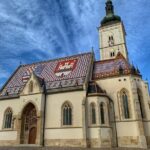
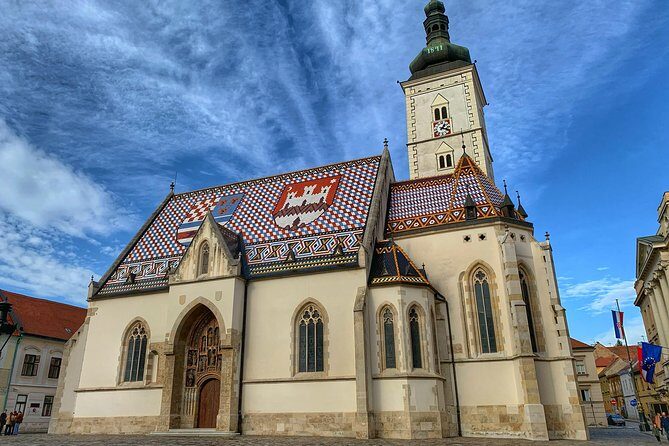
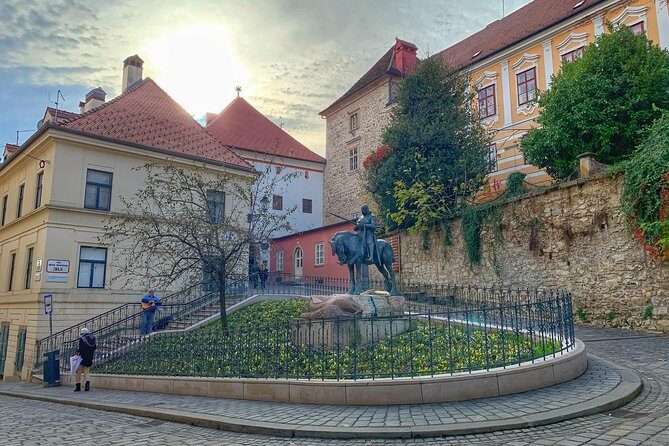
A key landmark here is St. Mark’s Square, the political center around St. Mark’s Church. The church roof is famous for its colorful tiled design featuring the coat of arms of Croatia, Dalmatia, Slavonia, and Zagreb. It’s a visual history lesson you don’t have to translate.
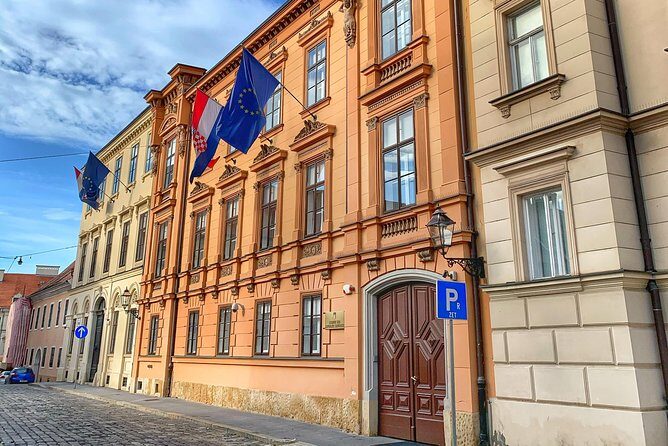
You’ll also be near the Croatian Parliament (Sabor) and the Banski Dvori government complex, which is tied to the prime minister’s seat.
Stone Gate and Radićeva: sacred stop, then street-level Zagreb
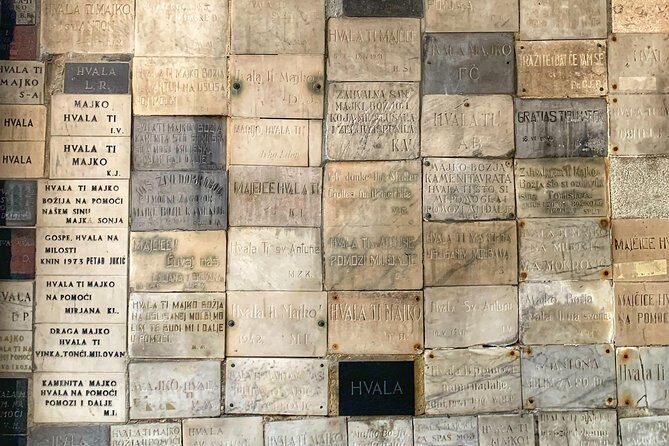
In the Upper Town, you’ll see Kamenita Vrata (Stone Gate), one of Zagreb’s most revered landmarks. It’s the last remaining medieval city gate from the old fortifications, dating to the 13th century. The inside has a chapel-like space with a painting of the Virgin Mary with Child, believed to have miraculous power.
Here’s the detail you’ll remember: the painting survived a major fire in 1731, and votive offerings still cover the area today. Locals come to light candles and pray, so you’re stepping into a living tradition, not a staged scene.
Then walk along Radićeva Street, running from Ban Jelačić Square up toward the Stone Gate. The street mixes medieval and 19th-century architecture and is a practical route between the big Upper Town points. If you like finding courtyards and small shops without sprinting from one landmark to the next, this works well.
Big culture blocks: HNK, the Art Pavilion, and the Main Station
Not every stop is medieval. Zagreb also flexes in the late-19th and early-20th century cultural world.
At the Croatian National Theatre (HNK), you’ll see the Neo-Baroque building opened in 1895. The yellow façade and ornate detail reflect how seriously Zagreb took public arts. It’s also tied to the broader cultural institutions around Trg Republike Hrvatske.
A short step away is the Art Pavilion (Umjetnički paviljon) on King Tomislav Square. It was originally built for a millennial exhibition in 1898 and then reassembled in Zagreb. It’s designed by Viennese architects Helmer and Fellner, with a striking yellow exterior and a glass dome. Even if your art tastes are simple, the building is worth the look.
Then you pass Glavni kolodvor (Main Railway Station), opened in 1892 and designed by Ferenc Pfaff. It’s a major transport hub, but visually it’s a late-19th-century statement. For many visitors, seeing the station during the tour is useful because it gives you a mental map of where everything connects.
New Zagreb and quiet reflection: Mamutica and Mirogoj
Zagreb doesn’t only live in the old streets. You also see Mamutica, a massive Yugoslav-era residential complex from the 1970s. It’s the largest building in Croatia, stretching over 240 meters and containing more than 1,100 apartments. The style is Brutalist, with raw concrete that makes it feel more like an industrial structure than a neighborhood.
It’s an odd stop in the best way. It reminds you that Zagreb changed dramatically in the 20th century and that everyday life has its own architecture worth noticing.
Then there’s Mirogoj Cemetery, one of the day’s most reflective stops. Established in 1876 and designed by Hermann Bollé, it has ivy-clad arcades and grand domes. It’s not just a cemetery either—it’s described as a park-like space, and it welcomes people of all faiths, which makes it feel unusually inclusive for a memorial setting.
If you’re short on time, keep your pace calm here. You’ll get more from walking slowly under the arcades than from treating it like another checklist photo.
Up to Medvednica: the cable car payoff and what Sljeme is for
The mountain portion starts with the Sljeme Cable Car (Žičara Sljeme). It was reopened in 2022 after renovations, and the ride takes about 20 minutes. Cabins are spacious, and the views shift from city blocks to forested slopes as you climb.
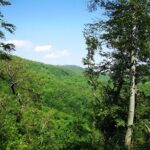
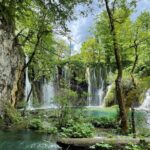
Once at Sljeme, you’re on Medvednica Mountain—the nature park right north of Zagreb. The area is known for dense forests, trails, and wildlife, and it’s year-round. In winter, you can ski. In warmer months, you’ll likely find hiking and mountain biking, plus you can relax at mountain lodges.
Sljeme itself sits at 1,033 meters, and it’s the popular peak. The tour framing is practical: it’s not just a viewpoint, it’s an active outdoor destination. You’ll also hear about the Medvedgrad fortress and educational paths in the wider Medvednica area, plus the option of hearty Croatian food at lodges.
If you’re trying to escape city pacing, this is the built-in reset button.
Price and value: why this costs $300.35 per person
At $300.35 per person, this isn’t a budget walking tour. But the structure explains the price.
You’re paying for:
- a private tour (not shared with strangers),
- professional guidance and live commentary,
- air-conditioned private transportation for the driving portions,
- and an included major activity: the cable car to Medvednica.
Also, the time structure helps. You’re usually only in each stop for a short window (often 5 to 10 minutes for the quick hitters, longer at Upper Town and the mountain). That can feel fast, but it’s also why the tour works for people who want a full Zagreb day without burning energy on transit.
One more value point: guides can adjust based on your interests and the day’s conditions. In practice, that means you’re not just following a fixed script.
Who should book this, and who might not love it
This tour fits you best if you:
- want a private day with a guide who can answer questions on the spot,
- like mixing historic streets with serious nature time,
- and appreciate practical transport planning (funicular and cable car included in the flow).
It may be less ideal if you:
- hate walking on cobblestones or want a very slow, low-step pace,
- or you want deep museum time for one theme. This day is wide, not narrow.
Because the itinerary includes the Upper Town and the mountain, moderate physical fitness is the right mindset.
Should you book Zagreb in a Day with Medvednica Nature Park?
I’d book it if you want one guided day that links Zagreb’s story to its geography. The best ingredient is the combo: city landmarks you can place on a map, then the lift into Medvednica where the air and pace change.
If your travel style is mostly independent, you could DIY parts of this. But you’d likely spend more time coordinating transport and tickets, and you would lose the “why this matters” explanations that tie the stops together—from the meteorological post in Zrinjevac to the noon cannon at Lotrščak to the forests around Sljeme.
If you’re aiming for maximum value with minimum hassle, this is a smart way to do it.
FAQ
How long is the Zagreb in a day tour with Medvednica?
It runs about 6 to 8 hours.
Is the tour private and in English?
Yes. It’s a private tour for your group, and it’s offered in English.
What cable car ride is included?
The tour includes the cable car to Medvednica (Sljeme).
Are entrance tickets included for everything?
Many stops have free admission. The Zagreb Funicular is included, but Lotrščak Tower admission isn’t included.
Do I get pickup?
Pickup is offered, and the tour starts at Zrinjevac 2, 10000 Zagreb.
Is the day walking-heavy?
It includes walking through the city, and the day is suited for travelers with moderate physical fitness. You’ll also have vehicle time for the driving portions.